NYC Digs Out After Flash Floods Swamp Streets, Ground Flights and Test Aging Infrastructure
The NYC flash flooding cleanup began in earnest Sunday, a day after severe thunderstorms hammered New York City and the surrounding Tri-State area with a punishing mix of torrential rain and damaging winds.
Saturday’s storms turned ordinary streets into waterways, stranded drivers on major highways, and left residents in several neighbourhoods hauling ruined belongings to the curb.
Where It Hit Hardest
The images from Saturday were dramatic even by New York standards.
In SoHo, water surged through streets deep enough that the roadway became indistinguishable from a river. Drivers along busy highways found themselves stranded as flood water rose faster than traffic could clear.
In Woodside, Queens, firefighters drove directly into the standing water on the BQE to reach motorists trapped in their vehicles. In Flushing, homeowners spent the following day clearing out properties that had taken on serious water damage.
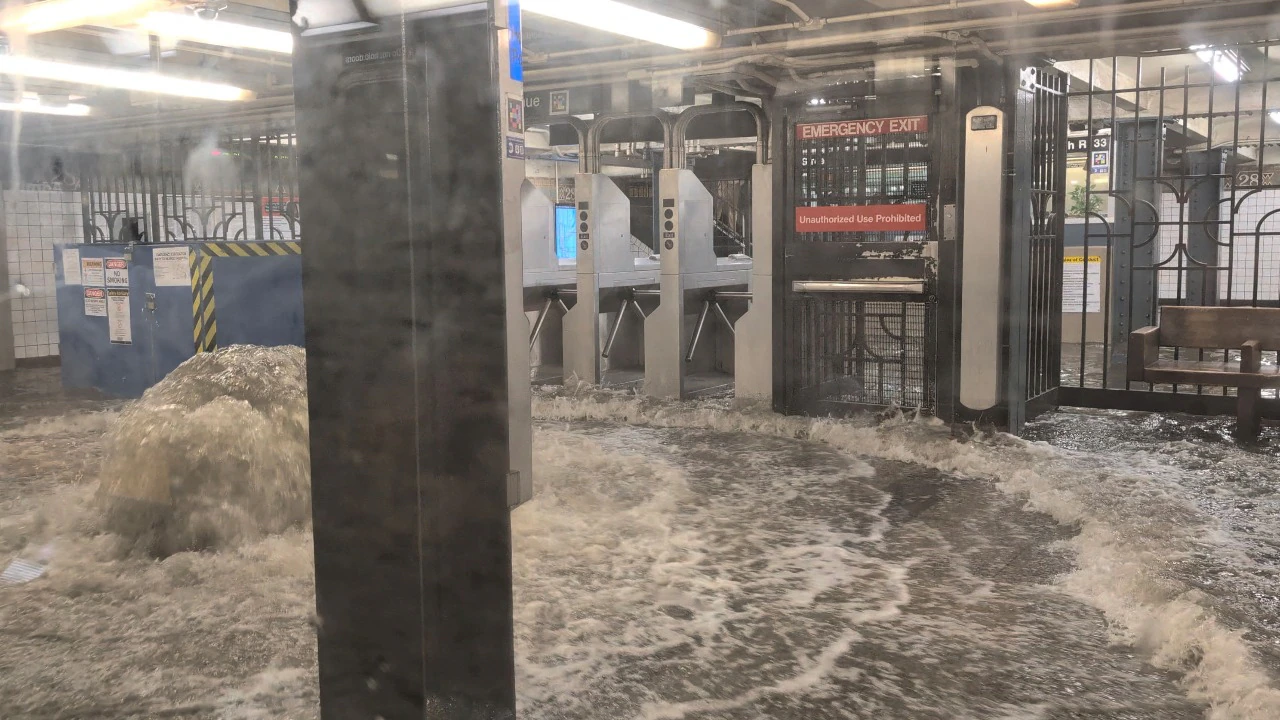
Subway stations flooded. Street-level rescues were required. It was the kind of event that used to feel exceptional and increasingly does not.
A Complete Weather Reversal
Sunday brought conditions almost unrecognizable from the day before: sunshine, lower humidity, and noticeably cleaner air.
The storms accomplished something the previous days of haze could not — they scrubbed much of the Canadian wildfire smoke out of the regional atmosphere. Rain is remarkably effective at removing airborne particulate, pulling it from the air and depositing it on the ground.
The improvement wasn’t total. Enough particulate matter lingered to pose problems for sensitive groups, and health officials continued advising people with respiratory conditions to check air quality readings before spending extended time outdoors.
More Than 1,000 Flights Cancelled
The aviation fallout extended well past the storms themselves.
Airlines cancelled over 1,000 flights on Sunday while working to recover operations disrupted by Saturday’s thunderstorms across the Northeast.
That gap between the weather and the cancellations reflects how air travel actually breaks down. Once aircraft and crews are displaced from their scheduled positions, restoring the network takes far longer than the storm lasted. A Saturday afternoon of ground stops produces a Sunday of cancellations in cities that never saw bad weather.
Major carriers issued travel waivers permitting passengers scheduled to fly Saturday or Sunday to rebook without change fees. Delta extended a separate waiver covering the Atlanta area for Sunday and Monday travel, anticipating thunderstorms in that region.
The FAA warned of possible additional delays Sunday evening tied to storms across the Southeast.
Infrastructure Under Strain
The flooding renewed a conversation the city has been having with itself for years.
Homeowners in affected neighbourhoods reported that flooding has worsened noticeably with the type of rainfall the region now receives. The complaint isn’t simply about volume — it’s about intensity. Storms delivering several inches in a short window overwhelm drainage systems designed for gentler, longer rain events.
New York’s sewer network is largely a combined system, carrying both stormwater and wastewater through the same pipes. When rainfall exceeds capacity, the results appear on streets and in basements.
In response, the city has installed flood sensors in some neighbourhoods to collect better data on where problems concentrate and how quickly water accumulates. It’s a modest step, but a necessary one — targeted infrastructure investment requires knowing precisely where the failures occur rather than relying on complaint volume.
Clearer Skies for the World Cup Final
There was one fortunate consequence of Saturday’s violence.
Smoke that had blanketed the Northeast in haze was expected to largely clear from the New York and New Jersey area in time for Sunday’s World Cup final — an event drawing enormous crowds to MetLife Stadium.
Organizers weren’t leaving it to chance. David Lu, CEO and co-founder of Clarity Movement, an environmental technology company providing air quality monitoring, said conditions at the field were being measured every ten minutes.
That level of monitoring at a sporting event would have seemed excessive a few years ago. It reflects how routine smoke episodes have become across the eastern United States, and how much organizers of large outdoor gatherings now factor air quality into operational planning.
People sensitive to particulate matter were still advised to check the air quality index, particularly in the morning hours.
What Comes Next
For most of the region, Sunday offered a reprieve. For the neighbourhoods that flooded, it offered work.
Cleanup after water damage is slow and unpleasant. Soaked drywall and insulation have to come out. Mould develops within days in summer humidity. Insurance claims for flood damage often turn on distinctions between surface water and sewer backup that homeowners discover only after filing.
The broader question sits where it usually does after these events. Storms delivering extreme rainfall in short bursts are arriving more often, and the drainage infrastructure beneath the city was designed for a different pattern.
Sensors will tell officials where the water goes. What happens after that is a matter of funding and priority — and the next storm rarely waits for either.
Author