Supreme Court Voting Rights Act Ruling Reshapes the Future of American Elections
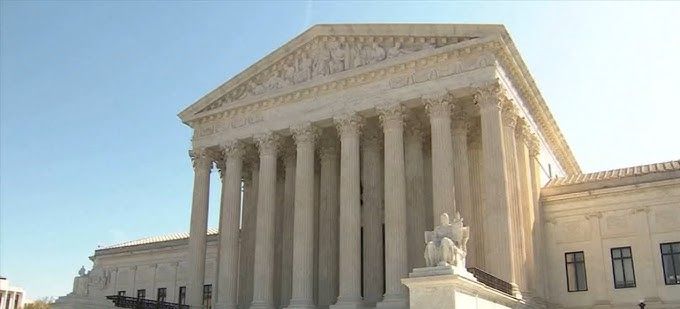
In a decision that will likely echo through American politics for years to come, the Supreme Court Voting Rights Act ruling delivered Wednesday has fundamentally weakened one of the most important civil rights protections of the past six decades. The 6-3 verdict, split along ideological lines, places strict new limits on how race can factor into the drawing of congressional and legislative maps.
While the conservative majority stopped short of declaring Section 2 of the Voting Rights Act unconstitutional, voting rights advocates and the court’s liberal wing argue the provision has been left a shell of its former self.
What the Court Actually Decided
At the heart of the case was Louisiana’s congressional map, which included a second Black-majority district designed to comply with the Voting Rights Act. The court’s conservatives concluded that the state had crossed a constitutional line by relying too heavily on race when drawing that district.
Justice Samuel Alito, writing for the majority, argued that lower courts have, over the years, pushed states into the very kind of race-based decision-making the Constitution prohibits. He pointed to three reasons the law needed reworking: meaningful progress against racial discrimination, the misuse of VRA lawsuits for partisan ends, and modern mapping technology that allows lawmakers to balance political and demographic interests far more precisely than before.
Going forward, plaintiffs challenging a map under Section 2 will need to prove that lawmakers intentionally discriminated against a minority group. Simply showing that a community lacked a fair chance to elect its preferred candidate will no longer be enough.
A Forceful Dissent from the Liberal Justices
Justice Elena Kagan read her dissent from the bench, a move typically reserved for rulings the dissenting justices view as deeply troubling. She accused the conservative majority of finishing what she described as a decade-long dismantling of the Voting Rights Act.
According to Kagan, the practical effect is that minority voters in regions still shaped by residential segregation and racially polarized voting can now be effectively shut out of meaningful political representation. She warned that minority political power is poised to erode quickly.
Why This Ruling Carries Such Weight
The Voting Rights Act of 1965 was a cornerstone of the civil rights movement. It outlawed practices like literacy tests and poll taxes and helped open the door for a wave of minority candidates to win seats at every level of government.
Section 2 was the law’s last major remaining tool. It required states to consider race carefully during redistricting so minority communities had a real chance to elect representatives who shared their concerns. The challenge has always been the constitutional tightrope: states must consider race enough to comply with the VRA, but not so much that they violate the Equal Protection Clause of the 14th Amendment or the 15th Amendment’s protections against racial discrimination in voting.
This ruling significantly tilts that balance.
How Louisiana’s Case Reached This Point
The dispute began in 2022 when Black voters and civil rights groups sued Louisiana, arguing that the post-2020 Census map shortchanged African Americans, who make up roughly a third of the state’s population but had only one of six majority-Black districts.
A federal court agreed and ordered a new map. In 2024, the Louisiana legislature drew a second majority-Black district stretching from Baton Rouge to Shreveport, partly designed to protect Republican incumbents like House Speaker Mike Johnson and Majority Leader Steve Scalise.
A group of non-Black voters then sued, calling the redrawn map an unconstitutional racial gerrymander. The case bounced through the courts before landing back at the Supreme Court, which used it to revisit the broader question of how race can be used in redistricting.
Political Fallout: A Redistricting Storm Ahead
The timing of the ruling could not be more politically charged. The country is already in the middle of an unusual mid-decade redistricting battle between the two major parties.
Republicans, worried about their thin House majority, have already redrawn maps in states like Ohio, Missouri, North Carolina, and Texas, potentially adding up to nine GOP-friendly seats. Florida Republicans were debating their own redistricting plan on the state House floor at the very moment the ruling came down.
Democrats have pushed back. California voters approved a new map projected to deliver up to five additional Democratic seats, and Virginia voters greenlit a similar redrawing effort.
With Section 2 weakened, Republicans may now have fresh opportunities to redraw majority-minority districts, particularly across the South. Senator Marsha Blackburn of Tennessee quickly called for new maps in her state to add a Republican-leaning seat around Memphis.
Reactions from Both Sides
NAACP President Derrick Johnson called the decision a devastating blow to minority political power, accusing the court of betraying Black voters and undermining American democracy itself.
The Trump White House celebrated the outcome. Spokeswoman Abigail Jackson described it as a complete victory for voters and praised the court for ending what she called unconstitutional misuse of the Voting Rights Act.
Louisiana Attorney General Liz Murrill labeled the decision seismic, saying the state had finally been freed from years of being forced to draw what she described as racially discriminatory maps.
Election law expert Richard Hasen of UCLA offered a blunt assessment: while Section 2 technically remains on the books, the ruling has stripped it of much of its bite, leaving it a shadow of what it once was.
A Pattern of Pulling Back
This decision fits into a broader pattern. In 2013, the court gutted Section 5 of the VRA, which had required certain states with histories of discrimination, mostly in the South, to get federal approval before changing election laws. Two years ago, the court limited race-conscious admissions in higher education.
Interestingly, just in 2023 the court surprised many observers by ruling against Alabama in a similar Section 2 case. That makes Wednesday’s ruling all the more striking, signaling that the conservative majority has now firmly committed to a narrower reading of the law.
Looking Ahead
This term is shaping up to be a major one for election law. The justices are also weighing the constitutionality of counting mail-in ballots that arrive after Election Day and considering whether to ease restrictions on coordinated campaign spending.
For now, the immediate consequences of the Supreme Court Voting Rights Act ruling will play out in statehouses across the country, where lawmakers, lawyers, and voters prepare for what promises to be one of the most contentious redistricting cycles in modern American history.
Author