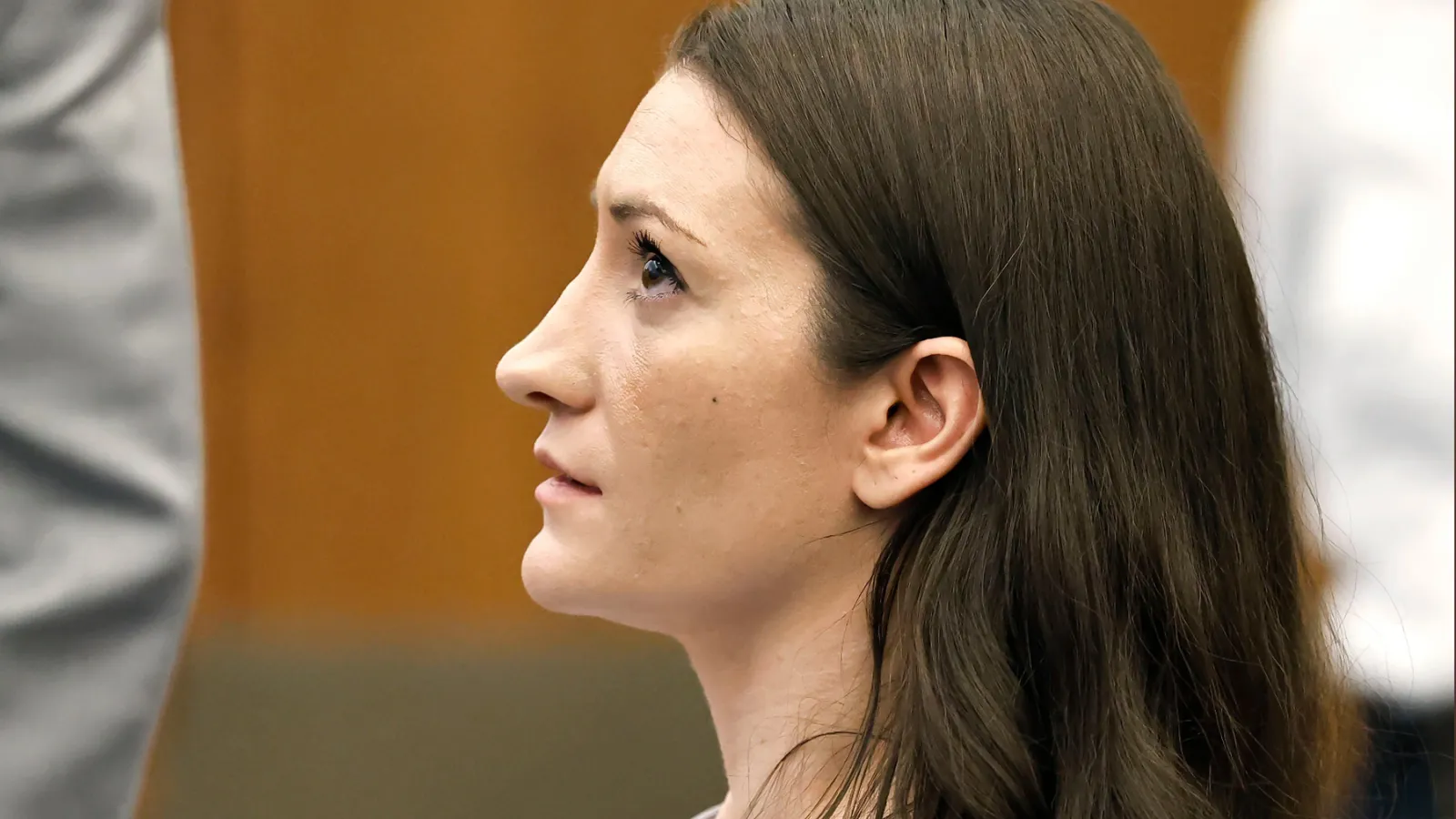
The Lindsay Clancy trial began Monday with jury selection in Massachusetts, opening a case that will turn almost entirely on a single question: was she in control of her own mind?
Clancy is accused of strangling her three children in 2023 before attempting to end her own life. She has not disputed her role in their deaths. What remains contested is whether she can be held criminally responsible for them.
Two Competing Accounts of the Same Night
The defense position rests on postpartum psychosis, a rare and severe condition that affects a very small fraction of women after childbirth. Those who experience it can develop delusions and, in some cases, hallucinations.
Clancy’s attorneys and her family argue that the illness stripped her of the capacity to be responsible for what happened.
Prosecutors reject that framing entirely. Their case holds that the killings were intentional acts.
Both sides accept the same underlying facts. They disagree about what those facts mean.
Understanding Postpartum Psychosis
The condition sits at the far end of a spectrum that most people know only through its milder forms.
Postpartum depression is relatively common and widely discussed. Postpartum psychosis is neither. It is rare, it develops rapidly, and it can produce a break from reality severe enough that the person experiencing it does not accurately perceive what she is doing.
That rarity cuts in two directions in a courtroom. It supports the defense argument that this was an extraordinary medical event rather than a criminal choice. It also means jurors are unlikely to have any personal frame of reference for it, which places enormous weight on expert testimony.
How Prosecutors Are Likely to Approach It
Defense attorney and former prosecutor Mark Eiglarsh, appearing on NewsNation with Chris Cuomo on Monday, laid out the reasoning the state will probably follow.
His central point was blunt: prisons hold large numbers of people who had mental disorders at the time they committed crimes. A diagnosis alone has never been sufficient to escape responsibility under the law.
For the prosecution, Eiglarsh said, everything reduces to establishing that Clancy planned the deaths.
He anticipated the specific questions the state will raise. Why wait until her husband had left the house? Why then attempt suicide?
Eiglarsh framed the prosecution’s answer directly, saying they will argue she chose to kill herself because she understood, once the act was complete, that what she had done was horrendous and horrible.
The logic is that awareness of wrongdoing, demonstrated after the fact, implies awareness before it.
The Legal Standard at Issue
Eiglarsh pointed to something that extends beyond this defendant.
Prosecutions, he noted, exist to uphold the law itself. That means prosecutors have to weigh how the result here might be invoked by future defendants building their own arguments.
The threshold, as he described it, is whether there is any indication the person knew right from wrong. Legislators, he said, did not intend for people to escape accountability where that knowledge existed, even alongside genuine mental illness.
That standard is narrower than many people assume. Severe illness is not automatically a defense. The question is specifically about the capacity to distinguish right from wrong at the moment of the act.
Why This Case Draws So Much Attention
Several elements make this trial unusually significant:
- The victims were three young children, which makes it emotionally overwhelming regardless of legal outcome
- The defense raises a condition most jurors have never encountered
- The verdict may influence how postpartum psychosis is treated in future criminal proceedings
- It intersects with a broader public conversation about maternal mental health that has grown considerably in recent years
There is also the uncomfortable fact that no outcome here resembles justice in any ordinary sense. Three children are dead. The person accused is their mother.
What Comes Next
Jury selection will take time given the case’s notoriety and emotional weight. Finding jurors without formed opinions in Massachusetts may prove difficult.
Once the trial proper begins, expect the evidence to center on:
- Psychiatric evaluations conducted after the deaths
- Clancy’s medical history and treatment in the months following childbirth
- Testimony from mental health experts on both sides regarding her state of mind
- Timeline evidence the prosecution will use to argue premeditation
The competing expert testimony will likely determine the verdict. Juries in cases like this are asked to reconstruct the interior state of a person’s mind on a specific day, using the tools of psychiatry, and then apply a legal standard written long before the condition was well understood.
It is among the hardest tasks the justice system assigns to ordinary citizens.
A Note on This Subject
This case involves suicide and severe mental illness, topics that can be difficult to read about. Anyone struggling with thoughts of suicide can find support through the 988 Suicide and Crisis Lifeline by calling or texting 988, or through resources listed at 988lifeline.org.
Author