Ukraine Drone Revolution Loses Its Standard-Bearer in a Double Firing
Drone warfare did not arrive in Ukraine on a wave of enthusiasm. It arrived through a fight — and the resistance came largely from senior generals trained on artillery and armour.
In the early stages of the war with Russia, many of those commanders regarded drones as hobbyist equipment, more suited to filming wedding parties from above than conducting battlefield missions. A loose coalition of junior officers and technology advocates disagreed, arguing that these machines might determine whether Ukraine survived.
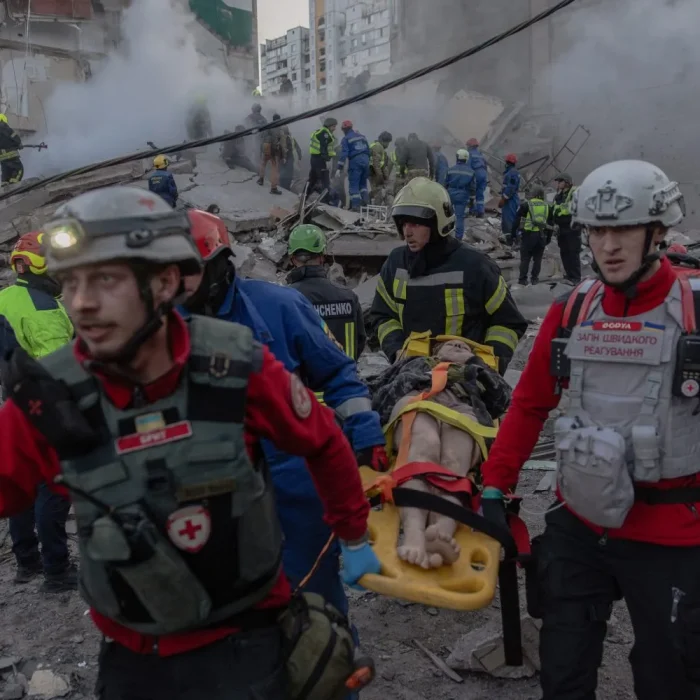
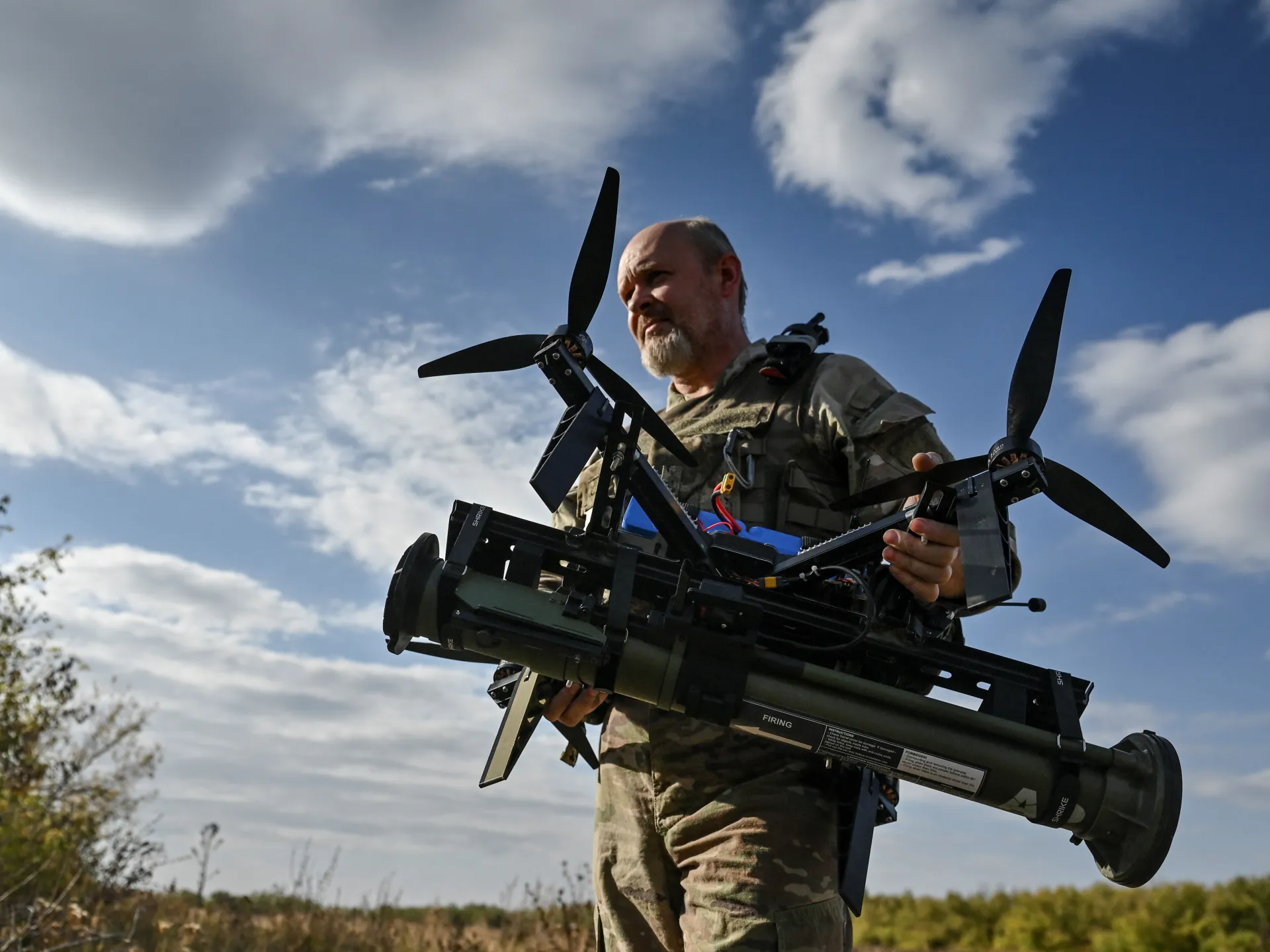
The war settled the argument. Drones now cause more than 80 percent of all battlefield casualties. Tanks and artillery have come to look cumbersome by comparison. Long-range drone strikes against Russian oil refineries and infrastructure have forced Moscow into a defensive posture on its own territory.
That vindication took years to arrive. And in the month it became undeniable, the man who fought hardest for it lost his job.
Building a Weapons Programme Without Authority to Buy Weapons
Mykhailo Fedorov, drone warfare’s principal advocate inside the Ukrainian government, described the early period bluntly in an interview last year: there was no financing.
The first attack-drone units formed in 2023, roughly a year into the full-scale invasion. Getting them equipped meant approaching businesspeople directly and running fundraising campaigns on Facebook.
At that point Fedorov was minister of digital transformation — a post carrying no authority whatsoever to procure weapons for the state.
He worked around that limitation through persistence, public showmanship and considerable skill at bureaucratic combat, converting his ministry into the operational centre of Ukraine’s emerging drone programme. As he put it, the revolution happened inside the bureaucracy.
The Counterrevolution Sat Two Miles Away
Opposition was headquartered behind the neoclassical facade of the General Staff building, and its leading figure was Oleksandr Syrsky, commander of Ukraine’s armed forces.
Syrsky trained in the Soviet school of military theory. He and Fedorov clashed repeatedly over how large a role drones should occupy in the national arsenal.
The conflict sharpened dramatically at the start of this year, when Fedorov was elevated to the Ministry of Defense — a position that finally gave him direct control over weapons purchasing.
For six months the two men brought their grievances to President Volodymyr Zelensky, who served as referee. This month the president decided he had heard enough. He fired Fedorov. Then he fired Syrsky.
The Question He Did Not Answer
Removing both men resolved the personality conflict without touching the substantive dispute underneath it.
That dispute is genuinely difficult: should a country fighting for its survival continue restructuring its defence machinery in ways no military power has ever attempted? Or does that experimentation risk weakening the forces holding the line?
Ukraine now has a leadership vacuum on exactly that question. Neither faction holds a clear mandate — not to complete the transformation, not to reverse it.
Syrsky’s Parting Argument
The day before his dismissal, Syrsky published a column in the Ukrainian defence outlet Militarnyi urging the technology accelerationists to slow down.
His core claims were that drones alone cannot defeat the Russian army, and that Silicon Valley culture cannot substitute for military discipline. Addressing proposals to hand soldiers’ work to artificially intelligent machines, he called it an obvious gamble — adding that an experiment on this scale gets paid for with Ukrainian land and Ukrainian lives.
Parts of the piece read like a man frustrated that the world has moved past him. But at 60, Syrsky was making arguments that many senior officers share, and they are not trivial.
Commanders must synchronise everything under them so that weapons and tactics function as a single organism. Ukraine’s war makes that unusually hard.
Why Coordination Became So Difficult
The front line runs more than 600 miles and is defended by an enormous variety of units drawn from different branches of the military.
Early in the war, many of these units developed the habit of raising their own money for equipment. Crowdfunding campaigns on social media pulled in vast sums internationally, and much of it went directly toward buying drones on the open market.
This produced a parallel procurement system in which low-level commanders ordered from suppliers of their own choosing.
Fedorov did not merely tolerate that practice — he institutionalised it.
An Amazon for Weapons
From the digital transformation ministry, Fedorov launched Brave1, an online marketplace where the military could shop for high-tech equipment.
Soldiers of any rank can browse thousands of items:
- Wheeled ground robots
- Remote-controlled bomber drones
- Microchips that add AI-powered targeting and other capabilities
Nothing comparable exists in modern warfare. Ukrainian law, like the law of every major military, requires the armed forces to centralise weapons orders through the defence ministry.
Fedorov considered that system slow and vulnerable to corruption. It could not deliver fast enough, he argued, and it could not respond to how quickly frontline requirements change. After his January promotion, he attempted to replace conventional procurement with a version of the marketplace.
Why Syrsky Saw a Threat
His objection is not hard to understand. When junior officers decide independently how to equip their units, maintaining coherence across the battlefield becomes substantially harder.
Lower ranks value the flexibility. Their commanders in Kyiv do not.
In his Militarnyi column, Syrsky noted that the General Staff supplies the ministry with a complete list of wartime requirements — artillery, mortars and dozens of other categories. His point was that everything on that list must be purchased, not only whatever happens to be fashionable.
The Backlash Zelensky Should Have Anticipated
By the time Fedorov was removed, his position had been thoroughly validated.
Ukraine now manufactures several million drones annually, substantially reducing dependence on foreign military assistance. The credit belongs collectively to an ecosystem of drone factories, start-ups, software developers, training academies and military innovators.
But Fedorov, at 35, had been that ecosystem’s public face and its advocate inside government for years.
His firing triggered immediate protest. Thousands demonstrated in Kyiv and other cities demanding his reinstatement, with many calling for Syrsky to be removed instead.
Zelensky did remove the general. He did not restore the minister.
A Consolation Prize Fedorov Refused
The president offered Fedorov a seat on the National Security and Defense Council, an advisory body that typically functions as a dignified retirement destination for senior officials and military figures.
Fedorov declined. The council cannot purchase weapons, and it cannot implement the reforms he left unfinished.
Who Replaced Them
In place of two seasoned figures, Zelensky installed two lesser-known ones: Yevhenii Khmara as acting defence minister and Mykhailo Drapatyi as commander of the armed forces.
Both are experienced and well regarded within the military. Both, however, lack the institutional standing — and possibly the appetite — for the bureaucratic warfare that destroyed their predecessors.
Their most visible shared trait is age. Both belong to the same generation as Fedorov and Zelensky, meaning neither passed through the Soviet academies where Syrsky absorbed the doctrine he applied throughout this war.
Generational Change Without a Mandate
That generational shift does not amount to victory for the reformers.
Zelensky has granted no mandate to continue Fedorov’s more radical agenda. The new appointees will almost certainly encounter the same resistance from older cadres within the General Staff that Fedorov spent years fighting.
What Ukraine Can Least Afford
The drone revolution has passed the point where it could be reversed. Several million units a year are already rolling off Ukrainian production lines, and 80 percent of casualties are being inflicted by them.
What has been lost is the person driving it forward inside the government — at precisely the moment the innovations were proving themselves.
The likely outcome is not reversal but drift: a period of indecision while two camps that have both lost their leaders wait to see who sets direction. In a war measured in daily territorial adjustments and constantly evolving countermeasures, hesitation carries a price of its own.
Author
-
Lucienne Albrecht is Luxe Chronicle’s wealth and lifestyle editor, celebrated for her elegant perspective on finance, legacy, and global luxury culture. With a flair for blending sophistication with insight, she brings a distinctly feminine voice to the world of high society and wealth.