The Gordie Howe International Bridge finally has an opening date, and Canadian officials marked the moment on July 24 with a ceremony that celebrated cooperation between two countries — while pointedly excluding officials from one of them.
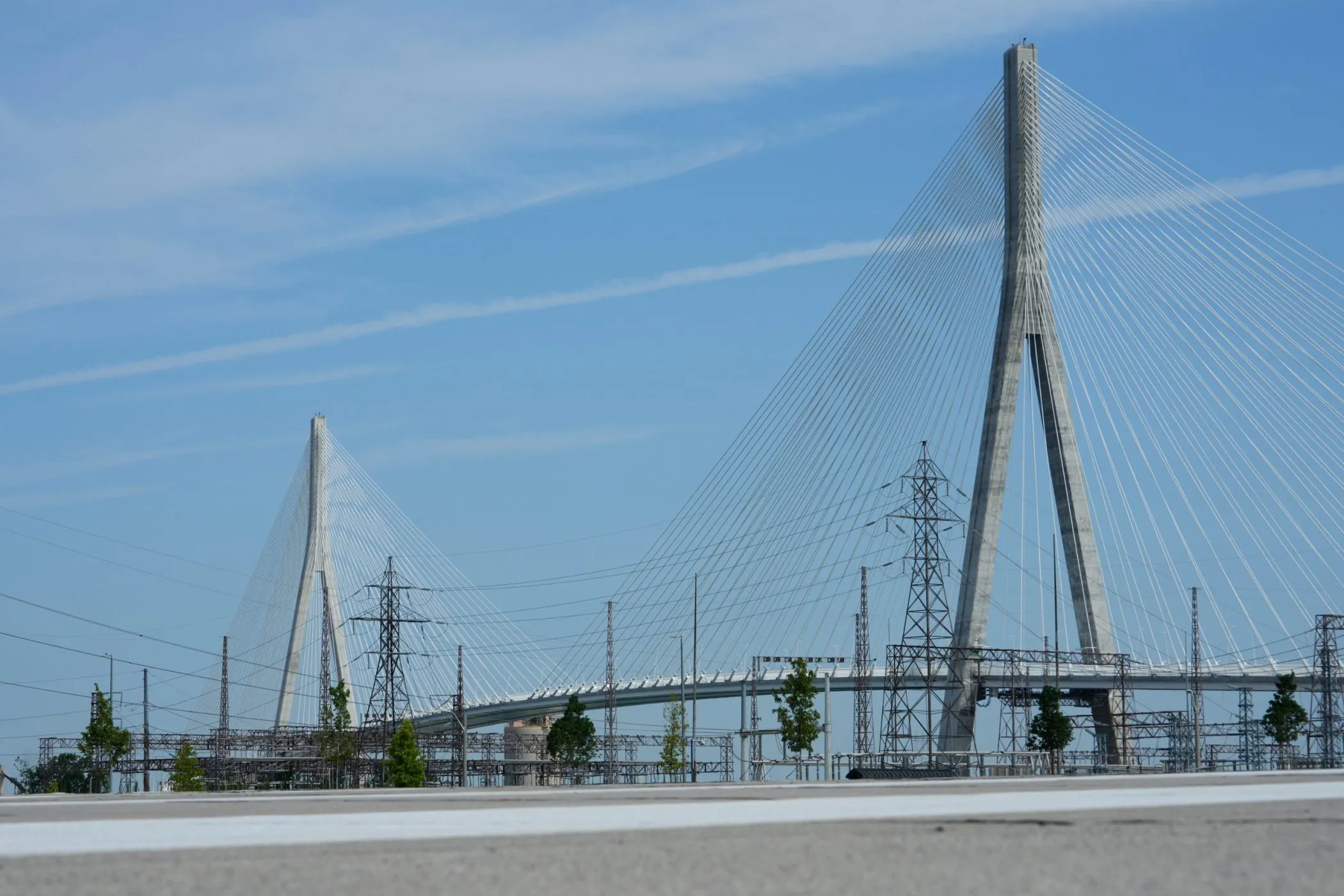
The $4.7 billion span connects Canada and the United States at one of the continent’s busiest crossings. Vehicle traffic is scheduled to begin flowing as early as noon on July 27, according to the Windsor-Detroit Bridge Authority, the Canadian government-chartered corporation that managed the project. Pedestrians and cyclists get access on August 5 at 8 a.m.
A Project Older Than Most of Its Critics
The bridge has been in the works for a remarkably long time, weathering the pandemic, which slowed construction significantly, and repeated trade disputes between Ottawa and Washington.
Michael Belzer, an economics professor at Wayne State University, described the opening as badly overdue in comments to the Detroit Free Press. Efforts to build an additional crossing date back to the late 1990s, he noted, and the cost of that delay has run into the tens of billions of dollars in lost efficiency and economic activity.
That figure captures something easy to overlook. Every hour a truck idles in a backup at the border is fuel burned, driver hours consumed and delivery windows missed across supply chains that stretch deep into both countries.
The Guest List Told Its Own Story
The ceremony took place on a hot, sunny afternoon at the Canadian foot of the bridge, in Windsor’s Sandwich Town neighborhood. Canadian officials filled the podium, many dressed in red and white. Journalists from both countries attended.
American officials did not — and that absence was deliberate.
Days earlier, President Donald Trump threatened to lift tariffs on a broad range of Canadian goods from 25% to 50%, with the increase set to take effect next month. The targeted list ran from wine and cement to hockey sticks. In response, Canadian organizers withdrew their invitations to U.S. representatives.
Speakers included Gregor Robertson, Canada’s minister of housing and infrastructure; Ontario Premier Doug Ford; Windsor Mayor Drew Wilkins; Steve DeWitt of ACS Infrastructure, part of the private-sector consortium Bridging North America; Mark Wiseman, Canada’s ambassador to the United States; and Dr. Murray Howe, son of the hockey legend the bridge honors.
Ford Sets the Tone
Ford appeared in a red hockey jersey bearing a black maple leaf on the front and Howe’s name and number 9 on the back — a costume choice that made his message before he opened his mouth.
He said Team Canada has never been more unified, and pledged that working alongside Prime Minister Mark Carney, he would continue defending Ontario’s interests. The province stands ready to answer any new American tariffs, he said, and will not back down, negotiating instead from the strength of being a leading trading partner.
He closed on a more conciliatory note, arguing that Canadians and Americans both come out ahead when the two countries work together rather than apart.
Trump responded from a distance. Posting on Truth Social during the event, he claimed credit for securing a far better arrangement for the United States and said being disinvited was fine, given that Canada is paying tariffs. He will be in Michigan on July 27 regardless, delivering remarks on the economy at General Motors’ Milford Proving Ground the same day the bridge opens.
What the Bridge Actually Changes
Beyond the politics, the practical case for the crossing is straightforward.
Officials emphasized two benefits. Goods moving between the two countries should reach their destinations faster, and Windsor residents should see relief from the truck traffic and associated pollution that has accumulated around delays at the Ambassador Bridge.
That older crossing is privately owned by the Moroun family, and its position has long shaped regional trade. Belzer framed the new bridge as removing a severe bottleneck while ending a decades-long monopoly over U.S.-Canadian truck traffic that a single family controlled and profited from.
Redundancy matters as well. A border corridor carrying an enormous share of bilateral trade through one privately held span represents a single point of failure. Two crossings mean an accident, closure or maintenance shutdown no longer chokes the entire route.
The Ownership Deal — and Its Rewrite
Canada and Michigan jointly own the Gordie Howe bridge under an agreement reached in 2012 and approved during the Obama administration.
The original terms were unusual. Canada financed construction entirely on its own while sharing ownership, with the expectation that toll revenue would first repay that debt before any profits were divided.
Those terms changed last month. Under a newly negotiated proposed agreement in principle, Canadian and American negotiators settled on an arrangement in which a share of operating profits will fund an economic development fund controlled by the United States. Robertson cautioned that the sums involved are unlikely to be substantial in the early years, since traffic volumes will build gradually rather than arriving all at once.
The renegotiation explains Trump’s claim of an improved deal, and it also explains some of the awkwardness surrounding the ceremony. The bridge is being celebrated as a symbol of partnership at precisely the moment the financial terms of that partnership were reopened under tariff pressure.
Why the Timing Feels Strange
There is an obvious tension in opening a piece of infrastructure designed to move goods more freely during a period when both governments are erecting barriers to those same goods.
Officials on the Canadian side leaned into that contradiction rather than avoiding it, presenting the bridge as evidence that long-term cooperation outlasts short-term friction. Physical infrastructure, the argument goes, has a lifespan measured in generations, while tariff policy changes with elections.
Whether the crossing delivers on its economic promise will depend heavily on what happens to trade policy over the next several years. A bridge built for volume performs poorly if volume collapses.
What to Watch
The immediate markers are simple enough. Whether the July 27 opening holds to schedule. How quickly commercial traffic shifts away from the Ambassador Bridge. Whether the threatened 50% tariffs take effect next month as announced. And how toll revenue tracks against projections that were made in a very different trade environment.
For Windsor and Detroit, the span itself is already real — steel and cable across the Detroit River, finished after nearly thirty years of argument about whether it should exist at all.
Author
-
Lucienne Albrecht is Luxe Chronicle’s wealth and lifestyle editor, celebrated for her elegant perspective on finance, legacy, and global luxury culture. With a flair for blending sophistication with insight, she brings a distinctly feminine voice to the world of high society and wealth.