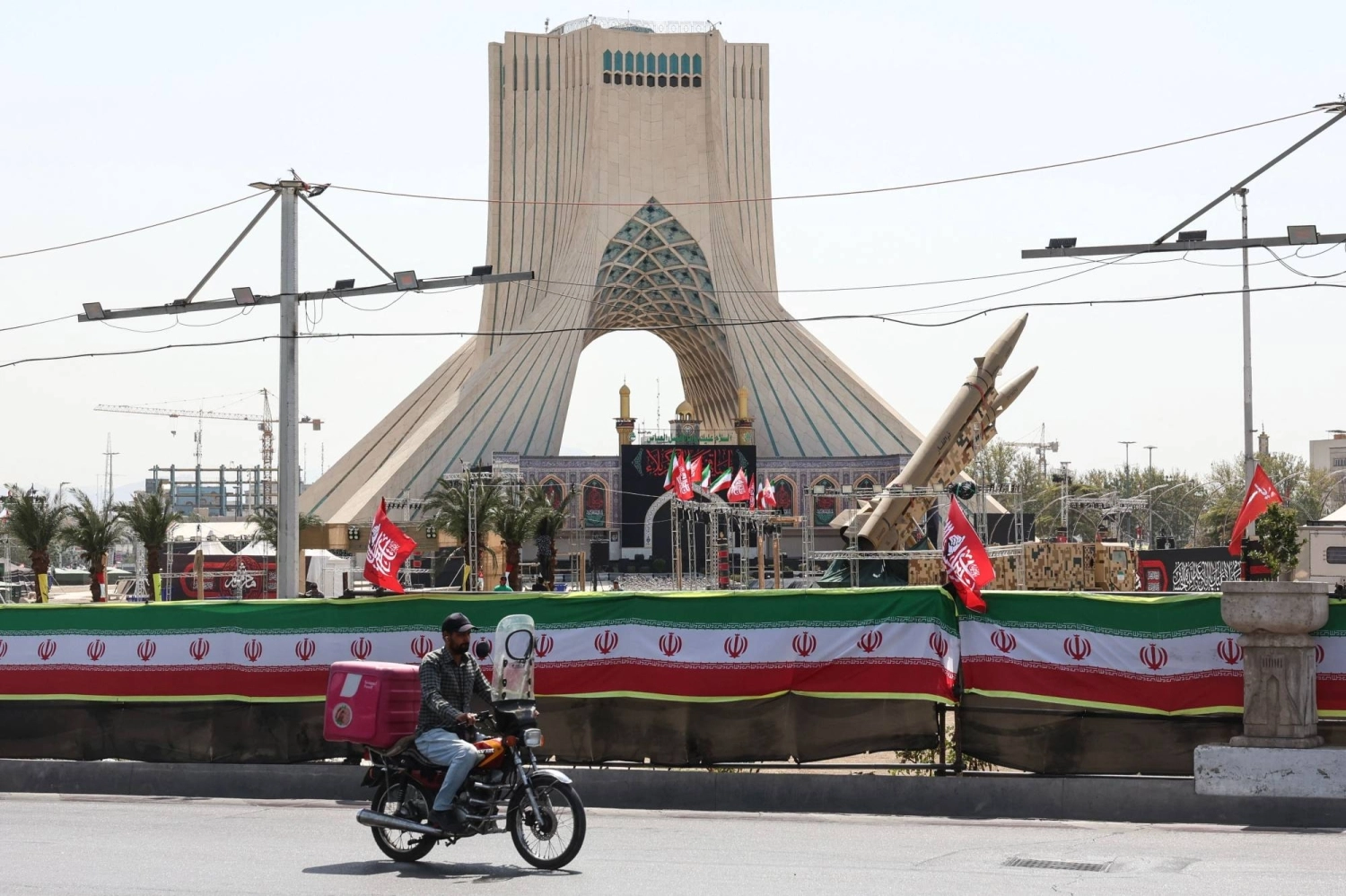
The Iran US war has entered an uneasy lull, and Tehran is using it to make a point about who controls the timing. Iranian officials say Washington is stuck and struggling after five months of fighting it launched under Israeli influence, and that it will inevitably pay for that decision.
For the second consecutive day, American forces have held fire, and Iran has suspended the retaliatory strikes it had been launching across the region after nearly two weeks of intense bombardment. Neither side has called it a ceasefire. Both are treating it as a pause with no agreed terms.
No Request for Talks
Iranian foreign ministry spokesperson Esmaeil Baghaei was direct when asked whether Tehran had sought a return to negotiations with the United States. It has not.
Speaking to reporters in Tehran, he characterised American conduct as something other than war management, describing repeated war crimes and public boasting about them as an attempt to escape a disaster of Washington’s own creation. Those responsible, he said, would face consequences.
The framing matters more than the language. By insisting Iran has not asked for talks, Tehran is presenting the pause as an American climbdown rather than a mutual step back — and positioning itself as the party that decides when the fighting stops.
The Strait Stays Shut
One concrete detail cuts against any suggestion that conditions are normalising.
Baghaei confirmed that Iran and Oman held talks on Friday and Saturday about the Strait of Hormuz, describing useful discussions on how shipping through the waterway might be managed. He was careful to add two qualifications: the strait remains closed, and the negotiations have nothing to do with the United States.
That distinction is deliberate. Oman has long served as a discreet intermediary between Tehran and Washington, and Iran appears keen to prevent these particular conversations from being read as indirect diplomacy with the Americans.
The closure itself remains the single most consequential fact of the war for the rest of the world. The strait carried roughly a fifth of global oil and gas traffic before the conflict, and every week it stays shut compounds pressure on energy markets and shipping insurance far from the battlefield.
A Military Promising Worse
Iran’s army marked the anniversary of Operation Mersad, a major engagement in the final phase of the Iran-Iraq War, with a message aimed squarely at the present.
According to a statement carried by Tasnim news agency, the military described itself as more vigilant than ever and prepared to confront any threat or conspiracy from its enemies. It pledged to continue defending the country’s independence and territorial integrity, and warned that it would answer future aggression more severely than before.
Invoking Mersad is not incidental. That battle is remembered in Iran as a moment when the country repelled an incursion at the end of a long, exhausting war — a comparison the leadership clearly wants drawn now.
The Caspian Complication
The conflict has begun spilling into places that have nothing obvious to do with the Gulf.
Following a deadly Ukrainian attack on an Iranian commercial vessel in the Caspian Sea, both Tehran and Kyiv have escalated their rhetoric. Zeidon Alkinani, founding director of the Arab Perspectives Institute, told Al Jazeera that the two governments hold sharply different readings of the incident and that significant political stakes are attached to each.
One possibility he raised is that President Volodymyr Zelenskyy is supplying the support Donald Trump failed to secure from European governments over the Iran campaign, calculating that it might push Washington toward greater pressure on Moscow.
His warning about where that leads is worth quoting in substance. Further escalation in the Caspian would place Ukraine in direct confrontation with Russia, converting what began as a regional war into a trans-regional conflict that has drawn in both Middle Eastern rivalries and global ones. He compared the pattern to the proxy entanglements of the Cold War.
Zelenskyy Sees an Axis Forming
Zelenskyy himself has been describing the same convergence from the other end.
In an interview with Sky News, the Ukrainian president said Moscow is deepening military coordination not only with Tehran but with North Korea and China. He suggested North Korea could dispatch 30,000 troops to Russia, and that Iran may supply additional missiles.
Asked whether he feared an Iranian attack on Ukraine, he argued the question was already settled. Iran, he said, entered the war at the outset by arming Russia without any provocation from Kyiv, which is why he does not consider Tehran trustworthy. He said Ukraine must do everything possible to avoid opening a new front, while insisting that Iranians and North Koreans have already attacked his country.
Other Fronts Keep Moving
While attention concentrates on Iran, related fronts continued to generate casualties over the weekend.
In Syria, Israeli forces launched a fresh incursion into the Quneitra countryside. Syria’s official SANA news agency reported that several military vehicles entered the village of Western Samdaniyah in the northern part of the province on Sunday, raided a house, detained a civilian and then withdrew. Separately, state-run Alikhbariah TV reported that Israeli forces advanced before dawn toward the villages of Maariyah and Al-Ardah in the Yarmouk Basin area of Daraa province.
The Israeli military offered no immediate comment on either report. Southern Syria has experienced months of recurring incursions involving raids, searches, arrests and the construction of checkpoints.
In Gaza, medical sources told Al Jazeera that at least two Palestinians were killed when Israeli forces opened fire outside aid distribution areas south of Khan Younis. There was no immediate Israeli comment. The deaths occurred despite a ceasefire nominally in effect since October 2025, with the army still controlling roughly 70 percent of the territory.
The West Bank Powder Keg
From Ramallah, Al Jazeera’s Nida Ibrahim reported that some Israeli outlets are warning of an impending explosion in the occupied West Bank, driven by continued impunity for settlers attacking Palestinians.
Rather than restraining settlers, she reported, the army is providing them a protective layer while restricting Palestinian movement — effectively confining residents to their villages as settlers move freely. She described the situation as volatile enough to shift by the minute, with Palestinians feeling entirely without protection.
The pattern she outlined follows a familiar sequence. Settlers position themselves in or near remote villages, establish small caravan outposts, begin attacking nearby residents, then expand. Over time, the Israeli government grants those outposts retroactive recognition as settlements.
The result, in her assessment, is a system built to dispossess Palestinians of land while enabling settlers to expand, displace and terrorise.
Where This Leaves Things
Two days without strikes is not peace, and nobody involved is describing it that way. Iran says it has requested nothing and will decide the terms. Washington has stopped shooting without explaining why. The strait remains closed, the parallel fronts in Syria, Gaza and the West Bank continue producing casualties, and a naval incident in the Caspian has quietly linked the Gulf war to the one in Eastern Europe.
The pause is real. What it means will depend entirely on which side blinks first when it ends.
Author
-
Lucienne Albrecht is Luxe Chronicle’s wealth and lifestyle editor, celebrated for her elegant perspective on finance, legacy, and global luxury culture. With a flair for blending sophistication with insight, she brings a distinctly feminine voice to the world of high society and wealth.