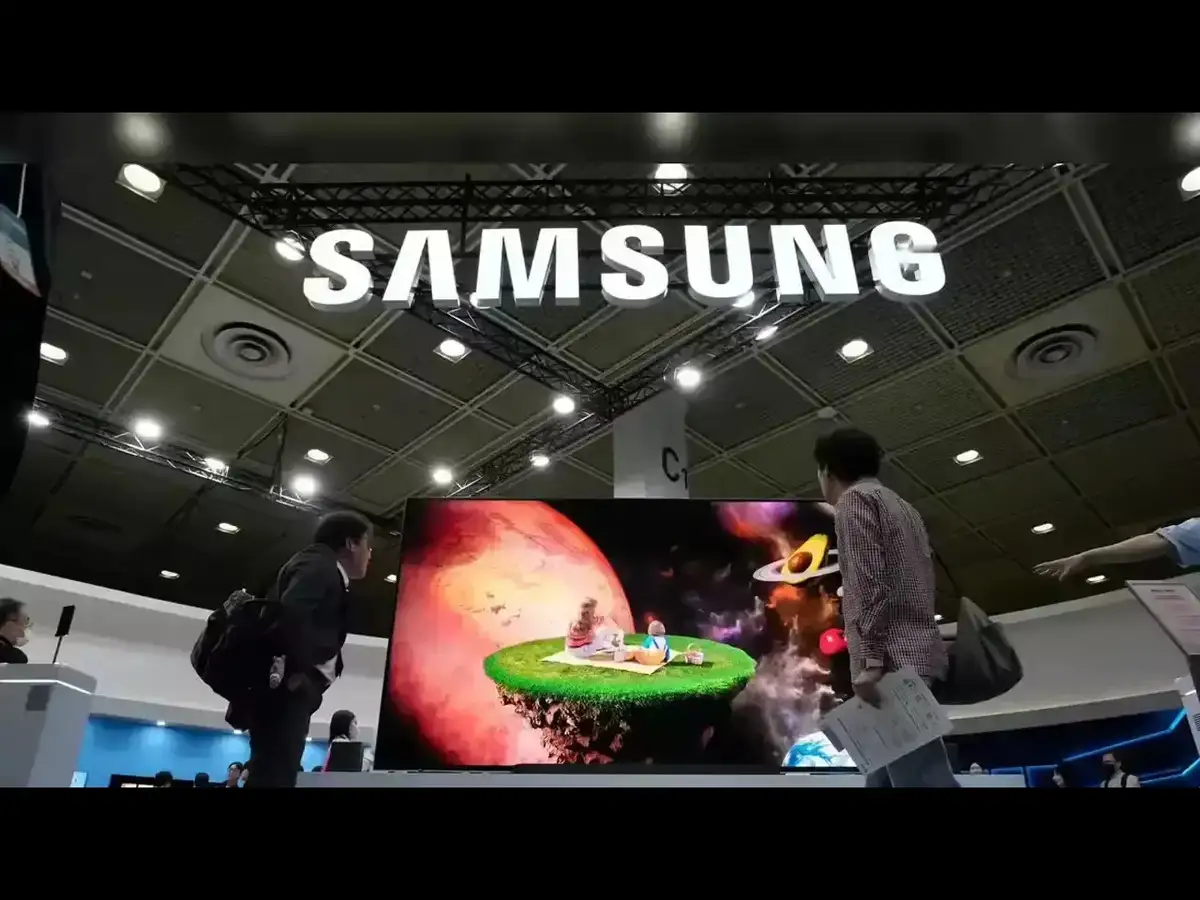
The Samsung strike AI bonus standoff has taken a sudden turn, with the company’s largest union postponing a planned strike after reaching a last-minute tentative pay deal with the South Korean tech giant. While the agreement has temporarily calmed nerves across the global semiconductor industry, the underlying dispute reveals deep tensions inside Samsung — and shines a spotlight on how the AI boom is reshaping the economics of chipmaking.
The union, which represents nearly 48,000 Samsung Electronics workers, confirmed that industrial action originally scheduled for Thursday would be suspended while members vote on the proposed agreement between May 22 and 27. The decision instantly lifted Samsung’s shares by more than 8%, and even drove South Korea’s Kospi index sharply higher.
But the broader question remains: How long will this peace last in one of the world’s most strategically important industries?
What the Dispute Is Really About
At the core of the conflict is a question almost every modern tech company is wrestling with — how to fairly share the windfall created by surging demand for AI chips. Samsung’s plan to distribute bonuses unequally across its workforce ignited a wave of resentment that quickly escalated into one of the most high-stakes labor disputes in the company’s recent history.
According to the union, Samsung planned to give:
- 27,000 employees in memory chip divisions massive bonuses
- 23,000 employees in other chip and electronics units significantly smaller payouts — at least six times lower
The union argued that workers producing less advanced chips — used in products built by companies like Tesla and Nvidia — should not be sidelined despite their important role in Samsung’s broader business.
Why the Stakes Are So High
Samsung isn’t just any company. It’s:
- The largest memory chipmaker in the world by sales
- A major supplier for AI data centers, smartphones, and laptops
- Producer of components used across the global tech industry
- A linchpin of South Korea’s export-driven economy
In fact, the broader Samsung Group accounts for nearly one-fifth of South Korea’s entire economic output. A prolonged strike could send shockwaves through global supply chains, raise prices for consumers, and rattle financial markets dependent on stable AI hardware production.
A Defining Moment in the AI Boom
The dispute comes at an extraordinarily sensitive time. Demand for high-performance AI memory chips has skyrocketed as companies race to build advanced data centers. The result?
- Samsung’s first-quarter operating profit jumped roughly 750% year-over-year
- Its market capitalization recently surpassed $1 trillion
- Competition from SK Hynix and Micron has intensified dramatically
- Global supply chains remain strained as AI infrastructure scales
In this environment, every employee — from chip designers to factory technicians — is increasingly vital. That’s part of why workers are pushing back against bonus structures they see as inequitable.
A Bigger Concern: SK Hynix’s Aggressive Bonus Strategy
A major catalyst for the unrest was a major shift by Samsung’s rival, SK Hynix. Last year, SK Hynix:
- Eliminated its 10-year bonus pay cap
- Offered bonuses more than three times higher than Samsung’s
- Began attracting Samsung employees who switched companies for better pay
Faced with the threat of losing talent, Samsung proposed substantial new bonuses, but only for memory chip workers. According to wage-negotiation transcripts viewed by Reuters:
- Memory chip employees were offered bonuses of 607% of annual salary
- Workers in other divisions were offered bonuses of just 50% to 100%
The huge disparity quickly became the central battleground in the dispute.
Union Demands Beyond a One-Time Bonus
The union wasn’t just upset about the size of the bonuses — it was pushing for systemic changes to Samsung’s compensation framework. Among the demands:
- Eliminate the 50% annual bonus salary cap
- Allocate 15% of annual operating profit to a bonus pool
- Distribute that pool more evenly across departments
- Create a more transparent, performance-linked reward system
These demands reflect long-standing frustration among non-memory-chip workers who feel undervalued despite contributing to the broader Samsung ecosystem.
What Samsung Has Said
Following the announcement of the tentative agreement, Samsung issued a public statement aimed at calming both employees and investors. The company emphasized its commitment to building a healthier labor-management relationship moving forward, signaling a desire to avoid future disruptions.
Samsung also acknowledged the broader economic implications of a strike. Executives previously warned that prolonged labor action could:
- Reduce sales
- Trigger investment outflows
- Lower national tax revenue
- Affect South Korea’s overall economic stability
In other words, this dispute was never just an internal HR issue — it carried wide-reaching consequences.
The Potential Cost of a Strike
Analysts at JP Morgan estimated that an extended walkout could impact Samsung’s operating profit by:
- 21 trillion to 31 trillion won
- Roughly $14 billion to $20 billion in U.S. dollars
That’s a staggering figure even for a company of Samsung’s scale, and it underscores why investors reacted so strongly to news of the tentative agreement.
Court Order Limits Strike Power
Even if the union ultimately rejects the deal, any strike would face significant restrictions. A South Korean court granted Samsung Electronics an injunction designed to protect critical operations. The order requires that:
- Staffing remain at levels needed for safety protection
- Operations continue to prevent facility damage
- Production quality be maintained at normal levels
- The union and its leaders cannot occupy or block company facilities
- Workers cannot be prevented from entering Samsung sites
If the union violates the order, it faces fines of approximately $74,000 per day — adding pressure to settle the dispute peacefully.
A Global Industry on Edge
The Samsung dispute also has broader geopolitical implications. The American Chamber of Commerce in Korea warned that disruptions in strategic industries can quickly ripple beyond a single company or country.
The biggest worry?
- Competing regional manufacturing hubs could benefit at Korea’s expense
- Global tech buyers may diversify production to reduce risk
- AI hardware projects could face slower rollouts
- Reliability concerns may impact Samsung’s pricing power
In a market where geopolitical stability and predictability are deeply valued, even short-term turbulence can lead to long-term consequences.
Why Workers Have Real Leverage
Despite the court restrictions, workers wield significant influence — particularly in a moment when AI infrastructure depends on continuous chip production. With companies like OpenAI, Google, Microsoft, and Meta racing to expand AI capacity, the global market simply cannot afford a Samsung slowdown.
This dynamic puts unprecedented weight behind union demands and forces Samsung’s leadership into compromise faster than they might prefer.
What Happens Next?
The vote scheduled for late May will be the next major moment in the dispute. Workers will decide whether to accept the tentative deal or push for further concessions. The outcome will set the tone for:
- Samsung’s labor relations going forward
- Bonus structures in South Korea’s tech sector
- How global chipmakers respond to talent competition
- Whether more strikes emerge across the semiconductor industry
If the deal passes, Samsung will avoid one of the most damaging labor disruptions in its modern history. If it fails, the company — and the global tech industry — could be in for a turbulent stretch.
The Bigger Picture
The Samsung strike AI bonus battle is more than a corporate squabble. It’s a reflection of how the AI boom is reshaping wages, workforce expectations, and economic power across the tech sector. Workers who feel central to the AI revolution are demanding compensation that matches the value they create.
For Samsung, balancing the demands of memory chip and non-memory workers will be critical to preserving its competitiveness, talent base, and global reputation. For the broader industry, the dispute is a warning — the engineers, technicians, and factory workers powering the AI economy aren’t going to remain quiet while their employers report record profits.
The tentative deal has bought time. But the real test is just beginning.
Author