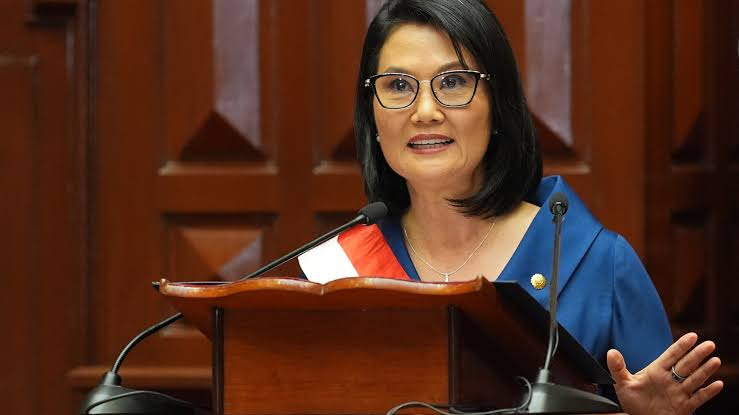
Keiko Fujimori sworn in as Peru’s president on Tuesday, closing out a campaign that ended with fewer than 50,000 votes separating her from defeat. The margin was thin. The symbolism was not — her win slots Peru into a broader conservative realignment sweeping South America.
At 51, and after four attempts at the presidency, Fujimori now leads the country as its ninth head of state in a decade. She heads Peru’s largest political party and inherits a state that has spent ten years cycling through leaders faster than most governments change cabinets.
A Presidency Built on Unusual Political Ground
The instability is worth pausing on. Of the presidents who have held the office over the past decade, only three arrived through a popular vote. The others took power after their predecessors resigned or were removed by Congress amid protests and corruption scandals.
Fujimori enters with a structural advantage none of them had. Her Popular Force party, together with its principal ally Popular Renovation, will control half the Senate once the new legislature is seated. That arithmetic makes a congressional removal attempt substantially harder to mount — the mechanism that has ended so many recent Peruvian presidencies.
Whether that translates into governing capacity or simply survival is the open question.
What She Promised, and What She Announced
Security dominated her campaign, and for reasons voters feel directly. Extortion rackets have spread widely enough to reshape daily commerce in parts of the country.
Her answer is an explicitly hard-line one. She pledged an iron fist approach, borrowing from policies associated with Salvadoran President Nayib Bukele, and committed to building a megaprison modelled on El Salvador’s Cecot facility. She has also proposed allowing judges to conceal their identities while presiding over criminal trials, a measure intended to shield them from retaliation.
On inauguration day she went further than security. Fujimori announced a 15 percent increase in the national minimum wage and said she would restructure social services to address malnutrition in rural communities.
She also said the military will temporarily take the lead on security operations in the areas worst affected by crime, and flagged preparations for the latest El Niño cycle, a warming pattern that regularly brings flooding to Peru’s coastline.
Her stated framing was broader than administration. Managing the state is not the goal, she said. Narrowing the social deficit affecting millions of Peruvians is.
Her economic platform leans on infrastructure, specifically making it easier for government agencies to enter partnerships with private investors.
The Name She Carries
Fujimori’s surname is inseparable from her politics.
Her father, Alberto Fujimori, governed Peru through the 1990s. His record splits sharply depending on who is describing it. He stabilised a collapsing economy and defeated the terror groups that had terrorised the country. He also presided over an authoritarian turn, and was later imprisoned for human rights abuses committed by the Peruvian military under his rule. He received a pardon in December 2023 and died the following September.
That inheritance supplies both her base and her opposition. For supporters, the family name signals order restored. For critics, it signals the cost at which order was purchased.
Protests Outside the Ceremony
The inauguration did not proceed without dissent.
Opposition lawmakers gathered outside parliament in Lima holding photographs of people killed during the anti-government protests of late 2022 and early 2023, which followed the removal of former President Pedro Castillo. Fifty civilians died in that period.
Relatives of the dead have said they do not recognise Fujimori as president and were protesting the ceremony itself.
Opposition leaders are pressing the new government to establish a commission to investigate those deaths. It is an early test with no comfortable answer: agreeing invites scrutiny of security forces she now commands, while refusing hands her critics a grievance with photographic evidence attached.
A Country Split by Geography
The election map tells the story of the divide Fujimori now has to govern across.
She drew strong support in Lima and along the Pacific coast. In the highlands, where Indigenous communities make up a larger share of the population, voters backed left-wing candidate Roberto Sanchez, an ally of Castillo, by wide margins.
Sanchez contested the outcome, alleging irregularities in how votes were tallied at Peruvian consulates abroad. Electoral authorities rejected the complaints.
That geographic split maps onto an economic one. Peru remains among Latin America’s more stable economies, with a central bank that has kept its benchmark rate below 5 percent for years and a government known for restrained public spending. But critics point to a widening gap in living standards between the coast and Andean communities — precisely the fault line the election exposed.
Part of a Regional Pattern
Fujimori’s victory did not happen in isolation.
It arrived alongside wins for Abelardo de la Espriella in Colombia and José Antonio Kast in Chile, marking a decisive shift toward the conservative wing across South America. That is a striking reversal from the era when figures like Hugo Chávez in Venezuela and Brazil’s Luiz Inácio Lula da Silva defined the region’s politics.
Conservatives have now taken seven major presidential elections across Latin America in recent years, most of them since Donald Trump’s January 2025 inauguration in the United States. The drivers have been consistent across very different countries: rising crime, immigration pressure, and economies growing too slowly to satisfy voters.
What Comes Next
Fujimori takes office with a legislative cushion, a mandate measured in tens of thousands of votes, and a list of commitments that will be expensive to keep.
The minimum wage increase and expanded social services require money. The megaprison and military deployments require both money and political durability. And the protests outside her swearing-in are a reminder that roughly half the electorate did not choose her.
Peru has spent a decade proving that winning the presidency and holding it are separate accomplishments. Fujimori has managed the first.
Author
-
Lucienne Albrecht is Luxe Chronicle’s wealth and lifestyle editor, celebrated for her elegant perspective on finance, legacy, and global luxury culture. With a flair for blending sophistication with insight, she brings a distinctly feminine voice to the world of high society and wealth.