An Agreement Both Sides Describe Differently: Inside the Gaza Disarmament Announcement
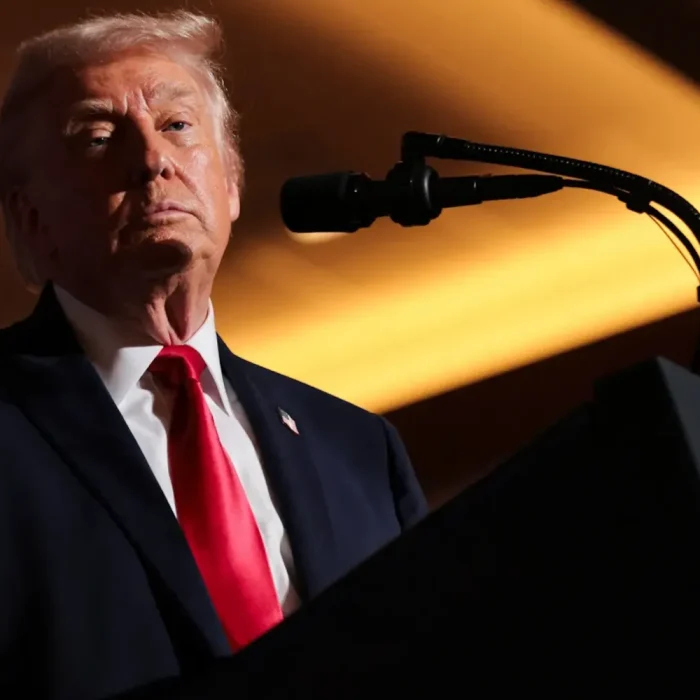
President Donald Trump announced Thursday evening that an agreement has been reached for the complete disarmament of Hamas and all other armed groups in Gaza, calling it a historic and monumental step toward lasting peace and security.
Within hours, a senior Hamas negotiator described a sequence of events that does not match the president’s description, an Israeli diplomatic source said the document does not satisfy Israel’s requirements, and a Hamas official characterised the text as a draft.
That gap is the story.
What Was Announced
Writing on social media, Trump said the Board of Peace — the international body he established to oversee the Gaza ceasefire, which he chairs — had secured the agreement.
He described implementation in carefully structured phases. As disarmament is completed, Israeli forces would withdraw, and an International Stabilization Force would work alongside a new Palestinian police force to take responsibility for security. He said Gaza would come under a new Palestinian government working with the Board of Peace, while Israel would gain the security it deserves, with the territory no longer used as a base for attacks.
The Board of Peace posted afterward that Hamas had for the first time officially committed to an actionable plan for relinquishing all its weapons, to be followed by Israeli withdrawal.
The announcement arrives roughly nine months after a US-brokered ceasefire took effect on October 10, 2025. Negotiations had largely deadlocked over the second phase, which covers disarmament and reconstruction.
What the Document Reportedly Contains
The text under discussion has been described as a 15-point document, produced during talks in Cairo where Hamas leaders have been meeting mediators from Egypt, Qatar and Turkey since late last week.
According to a copy obtained by Al Jazeera, the agreement stipulates that a precise disarmament roadmap must be prepared within 14 days, with possible extensions subject to approval by an international verification body and the consent of all parties.
In other words, the document schedules the writing of a plan rather than constituting the plan itself.
The Timelines
US and Board of Peace officials briefed reporters anonymously under White House ground rules and offered an optimistic assessment, though they could not provide specific timelines for the disarmament of Hamas or of other groups such as Palestinian Islamic Jihad.
What they did specify:
- Within about two weeks, the Gaza police force is to turn over weapons to the technocratic administration backed by the Board of Peace
- That step does not include the vast majority of Hamas fighters, and heavy weaponry is excluded from it
- The surrender of heavy weapons and decommissioning of tunnels and other infrastructure would follow later, over a process estimated at 200 to 350 days
Roughly seven to eight months, in other words, for the part that actually matters — and only after a roadmap that has yet to be written.
The Sequencing Problem
The clearest contradiction concerns order of operations.
Trump described a phased process in which Israeli withdrawal tracks the progress of disarmament. Ghazi Hamad, a member of the Hamas negotiating delegation, told Al Jazeera something different: that no steps regarding disarmament would be taken before Israel withdraws from Gaza, and that the process would be carried out without Israeli involvement.
He also said the negotiations had been difficult, that the delegation sought the best formula achievable, and that Hamas would not implement any part of the agreement if Israeli forces failed to meet their obligations.
US and Board of Peace officials said implementation would proceed through reciprocal, independently verified steps, while acknowledging that the timetable for Israeli withdrawal is still being finalised.
Israel’s Position
Israel has not confirmed the agreement. Its UN Mission said it had no immediate comment.
Earlier Thursday, a diplomatic source said Israel demands complete disarmament — including the removal of weapons from Gaza and full demilitarisation of the territory — as a precondition for any withdrawal process, and that the document does not adequately address those demands. Israel conveyed its objections to former British prime minister Tony Blair, who serves as an envoy.
A US official said Israel had been consulted at every stage and is not being asked to do more than it already committed to under Trump’s 20-point plan, which involves withdrawing forces and ending airstrikes. The same official said Trump would be very disappointed if Israel did not adhere to the agreement.
Trump and Prime Minister Benjamin Netanyahu met at the White House on Tuesday. Neither said much publicly about what was discussed.
Why Disarmament Is So Hard
Hamas had previously insisted on completing the ceasefire’s first phase before discussing its weapons. Its founding charter calls for armed resistance against Israel, and its arsenal — rockets, anti-tank missiles, explosives — is central to its identity as an organisation.
There has been movement. Earlier this month the group announced it had dissolved its government in Gaza and was preparing to transfer authority to a UN-backed technical committee.
A US official also described Iran as a wildcard, saying Tehran had advised Hamas against accepting a deal but is not positioned to offer much support given its own conflict with the United States.
The Conditions on the Ground
The war began with the Hamas-led attack on southern Israel on October 7, 2023, which killed around 1,200 people and resulted in 251 people being taken hostage.
Gaza’s Health Ministry says more than 73,000 Palestinians have been killed since, including nearly 1,200 since the ceasefire took effect. Those figures come from a ministry under Hamas-run administration and are not independently verified, though international organisations have generally treated them as broadly indicative.
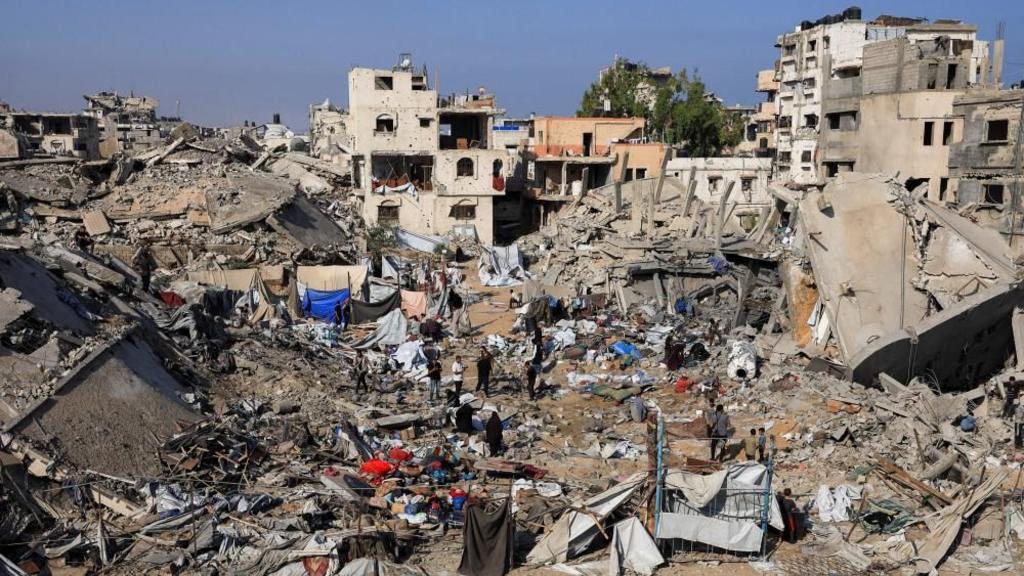
Israel’s military currently controls more than half of Gaza. Most of the territory’s roughly two million residents remain in tents or makeshift shelters amid heavily damaged neighbourhoods. Aid is entering in significant quantities, but conditions remain severe.
Israeli strikes on Thursday killed at least six Palestinians, including two children, according to medics.
What Would Have to Happen
For this announcement to become something more than an announcement, several things must occur in sequence:
- A detailed disarmament roadmap must be drafted within about two weeks
- An international verification body must be stood up and accepted by all parties
- The sequencing dispute between disarmament-first and withdrawal-first must be resolved
- Israel must accept terms it has already indicated fall short of its requirements
- Heavy weapons and tunnel infrastructure must be surrendered over roughly seven to eight months
- An international force and a new Palestinian police service must be assembled and deployed
Each of those has failed to materialise at some earlier point in this process.
None of which makes the announcement meaningless. A written commitment from Hamas addressing weapons is further than previous rounds reached, and the regional involvement described by US officials — Jordan, Saudi Arabia, Qatar, the Emirates and others — suggests broader backing than earlier attempts.
But an agreement that the two principal parties describe in incompatible terms is, at this stage, a framework for continued negotiation rather than a settlement.
Author
-
Lucienne Albrecht is Luxe Chronicle’s wealth and lifestyle editor, celebrated for her elegant perspective on finance, legacy, and global luxury culture. With a flair for blending sophistication with insight, she brings a distinctly feminine voice to the world of high society and wealth.