The Europe drought river levels crisis has escalated to the point where the Romanian navy is detonating explosives underwater to keep a nuclear plant running. That is not a metaphor for economic strain. It is a literal description of what happened this week.
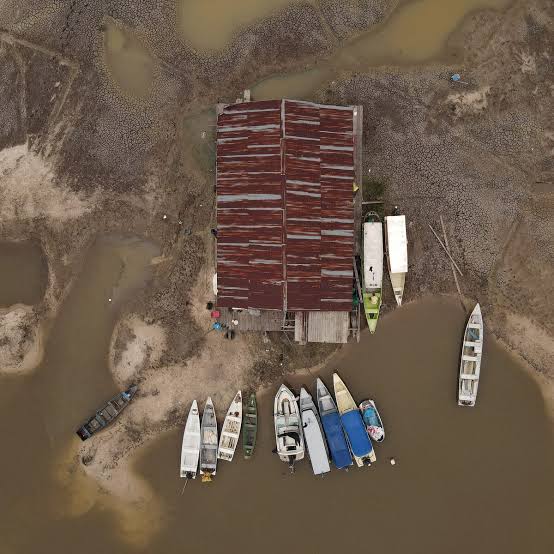
Across the continent, two of Europe’s most important waterways have dropped low enough to disrupt electricity generation, halt cargo movement, and shave measurable amounts off national growth figures.
Blowing Up Riverbeds to Save a Reactor
Romania recently shut down its only operating nuclear reactor cooled by the Danube, a first for the country.
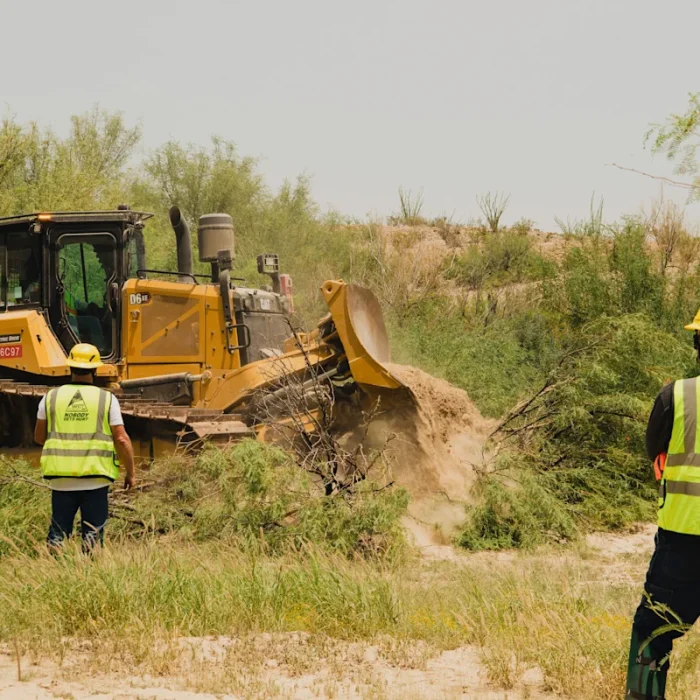
To restore adequate flow toward the cooling systems at the Cernavoda Nuclear Power Plant, Bucharest deployed naval forces to conduct controlled underwater detonations. Images published Monday showed the navy blasting rock formations near Izvoarele village in an effort to redirect water volume.
Romania is not alone in this predicament. Low Danube levels have threatened closure of Hungary’s Paks nuclear facility, which supplies roughly 40% of the country’s electricity, while Serbia has been forced to reduce hydropower output.
The Rhine Hits Its Lowest Point Since 1880
Germany faces a parallel crisis on the Rhine, which runs through the industrial core of the European economy.
At Kaub, a critical bottleneck for vessels heading toward southern Germany and Switzerland, the water level fell to 24 centimeters on Monday and Tuesday. That is the lowest reading since record-keeping began in 1880, according to official data compiled by ETH Zurich, and forecasts pointed toward further declines by week’s end.
For context, the critical navigation threshold at Kaub sits at 78 centimeters. Below that mark, transport does not stop entirely, but barges must carry substantially reduced loads. Freight costs climb accordingly, and low-water surcharges rise sharply.
The practical effect is that moving the same volume of goods now requires more trips, more fuel, and considerably more money.
The Ripple Effects Beyond the Water
Liz Saccoccia, water security lead at the World Resources Institute, described the problem as extending well past the rivers themselves.
She told CNBC by email that major waterways like the Rhine and Danube function simultaneously as trade corridors and as water sources for industry and power generation, meaning falling levels produce consequences across multiple sectors at once.
That is already visible. Nuclear facilities in Hungary, Romania, and France, along with hydropower operations in Serbia, have reduced electricity output because insufficient water is available for cooling or turbine operation. Saccoccia noted this raises the risk of blackouts and forces expensive electricity imports.
Along the Danube specifically, farmers have been unable to ship crops, and cruise vessels cannot reach ports including Budapest.
Her broader point is that these represent early indicators of how unreliable water supply propagates through an economy, touching trade, energy security, supply chains, and local businesses.
Putting Numbers to the Damage
Stefan Kooths, professor of economics at the Kiel Institute for the World Economy, estimated that low Rhine levels alone could reduce German GDP by as much as 0.2 percentage points in the third quarter.
He told CNBC that water levels appear unlikely to recover above the critical threshold in early August, meaning transport capacity will remain constrained through the coming month. He placed the loss in value added at roughly 1 to 2 billion euros, or between $1.15 billion and $2.3 billion, for the quarter.
Against Germany’s current growth trajectory, that is a significant bite. The economy expanded 0.2% in the second quarter following an upwardly revised 0.4% increase in the first.
As Felix Schmidt, senior economist at Berenberg, framed it, growing 0.1% instead of 0.2% means losing half the growth.
Businesses Saw It Coming
Schmidt argued that German companies were not blindsided, because recurring low-water episodes have become an expected feature of the climate landscape rather than an anomaly.
Firms have adapted in two main ways: building larger inventories in advance, and shifting some freight to rail and road transport.
Neither solution is cheap. Schmidt acknowledged that freight rates are currently going through the roof, which compounds existing inflationary pressure.
One Symptom Among Many
Schmidt was careful to place the river situation within a wider pattern of climate-driven economic disruption.
He pointed to a recent heat wave affecting Germany and much of northern Europe, which reduces worker productivity and damages infrastructure directly. He cited energy supply disruptions including nuclear shutdowns in Hungary, France, and Switzerland. He also referenced the wildfires currently burning across southern Europe.
His conclusion was that the effects are arriving through many channels simultaneously rather than through any single mechanism.
The Underlying Scarcity Problem
Beneath the immediate crisis sits a longer-term structural issue.
Roughly 30% of southern Europe’s population lives in areas experiencing permanent water stress, meaning demand routinely exceeds available supply. That baseline condition makes each drought year more damaging than it would otherwise be, because there is no reserve to draw down.
What makes this summer notable is not that rivers fell, but that they fell far enough to force a nuclear shutdown, naval demolition work, and record-low readings on gauges that have been measured for nearly 150 years.
Whether that becomes a recurring headline or an outlier depends largely on precipitation patterns that no government can negotiate with.
Author
-
Lucienne Albrecht is Luxe Chronicle’s wealth and lifestyle editor, celebrated for her elegant perspective on finance, legacy, and global luxury culture. With a flair for blending sophistication with insight, she brings a distinctly feminine voice to the world of high society and wealth.