Confederate school names are once again headed for removal in a rural Virginia county, after a federal judge ruled that putting them back on two public school buildings amounted to unlawful discrimination against Black students.
The decision, filed Thursday in the U.S. District Court for the Western District of Virginia, hands the Virginia NAACP a significant win in a legal fight that began more than two years ago and traces its roots back to the racial justice protests of 2020.
What the Court Decided
Judge Michael F. Urbanski found that the Shenandoah County school board crossed a constitutional line when it voted to restore the names of Confederate officers to a high school and an elementary school. In his view, the move breached the equal protection clause of the 14th Amendment, which bars racial discrimination by institutions funded and operated by the state.
The court also concluded that the board’s action ran afoul of the Equal Educational Opportunities Act, a federal statute designed to guarantee students fair access to schooling regardless of race.
Rather than allowing the names to stand while the county reconsiders, Urbanski instructed the board to choose replacements on a racially neutral basis and to do so without delay.
The Reasoning Behind the Ruling
Central to the opinion is the idea that these names are not neutral pieces of local heritage. Urbanski described them as remnants of an era when Shenandoah County ran separate schools for Black and white children, and he noted that the board understood exactly what that history carried when it voted.
He drew a sharp distinction between two very different situations:
- A community that simply never got around to removing an old name or symbol
- A community that deliberately reaches back and reinstalls one
The second, he argued, is considerably harder to defend. Choosing to restore a name is an affirmative act, not an oversight.
The judge also separated schools from other kinds of public memorials. Statues and monuments occupy public space that adults can choose to visit or avoid. A school is where children spend the bulk of their formative years, and Urbanski wrote that students are entitled to learn in surroundings free from the leftovers of racial segregation.
Where the Case Began
The dispute dates to June 2024, when the Virginia NAACP filed suit on behalf of six students and their families.
Weeks earlier, the school board had voted 5-1 to undo a decision made by a previous board in 2020. That earlier vote, taken while demonstrations against racial injustice were unfolding across the country, had removed Confederate references from both schools.
The 2024 reversal restored:
- Stonewall Jackson High School, which had been renamed Mountain View High School
- Ashby-Lee Elementary, which had been renamed Honey Run Elementary
The elementary school title pairs Robert E. Lee with Turner Ashby, a cavalry commander who fought for the Confederacy.
The Argument Made by Families
In its complaint, the NAACP stressed how small the affected group is. Black students account for under 3 percent of enrollment across the district, which meant a handful of children would carry the weight of the decision every school day.
The organization argued that these students were effectively forced to identify with an armed defense of slavery, and pointed out that Confederate imagery continues to serve as a rallying symbol within modern white supremacist circles. Attending a school bearing such a name, the suit contended, is not a passive experience but a compelled association.
Reactions to the Decision
The Rev. Cozy Bailey, who leads the NAACP Virginia State Conference, called the outcome a clear win for young people. He said that honoring Confederate figures inside Virginia schools has always been bound up with a longer record of racial exclusion, and that the board’s 2024 vote cannot be explained by anything other than race.
Kaitlin Banner, deputy legal director at the Washington Lawyers’ Committee for Civil Rights and Urban Affairs, which represented the NAACP, welcomed the court’s recognition that names of this kind cause tangible harm that falls unevenly along racial lines.
Jim Guynn, the lawyer representing Shenandoah County, could not immediately be reached for a response.
How the Board Defended Itself
Members who supported bringing the Confederate names back framed the vote as an act of responsiveness rather than hostility. They maintained that the community wanted the original names restored and that they were simply carrying out that wish.
They also raised a procedural complaint, arguing that the board serving in 2020 had brushed aside residents’ views and moved too quickly, without giving the public a proper hearing before stripping the names away.
A Broader National Backdrop
The Shenandoah County case is unfolding at a moment when the country is revisiting decisions made in 2020 on a much larger scale.
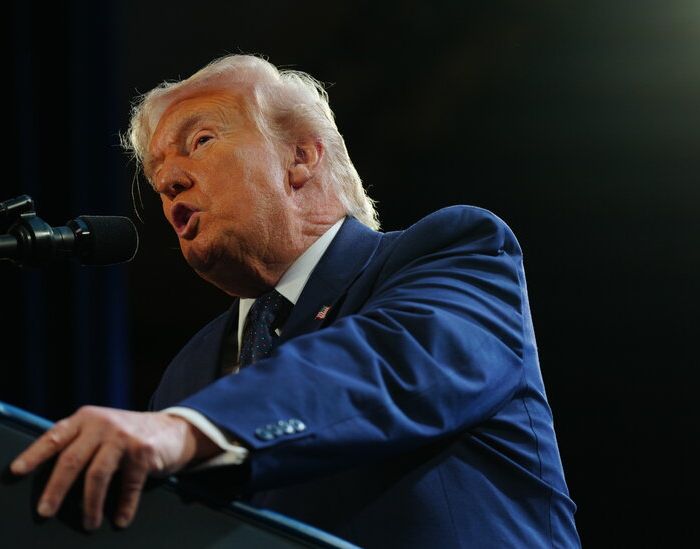
During President Donald Trump’s second term, several Confederate statues taken down during that period have been put back in place. The administration has also pushed to shape how American history is told in Smithsonian exhibitions, at monuments managed by the National Park Service, and in school curricula.
Seen in that light, the ruling runs against a prevailing current. It signals that while political majorities may shift and public sentiment may swing, courts can still treat the classroom as a distinct space with its own constitutional obligations.
What Happens Next
The board now faces the task of selecting two new names, and the judge’s language leaves little room for delay or half-measures. Whether Shenandoah County appeals remains an open question, but for the moment the district is required to begin the renaming process again, this time under judicial supervision.
Author
-
Lucienne Albrecht is Luxe Chronicle’s wealth and lifestyle editor, celebrated for her elegant perspective on finance, legacy, and global luxury culture. With a flair for blending sophistication with insight, she brings a distinctly feminine voice to the world of high society and wealth.