Greg Abel Opens the Vault: Berkshire’s Cash Pile Shrinks for the First Time in Years
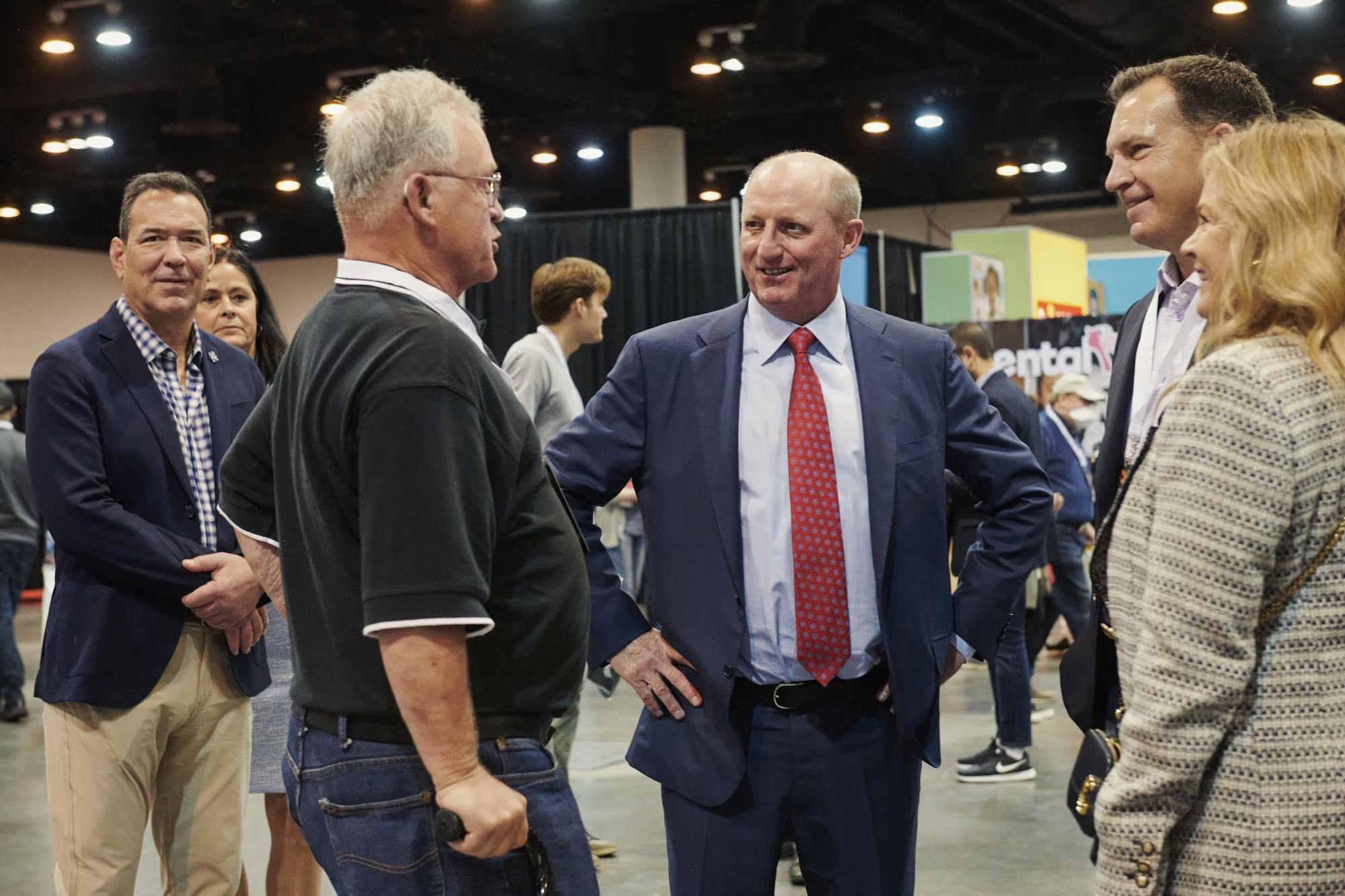
The Berkshire Hathaway cash pile has finally started moving in the other direction, and the shift says something meaningful about how Greg Abel intends to run the company.
Abel, who took over as chief executive at the start of this year, oversaw a decline in the conglomerate’s holdings of cash and Treasury bills from 380 billion dollars at the end of March to 365 billion by the end of June, excluding Treasury payables.
For a company that spent the previous two years accumulating cash faster than it could deploy it, that reversal counts as news.
A Buying Quarter After a Long Drought
The numbers behind the drawdown are striking.
Berkshire purchased 23.5 billion dollars in stocks during the quarter while selling just 3.7 billion, producing a net outlay of nearly 20 billion.
That ends a remarkable streak. Berkshire had been a net seller of equities for 14 consecutive quarters. The last time it committed more money to stocks on a net basis was the first quarter of 2022.
Abel also authorised 4.6 billion dollars in repurchases of Berkshire’s own shares, the company’s largest buyback quarter since 2021.
Why the Buyback Matters
Repurchases carry a specific signal at Berkshire, because the company only buys its own stock when management considers it undervalued.
Macrae Sykes, a portfolio manager at Gabelli Funds, said in emailed comments that he welcomed the size of the buyback. In his reading, it indicates that Abel and Warren Buffett, who remains chairman, once again view Berkshire shares as offering good value, and that they are finding avenues to put capital to work.
Both parts of that observation matter. Buybacks of this scale suggest conviction about price, and the broader spending pattern suggests the opportunity drought may be easing.
The Operating Business Delivered
Beneath the capital allocation story, the underlying businesses had a strong quarter.
The parent company of Geico, Dairy Queen and Squishmallows owner Jazwares posted a 16 percent year-on-year increase in operating income, reaching 13 billion dollars.
The composition was mixed. Insurance profits declined, but that weakness was more than offset by growth at BNSF Railway, Berkshire Hathaway Energy, and the manufacturing, service and retailing division.
A foreign-currency exchange gain of nearly 1.3 billion dollars added further support.
The spread of contributors illustrates why Berkshire’s structure has proven so durable. When one leg weakens, others typically compensate.
An Acquisition Just After the Bell
The buying did not stop when the quarter closed.
On 24 July, Berkshire completed its acquisition of Taylor Morrison Home Corporation for 8.5 billion dollars in cash.
That purchase falls outside the second-quarter figures, meaning the cash position has continued to decline since the reported date. It also represents exactly the kind of transaction Berkshire watchers had been waiting for: a whole-company acquisition in a cyclical industry, paid for in cash.
How This Differs From the Buffett Years
The contrast with recent history is what makes the quarter notable.
Berkshire’s cash position roughly doubled across Buffett’s final two years as chief executive. That was not by design. The famously price-conscious investor simply could not find bargains in a market running hot across both public equities and private businesses.
Cash accumulated because nothing met the standard.
Abel now appears to be finding things that do, whether because valuations have shifted, because his threshold differs slightly, or because opportunities have surfaced that suit Berkshire’s scale.
The Philosophy Remains Stated
Abel has been careful to position himself as a continuation rather than a departure.
In his first letter to shareholders in February, he affirmed the disciplined capital allocation approach that defined his predecessor, writing that Berkshire pursues opportunities where the reward matches the risk.
He expressed pride in what he called the company’s nimble culture, which allows it to make considered, thoughtful investments quickly.
He also pushed back directly on a recurring criticism. Many times in Berkshire’s history, he wrote, observers have suggested that a substantial cash position signals a retreat from investing. It does not. The company continues evaluating many opportunities and will remain patient and disciplined in pursuing the right ones on behalf of its owners.
This quarter reads as evidence for that argument. The cash was never idle by preference. It was waiting.
What to Watch From Here
Several questions follow naturally from these results.
Whether the pace of deployment continues into the second half, or whether this quarter proves an outlier driven by a handful of specific opportunities.
What Berkshire actually bought. Detailed portfolio disclosures will reveal which positions absorbed the 23.5 billion dollars, and those choices will offer the clearest read yet on Abel’s investing instincts.
Whether further whole-company acquisitions follow Taylor Morrison, which would signal a more acquisitive posture than Berkshire has shown recently.
And whether the buyback pace holds, which would indicate management continues to see its own shares as attractively priced.
The Larger Point
Succession at a company built so thoroughly around one individual was always going to be scrutinised quarter by quarter.
The first meaningful data point suggests Abel is not sitting on the inheritance. He is spending it, deliberately, on both external assets and Berkshire’s own stock, while publicly committing to the framework that made the cash pile possible in the first place.
Whether the purchases prove wise will take years to judge. That he is making them at all is the headline for now.
Author
-
Lucienne Albrecht is Luxe Chronicle’s wealth and lifestyle editor, celebrated for her elegant perspective on finance, legacy, and global luxury culture. With a flair for blending sophistication with insight, she brings a distinctly feminine voice to the world of high society and wealth.