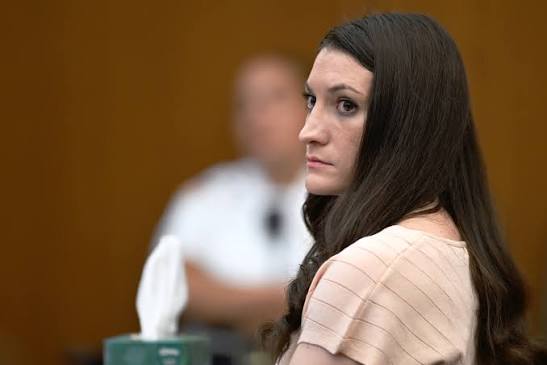
Lindsay Clancy trial testimony on Thursday shifted from the emotional weight of medical evidence to something colder and more clinical: the contents of a phone. Jurors spent the day hearing what forensic investigators recovered from Clancy’s devices, including a search query typed four days before her three children died.
The Search That Framed the Day
State police investigator Timothy Chiappini testified that a search asking whether a sociopath can be treated was entered on Clancy’s phone on 20 January 2023.
The children died on 24 January at the family home in Duxbury, a suburb south of Boston.
Chiappini and state police Sergeant Kyle Pavao both took the stand to describe the forensic examinations they performed — on Clancy’s phone and on a tablet belonging to her ex-husband, Patrick Clancy.
What Is and Is Not in Dispute
The structure of this trial is unusual, and understanding it is essential to reading the evidence.
Clancy has entered not guilty pleas to three counts of murder in the deaths of five-year-old Cora, three-year-old Dawson, and infant Callan.
Her defence team does not challenge that she caused their deaths. Their argument is narrower and more specific: that she should not bear criminal responsibility because she was experiencing postpartum psychosis at the time.
That framing changes what the evidence is for. Digital records here are not being offered to establish who was responsible. They are being offered to illuminate a state of mind — and both sides will read the same notes very differently.
Her Own Words, Recovered From the Device
Prosecutors presented notes written on Clancy’s phone in the months preceding the deaths. They document a woman describing exhaustion, guilt and mounting anxiety about her own adequacy as a parent.
In an October 2022 entry, she wrote about struggling because she wanted to raise each of her children the way she had raised her first, and finding it depressing that she could not. She identified that gap as the root of the family’s problems, said the sense of failing all three saddened her, and closed by saying she would try her best.
Another note captured her frustration over compromises made with her newborn. She wrote that she hated him having to put himself to sleep and felt sadness at having stopped breastfeeding, while acknowledging she believed those decisions were probably right.
A further entry moved into more explicit territory about her own mental health. She wrote that she still did not want Callan to be her last child but had much to work through first. She described being undecided about starting new medication for anxiety and depression, and articulated a simple wish — to feel happy, to be relaxed enough to care for her children, to unwind with her husband once they were asleep, and to get eight hours of deep sleep.
The Weight of Information
One note stands out for what it says about the environment surrounding modern parenting.
Clancy wrote that she was terrified something would happen to her children or that she would do something to damage their development. She attributed this to the sheer saturation of parenting content, describing a generation flooded with guidance about every aspect of raising children and warnings about what goes wrong at each misstep, layered over anxiety about the state of the world.
She called the effect insane, and said that for five years she had filled her mind with parenting material, concluding plainly that it was unhealthy.
For the defence, notes like this establish a documented trajectory of deteriorating psychological health. For the prosecution, the same material can be read as awareness and self-reflection — capacity, rather than its absence.
A Difficult Preceding Day
Thursday’s forensic testimony followed a session on Wednesday that tested everyone in the courtroom.
Clancy broke down in sobs repeatedly as medical examiners described the autopsies performed on her children. Doctors Renee Stonebridge and Barbara Olson gave evidence about injuries to Cora and Dawson.
Judge William Sullivan excused the jury from the room at several points during that testimony.
He also addressed jurors directly about their obligation. Some evidence presented at trial, he told them, produces an emotional response — and the law requires them to hold that reaction apart from the informational value and weight the evidence carries.
Why That Instruction Matters Here
Judicial instructions about separating emotion from evidence are standard, but they carry unusual force in a case built on mental state.
A jury deciding criminal responsibility must engage with clinical questions about psychosis, perception and volition. Those questions are technical. The underlying facts are devastating. The instruction acknowledges the tension without pretending it can be dissolved.
What Comes Next
The prosecution is expected to conclude its case shortly.
When it does, the defence will begin presenting its own evidence — and the trial’s centre of gravity will move fully onto the psychiatric question that has always been its actual subject.
Jurors will eventually be asked to decide something no forensic report can settle: not what happened, but what Clancy was capable of understanding when it did.
Author
-
Lucienne Albrecht is Luxe Chronicle’s wealth and lifestyle editor, celebrated for her elegant perspective on finance, legacy, and global luxury culture. With a flair for blending sophistication with insight, she brings a distinctly feminine voice to the world of high society and wealth.