NYC rent freeze made history this week as New York’s Rent Guidelines Board voted to halt rent increases on both one-year and two-year leases for roughly one million rent-regulated apartments. It marks the first time the board has ever frozen two-year leases, a decision that delivers immediate relief to tenants while igniting fierce backlash from property owners.
A Landmark Vote in East Harlem
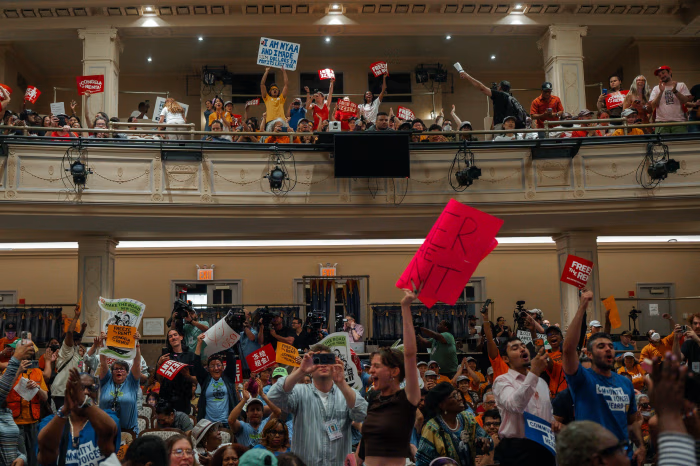
The board approved the freeze by a 7-1 margin on Thursday night. Inside El Museo del Barrio in East Harlem, the announcement was met with cheers, tears, and a wave of relief from tenants who had spent years organizing for this moment.
For many renters, the vote felt like a turning point. One tenant described the city as finally belonging to the working people who keep it running, rather than serving as a playground for the wealthy. After years of struggling to stretch their paychecks, supporters celebrated the outcome as a hard-won victory.
The decision is far from routine. Before Thursday, the board had frozen one-year leases only three times in its history, and it had never once frozen two-year leases. That makes this vote a genuine first.
Fulfilling a Signature Campaign Promise
The freeze delivers on one of Mayor Zohran Mamdani’s central campaign pledges. The path to this outcome began after he appointed half of the nine-member board, reshaping its composition and, critics argue, its priorities.
Mamdani framed the result as a major win for ordinary New Yorkers, emphasizing that the independent board reviewed the data and listened to residents before landing on both a one-year freeze and the unprecedented two-year freeze. To him, this is exactly the kind of relief working families deserve.
Tenant advocates echoed that sentiment. Organizers described the moment as the start of a new era of tenant power, pointing to the hundreds who testified in person and thousands more who weighed in online. For them, the balance of influence in the city has shifted decisively toward renters.
Landlords Sound the Alarm
Property owners saw the vote very differently. Many landlords argued that a rent freeze ignores the financial pressures squeezing their operations, including rising costs for fuel, oil, and insurance. Their concern is that frozen revenue will make it harder to keep buildings properly maintained.
The frustration was personal for some. One landlord warned that the freeze would force difficult cutbacks, including layoffs of building staff such as superintendents. He stressed that running rental housing is a business, not a charity, and that costs do not disappear simply because rents stay flat.
Industry groups were equally blunt:
- The president of the Real Estate Board of New York warned that while the vote may be politically popular, it could deepen the city’s housing crisis.
- The CEO of the New York Apartment Association argued that the freeze would damage living conditions for hundreds of thousands of New Yorkers by undercutting building upkeep.
Drama Behind the Scenes
Although the outcome felt all but certain heading into the night, it did not unfold without controversy. Hours before the vote, a board member appointed to represent landlords abruptly resigned.
In her resignation letter, she claimed the board had stopped functioning as a fact-finding body and accused it of being built to deliver a predetermined result. According to her, the hearings, reports, public comments, and data had become little more than theater, with the conclusion fixed from the start.
Mamdani pushed back on that characterization. He maintained that the board operates independently and that its members reached their own conclusions, saying he trusted them to make whatever decision they arrived at.
The Affordability Crisis Driving the Debate
For tenants, the freeze is about survival in an increasingly expensive city. Renters who already struggle to keep up said any increase would have been impossible to absorb.
One rent-stabilized tenant argued that the city should go even further, calling for actual rent reductions and insisting that rents are already far too high. That sentiment captures the broader anxiety fueling the tenant movement: housing costs that have outpaced what many working New Yorkers can afford.
Numbers from the previous administration added weight to those concerns. Under Mayor Adams, landlords received rent increases totaling 12%, while their net operating incomes climbed by 30%. For freeze supporters, that gap undercuts the argument that owners cannot absorb a year without hikes.
What Comes Next
The historic freeze sets up a continuing clash between two competing visions of New York’s housing future. Tenants and their advocates see it as overdue relief and a sign that renters finally hold real political power. Landlords and industry leaders see it as a short-term political win that risks long-term damage to the city’s aging housing stock.
What remains clear is that this vote has redrawn the battle lines. With a mayor who campaigned on freezing rents now overseeing a reshaped board, the debate over affordability, building maintenance, and who truly bears the cost is only beginning.
Author