Republicans Face Money Problems in Texas Senate Race After Paxton’s Win
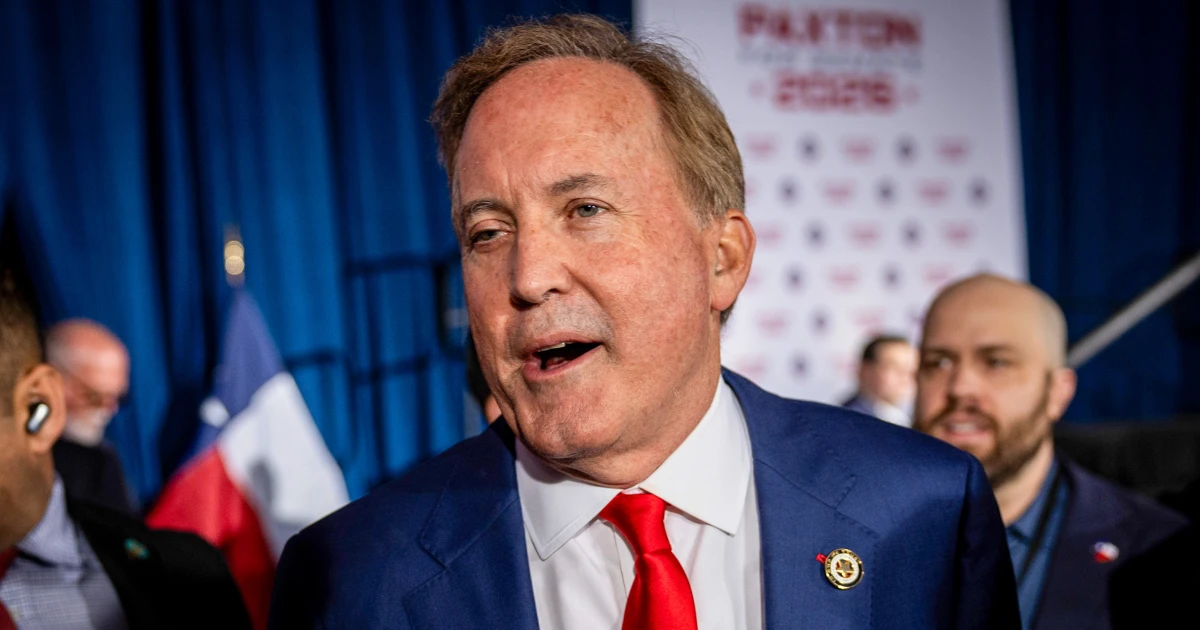
President Donald Trump may be celebrating Texas Attorney General Ken Paxton’s victory in Tuesday’s Senate primary, but the looming Republicans money problems in the Texas Senate race have left some in the party deeply uneasy. While Paxton’s win was decisive, his significant fundraising struggles have set off alarm bells among GOP strategists worried about what lies ahead.
The concern is straightforward: winning a statewide race in Texas is enormously expensive, and Paxton is trailing his Democratic opponent by a wide margin when it comes to raising money.
A Decisive Win, But With Warning Signs
With Trump’s endorsement firmly behind him, Paxton handily defeated four-term Sen. John Cornyn in the runoff. Democrats had largely viewed Paxton as the weaker general election candidate, in part because of his many controversies over the years.
Now, those concerns are compounded by his financial position. As one GOP consultant working on Senate races put it candidly, the situation is “economically a disaster,” noting that Texas is an extremely expensive state to campaign in. The consultant spoke on the condition of anonymity to discuss party resources frankly.
The Fundraising Gap
The numbers tell a stark story. So far, Paxton’s fundraising has lagged well behind that of the Democratic nominee, state Rep. James Talarico, who has raised more than $40 million, though he spent most of it during a fiercely contested primary.
More worrying for Republicans is Talarico’s momentum. He pulled in $600,000 in just two hours following Paxton’s win, and he’s expected to raise millions more in the months ahead. By contrast, Paxton has raised $7.6 million, with only $2.3 million remaining to spend as of May 6. His campaign did not respond to a request for comment.
A $100 Million Problem
The financial shortfall means outside Republican groups will likely have to step in aggressively. According to the consultant, GOP organizations may need to quadruple their original spending plans for the race, with total contributions potentially reaching $100 million.
That kind of spending carries real consequences beyond Texas. Pouring resources into the state could pull money away from other crucial battlegrounds at a time when Republicans are working to defend their Senate majority.
The cost of competing in Texas is daunting on its own. With roughly 20 media markets across the state, running statewide television ads can cost several million dollars per week, making it one of the most expensive places in the country to wage a campaign.
The Donor Dilemma
A key question hanging over the race is whether Cornyn’s deep-pocketed donors will rally behind Paxton. The consultant noted that while Cornyn enjoyed strong support from wealthy backers, those same donors may be reluctant to open their wallets for Paxton, who was impeached in 2023 on bribery and corruption charges before ultimately being acquitted.
George Seay, a longtime friend and donor to Cornyn, declined to say whether he would contribute to boost Paxton. He acknowledged that Paxton’s nomination meant Texas was “definitely in play” and represented a tougher path for Republicans.
Interestingly, Seay expressed skepticism about how much money actually matters in modern politics. He suggested that whether a candidate has $20 million or $200 million to spend, the impact may be limited because, in his view, most voters simply aren’t paying close attention.
Rallying the Republican Ecosystem
The effort to support Paxton is still coming together, and much attention is focused on MAGA Inc., the super PAC aligned with Trump. The group has substantial firepower, with more than $350 million in its account as of April 30, though it declined to comment on its plans for Texas. The conservative Club for Growth also endorsed Paxton on Tuesday night.
One veteran GOP consultant emphasized that Paxton will likely need help from every corner of the party. As the consultant put it, victory will require the entire ecosystem, including MAGA Inc., the Club for Growth, the Senate Leadership Fund, and Paxton’s own super PAC.
Paxton does have an aligned outside group in the Lone Star Liberty PAC, which has already spent more than $17 million on ads boosting him during the primary and runoff. Gregg Keller, who runs the super PAC, said fundraising for the general election was off to an extremely fast start, though he didn’t share specific figures.
Can Republicans Match Democratic Money?
Keller acknowledged the challenge of competing with Talarico’s fundraising machine. He raised pointed questions about whether the group could match what he described as “New York City money” or “San Francisco money,” calling it a tall order while expressing optimism about the response from his own donors.
The Senate Leadership Fund, the main GOP super PAC involved in Senate races and aligned with Senate Minority Leader John Thune, backed Cornyn in the primary and has not yet reserved airtime in Texas for the fall. Thune signaled that the party needs to go all-in to keep Texas red and prevent what he called a far-left liberal from winning the seat.
Thune also expressed hope that donors both in Texas and across the country would step up significantly, while acknowledging that the party is simultaneously defending seats in numerous other states.
Some Republicans Downplay the Worries
Not everyone in the party shares the gloomy outlook. Several Texas Republicans pushed back on fears that Paxton’s candidacy would drain resources or that he would struggle with major donors.
GOP strategist Brendan Steinhauser, who ran Cornyn’s 2014 campaign but stayed out of this primary, pointed out that Cornyn pledged on Tuesday to support the GOP ticket in November. Steinhauser argued this sends a clear signal to Cornyn’s donors and allies that they should back the ticket, which now includes Paxton.
He acknowledged some donors might wait on the sidelines for a time but predicted they would come around, especially as the threat of Democrats taking the Senate, and potentially the House, becomes more serious heading into September.
Former Texas GOP Chairman James Dickey, who remained neutral in the primary, said he wasn’t aware of any major donors likely to sit out the race. He also noted that strong Democratic fundraising has been a persistent challenge for Republicans in Texas, suggesting the problem isn’t unique to Paxton. He observed that since at least 2018, Republicans have had to devote funds to holding Texas that they would rather spend elsewhere.
Lessons From 2018
History offers a relevant warning. In 2018, a strong year for Democrats during Trump’s first midterm, Democrat Beto O’Rourke ran against Sen. Ted Cruz. O’Rourke raised a staggering $80 million compared to Cruz’s $35 million, yet Cruz still won, though by less than three points.
Cruz himself sounded a note of caution this week, urging his party not to take the general election for granted. While he expressed confidence that Republicans would win, he warned that the Democratic nominee, James Talarico, is a dangerous candidate who should not be underestimated.
The Battle to Define Talarico
Republicans have wasted no time going on the offensive against Talarico, targeting his past comments on cultural issues. They have highlighted previous remarks on race, gender, and other topics, and Keller’s Lone Star Liberty PAC launched a TV ad last week spotlighting those comments, which he said helped energize donors.
The attacks turned personal on Wednesday when White House deputy chief of staff Stephen Miller posted on social media referring to Talarico in pointed terms. The Democratic National Committee fired back sharply, telling Miller to be quiet in a profanity-laced response.
For his part, Talarico acknowledged that some of his past comments “missed the mark.” However, he accused Paxton of clipping those remarks to distract from what he called a career of corruption. Talarico drew a contrast between what he described as Paxton’s record and his own legislative work. (It’s worth noting that Paxton does not have a criminal record; he was indicted in 2015 on securities fraud charges and reached an agreement in 2024 to avoid trial.)
Talarico also tried to refocus the race on economic concerns, arguing that Texans are struggling to afford basics like gas, groceries, insurance, and housing. He pledged to bring people together to tackle corruption and lower costs rather than engage in what he called tired culture-war fights.
What Lies Ahead
As the general election campaign takes shape, the Republicans money problems in the Texas Senate race will be a defining storyline to watch. The party faces a genuine tension between defending a traditionally red state and conserving resources for other competitive races across the country.
Whether Cornyn’s donors ultimately rally behind Paxton, whether Trump-aligned groups like MAGA Inc. commit serious money, and whether Republicans can effectively define Talarico will all play crucial roles in determining the outcome.
For now, the race stands as a reminder that even in deep-red Texas, nothing can be taken for granted, especially when one candidate holds a commanding fundraising advantage. The coming months will reveal whether the GOP can close the gap or whether Democrats can turn their financial edge into a genuine opportunity to flip the seat.
Author