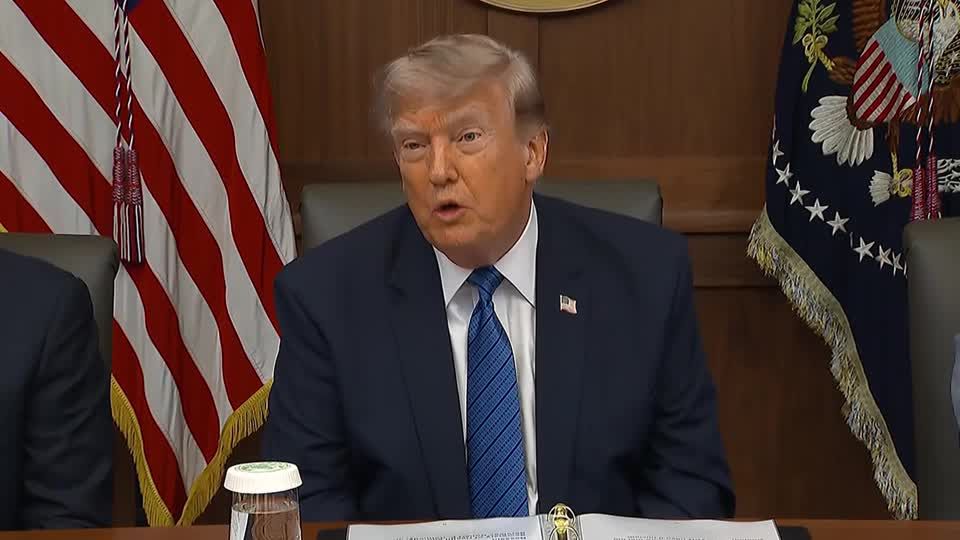
The anti-weaponization fund at the centre of a bitter standoff between the White House and two Republican senators is finished, President Donald Trump said on Friday, though he made no effort to hide his frustration with that outcome. Speaking to reporters at Camp David, he said his officials had agreed to abandon the $1.8 billion mechanism, then immediately made clear he thought they were wrong to do so.
The contradiction has left an already tangled negotiation in an even more awkward place, because the two senators holding up his attorney general nominee are demanding certainty, and certainty is precisely what the president’s remarks failed to provide.
A Fund Declared Dead and Defended in the Same Breath
Hours before the Camp David comments, Trump posted on social media that individuals prosecuted by the Justice Department, a large share of them tied to the violent assault on the Capitol on 6 January 2021, remain in difficult circumstances. He described many of them as ruined and argued they deserved to be compensated for what they had endured.
That message landed badly on Capitol Hill. Senator Thom Tillis of North Carolina responded by saying the president had just demonstrated the fund was still breathing, which he framed as the entire reason lawmakers were pushing to formally bury it.
Two Senators, One Demand: Put It in Writing
Tillis and Senator John Cornyn of Texas both sit on the Senate Judiciary Committee, and both have refused to advance Todd Blanche’s nomination for attorney general until the commitment to scrap the fund exists as a signed document rather than a spoken assurance.
Neither man has much to lose politically. Tillis is leaving the Senate when his term expires in January. Cornyn lost his bid for another term this year after Trump backed his primary challenger. That independence has made them unusually willing to hold the line.
For several weeks they have been trading drafts with the White House and with Blanche, who currently serves as acting attorney general. Neither senator has said he is satisfied with what has been produced so far.
The Justice Department has supplied language stating that the order Blanche signed on 18 May creating the Anti-Weaponization Fund is rescinded and carries no force or effect. That wording was reviewed by The Associated Press. It has not, on its own, been enough to unlock the votes.
The Tax Audit Question
The fund is only one half of the dispute. The senators are also seeking clarity on a provision of the underlying settlement that would shield Trump and his relatives from tax audits.
Cornyn said this week that his reading of the arrangement suggested the protection could reach well over a hundred subsidiaries linked to the Trump organisation, and could apply going forward rather than only to past filings. He noted that Blanche had described the shield as narrow, limited to the actual parties in the litigation and backward-looking in scope. The senators’ request, Cornyn said, is simply that the department commit that description to paper.
A Vote Postponed, Then Rescheduled
The Judiciary Committee had planned to vote on Blanche on Thursday morning. That vote was shelved once Tillis and Cornyn signalled they were not prepared to supply the numbers needed.
Trump reacted by floating the possibility of withdrawing the nomination altogether and resubmitting it next year, after both senators have departed. Talks continued regardless, and the three men met in person on Capitol Hill later that afternoon.
By late Friday, Committee Chairman Chuck Grassley had placed the vote back on the calendar for Tuesday. A committee spokesperson said Grassley hopes to see Blanche confirmed before senators leave for the August recess, and that scheduling the vote buys the White House additional time to line up support.
A person with knowledge of the discussions, speaking on condition of anonymity, said the tone had improved but that the senators were still waiting on a revised proposal from the Justice Department.
Where the Blame Is Landing
Both senators have been careful to separate Blanche from the impasse. Cornyn said he and the department had reached broad agreement before the president intervened and declined to accept the terms. Tillis described Blanche as candid, thoughtful and patient, and instead directed his criticism at what he called an incompetent personal adviser to the president.
Three people with direct knowledge of the talks, all requesting anonymity, identified Trump legal adviser Boris Epshteyn as the figure standing in the way of a deal.
The White House rejected that account outright. Communications director Steven Cheung said the AP’s sources were mistaken and that anyone assigning blame to the president or his team misunderstands the situation and is deflecting from what he called the real issue, namely that Blanche should be confirmed without further delay.
An Appeal Filed the Same Day
Also on Friday, lawyers for Trump informed a court that they intend to appeal a ruling that had sharply criticised the settlement of his lawsuit against the IRS. The judge characterised the arrangement as improper self-dealing, referred one of Trump’s attorneys for possible disciplinary review, and questioned Blanche’s role given that he had previously served as the president’s personal lawyer. Blanche has said he disagrees with what the judge implied about him.
Republican Unease Runs Deeper Than Two Votes
Discomfort with the settlement extends well beyond Cornyn and Tillis. Tillis pushed back directly on the framing of the Capitol rioters as patriots wronged by the government, saying those who attacked police officers and desecrated the building do not fit that description. Trump pardoned more than 1,500 people charged over the attack on his first day back in office.
Senator John Kennedy of Louisiana said most Senate Republicans are uneasy about the fund. Blanche has testified that it is finished and will not return, Kennedy noted, adding that for reasons he could not explain, someone was unwilling to say so on paper.
Author
-
Lucienne Albrecht is Luxe Chronicle’s wealth and lifestyle editor, celebrated for her elegant perspective on finance, legacy, and global luxury culture. With a flair for blending sophistication with insight, she brings a distinctly feminine voice to the world of high society and wealth.