British drones Ukraine strikes have crossed a threshold that had previously held throughout the war, with UK-manufactured systems reportedly used to hit targets deep inside mainland Russia for the first time.
The disclosure, based on Ukrainian army sources speaking to The Times, points to a considerably deeper military relationship between London and Kyiv than had been publicly acknowledged.
What the Report Says
According to those sources, drones produced by two British companies have been supplied to Ukraine and deployed in operations over the past six months.
The targets have not been limited to border areas. The report describes strikes on oil refineries in Volgograd and in the vicinity of Moscow, along with logistics facilities supporting Russian operations.
That represents a meaningful geographic expansion. Striking Belgorod near the border is one thing politically. Reaching Volgograd or the Moscow region is another.
The Nyan Drone
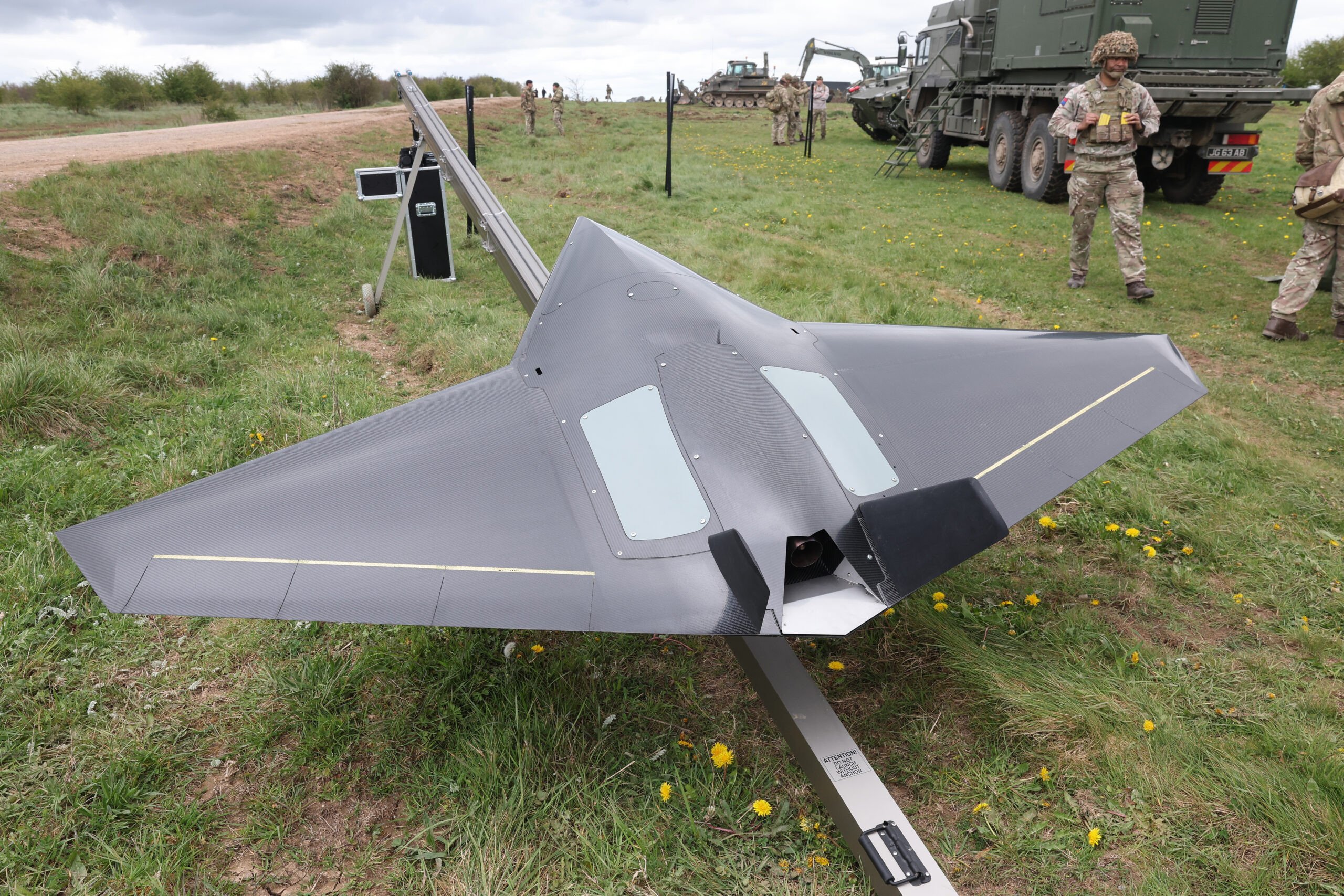
One of the systems identified is the Nyan, built in Wiltshire by Callen-Lenz, a subsidiary of BAE Systems. The platform has been tested by the Royal Navy and was reportedly used against Belgorod.
BAE Systems states that the drone was first tested this summer. It carries a wingspan of 2.9 metres and a range exceeding 150 miles, or roughly 241 kilometres.
The company confirmed to The Times that it delivers a range of capabilities to the UK Ministry of Defence as part of British support for Ukraine’s defence, describing the Nyan as a rapidly developed platform proven against emerging threats in heavily contested environments.
The Longer-Range System
The second British-manufactured drone reportedly has a range exceeding 600 miles, or approximately 966 kilometres.
It is launched via catapult, a design choice that allows multiple aircraft to be fired in rapid succession. That matters operationally, because saturating air defences requires volume rather than individual precision.
That range figure also dwarfs what the UK has previously supplied. Storm Shadow missiles, provided to Ukraine earlier in the conflict, reach roughly 155 miles, or 250 kilometres, and stocks are finite.
A Deliberate Signal
One defence source framed the development in explicitly political terms, arguing that Russia has been effective at keeping Western governments anxious about escalation, and that these strikes indicate the UK is no longer prepared to be constrained by that anxiety.
Whether that assessment reflects official policy or one official’s interpretation is unclear. But the underlying logic is straightforward. Supplying weapons used against targets near Moscow constitutes a statement of intent regardless of what accompanies it.
The Wider Deterioration
The timing coincides with an already strained relationship between London and Moscow.
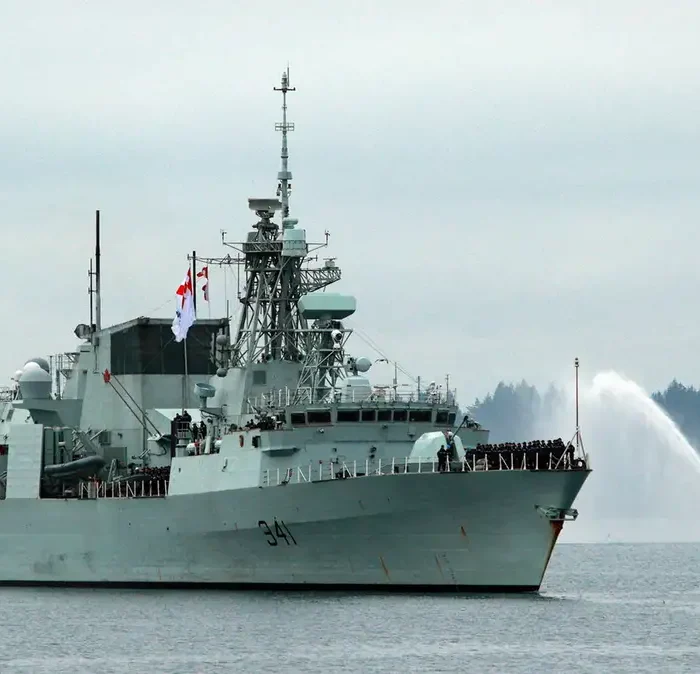
Tensions have risen over Russian vessels operating near UK waters, and the chief of defence staff has stated that Britain faces the highest level of threat from Russia since the Cold War.
Disclosures of this kind will not ease that trajectory. From Moscow’s perspective, direct attribution of strikes on Russian territory to NATO-member manufacturing carries significance beyond the physical damage caused.
How Drone Warfare Reshaped the Conflict
Ukraine’s long-range strike capability has become central to its strategy in ways that were not anticipated early in the war.
On Sunday, Kyiv launched what Russian authorities described as an assault involving more than 800 drones, striking what was reportedly the largest Wildberries facility in the country, located near Moscow.
The pattern behind that targeting is deliberate. Attacks on Wildberries infrastructure, transport networks and refineries aim at the Russian economy rather than purely at military assets, imposing costs that reach ordinary consumers and business operations.
British Money Behind the Effort
The UK’s financial commitment has been substantial. Earlier this year, then-chancellor Rachel Reeves confirmed a payment of 752 million pounds to Ukraine, forming part of a larger loan totalling 3.36 billion pounds.
That funding was designated for essential military equipment, including long-range missiles, advanced air defence systems and drones.
An Uncomfortable Mirror
There is an awkward counterpoint to this story that emerged last year.
British-made components were discovered inside Russian drones being used against Ukrainian targets. In October, President Volodymyr Zelensky called for tougher sanctions against UK companies whose parts had ended up in those systems.
He specifically identified UK-manufactured microcomputers used for flight control, recovered from drones involved in a deadly attack. Components originating in other allied countries, including the United States, were also identified.
The episode illustrated how difficult export controls are to enforce when parts pass through multiple intermediaries before reaching a final assembler.
Where This Leads
The reported use of British drones against targets deep inside Russia raises questions that extend beyond the battlefield.
It sharpens the debate about what constitutes participation in a conflict versus support for a partner defending itself. It exposes British manufacturers to a level of attention they may not welcome. And it removes a degree of ambiguity that had, until now, offered both sides some room for manoeuvre.
Neither government has an obvious interest in escalation. Whether that restraint survives contact with the current trajectory is a separate question.
Author
-
Lucienne Albrecht is Luxe Chronicle’s wealth and lifestyle editor, celebrated for her elegant perspective on finance, legacy, and global luxury culture. With a flair for blending sophistication with insight, she brings a distinctly feminine voice to the world of high society and wealth.