Chicago Area Storm Recovery Drags On as South Suburbs Plead for Federal Help and Indiana Struggles in the Dark
The Chicago area storm recovery effort has stretched into a second week, and for thousands of families on both sides of the Illinois-Indiana border, normal life still feels a long way off. Historic rainfall pushed several rivers past their banks, tornadoes carved paths through residential neighborhoods, and straight-line winds toppled trees onto homes, sidewalks and power lines. What remains is a landscape of tarps, chainsaws, dark houses and mounting frustration.
A Rising Death Toll and a Region Without Power
Indiana has borne some of the heaviest losses. At least seven deaths connected to the storms had been confirmed statewide as of Sunday. Three of those fatalities occurred within the Chicago metropolitan area, in Lake, Porter and LaPorte counties, while the remaining deaths were reported elsewhere in Indiana.
The electrical picture has been just as grim. By Sunday afternoon, roughly 150,000 customers across northwest Indiana were still waiting for the lights to come back on. Some households had gone dark since Tuesday, watching refrigerated food spoil and phone batteries drain as restoration crews worked through a backlog measured in tens of thousands.
Emergency Declarations Move Quickly in Indiana
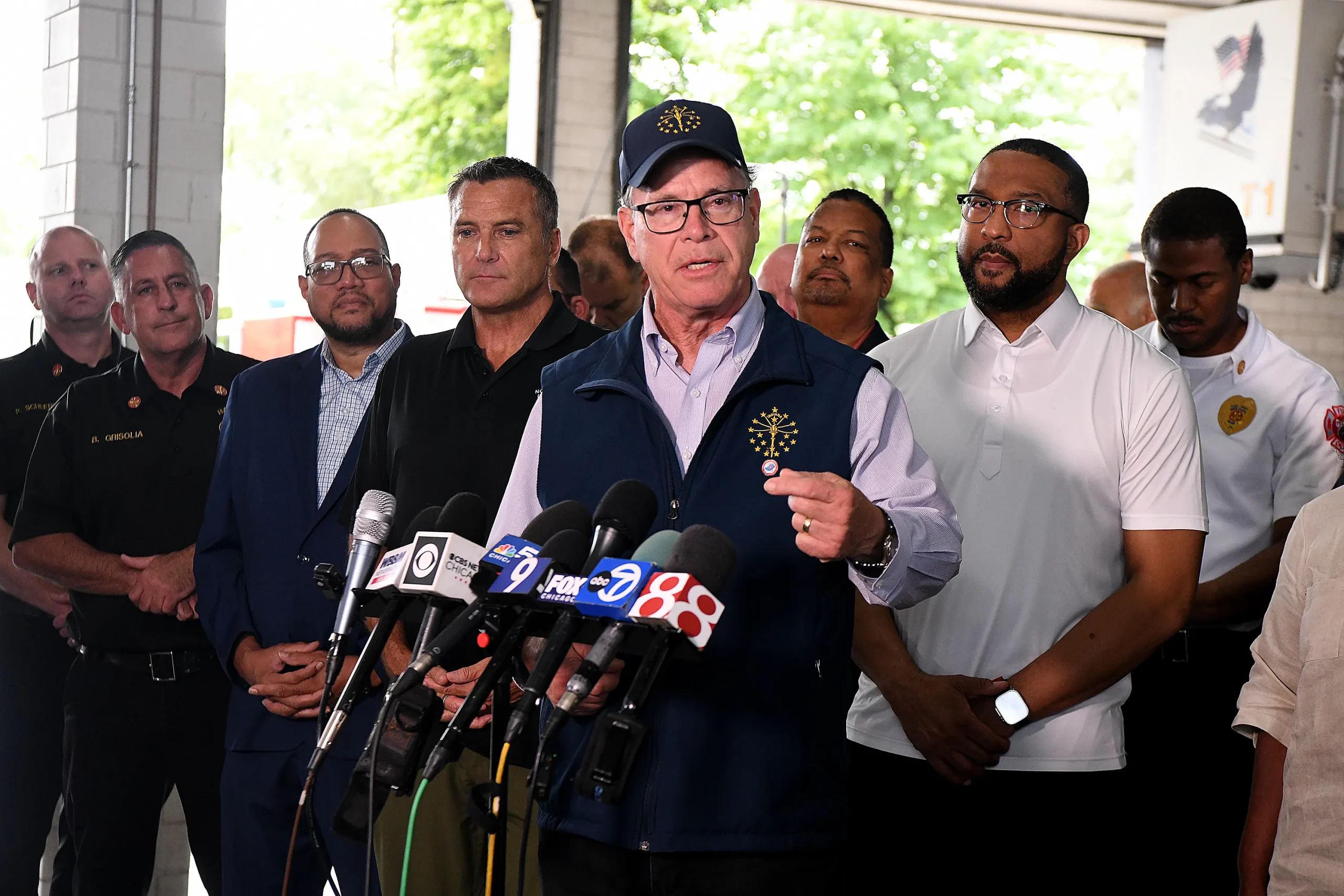
Indiana’s path through the bureaucratic process moved with unusual speed. Governor Mike Braun issued a statewide disaster emergency on Friday, and by Saturday President Donald Trump had signed off on the state’s request for a Presidential Emergency Declaration.
FEMA followed that evening with an announcement confirming that federal disaster assistance would flow to Indiana to reinforce state, tribal and local efforts. The agency tied the aid specifically to the emergency conditions created by severe storms, straight-line winds, tornadoes and flooding that began on August 11, 2026, and had not yet ended.
Illinois Communities Left Waiting
Across the state line, the mood is far less settled. Illinois remains somewhere in the middle of the approval pipeline, and south suburban leaders are not hiding their impatience.
Less than a week after twisters ripped through the Southland, mayors, residents and community organizers assembled in Lansing to make a public appeal. Their argument was simple: the damage exceeds what any single village can absorb.
Lansing Mayor Brian Hardy described a town where destruction is not confined to a few unlucky streets. He said it does not matter which block a visitor drives down, because evidence of the storm is everywhere. Uprooted trees, collapsed structures, broken curbs, buckled sidewalks and damaged infrastructure appear in every direction. His appeal to Washington contained no political framing at all, only three words: we need help.
Families Hit Twice in a Single Summer
Part of what makes this Chicago area storm recovery so punishing is timing. Many households were still rebuilding from a tornado that struck in July when the August system arrived and undid what little progress had been made.
Lansing resident Lisa Sullivan captured that exhaustion plainly, saying help is needed now and boots are needed on the ground. She urged officials of every political affiliation to set party loyalty aside and simply show up for the community.
In Flossmoor, crews continue clearing debris from a village that had already absorbed damage from earlier storms. Mayor Michelle Nelson said the pace of progress has been agonizing. Between the sheer volume of destruction and the density of the fallen vegetation, she said, outside assistance is not optional and waiting is not an option either.
Aid Framed as Obligation, Not Favor
Cook County Commissioner Donna Miller pushed back on any suggestion that emergency relief functions as a political bargaining chip. She characterized disaster assistance as a standing promise the federal government makes to every American facing catastrophe, rather than a gift dispensed at a president’s discretion. Southland communities, she said, cannot carry these costs alone and deserve a proper federal damage assessment.
U.S. Rep. Robin Kelly, whose 2nd Congressional District covers much of the affected area and who was personally caught up in the storms, offered a similar view. In her framing, the only relevant question is whether people need help, not what state they live in or how they cast their ballots. She noted that local governments have leaned heavily on one another, trading equipment and personnel wherever gaps appeared.
Neighbors Filling the Gaps
While officials lobby for federal dollars, communities are improvising their own relief. Lynwood organized a food truck event that handed out free meals to storm-affected residents.
Mayor Jada Curry said the goal was as much emotional as practical. Most of her residents, she explained, have never experienced anything like this and hope never to again. The gathering was meant to signal that they are cared for and supported. It also gave neighbors a place to compare notes and find resources during a bewildering stretch of days.
Anger at NIPSCO Boils Over
Utility response has become its own flashpoint. In Crown Point, Indiana, homeowner Dinno Jahovic says a downed power line sat in standing water on Wells Street for days. He reported it Tuesday and says he called again Wednesday, Thursday and Friday without a crew ever arriving.
When electricity returned to the neighborhood overnight into Sunday, the same line reportedly began throwing sparks and ignited near his driveway, with a second fire breaking out in a neighbor’s yard. Nobody was injured, but Jahovic wants an investigation into why his warnings went unanswered before the grid was re-energized. NIPSCO said it was alerted to the fire and dispatched workers to assist first responders. Officials in Dyer have voiced similar frustration with the company’s pace.
Gunfire Halts Restoration Work in Gary
The recovery took a darker turn Friday night when gunfire struck a NIPSCO crew vehicle in Gary. Mayor Eddie Melton confirmed the shooting, said no one was hurt, and called the violence unacceptable, stressing that the crews were present solely to restore electricity to families already enduring days without it. Police are investigating.
NIPSCO temporarily suspended crew-based restoration in Gary while coordinating with law enforcement and reviewing security measures, resuming Saturday evening. Melton said the city is working alongside Gary police, Indiana State Police and state officials to protect workers, with additional troopers being deployed. Residents without power since Tuesday reacted with dismay upon learning the pause had delayed their relief.
Events Cancelled, Surveys Opened
The fallout reached the region’s calendar as well. Next weekend’s Gary Air Show was scrapped, with organizers concluding that first responders are needed for cleanup far more than for crowd control, and expressing hope for a return next summer. In Chicago, weather forced delays to the Air and Water Show across Saturday and Sunday after producers consulted the FAA on flight safety.
Forecasts offer modest encouragement. Sunday’s early rain cleared out, leaving highs in the low 80s, and the coming week carries limited rain chances. Cook County residents with damage from Tuesday and Wednesday are being urged to complete an online damage survey by August 24, a step that could strengthen the state’s case for aid.
Author
-
Lucienne Albrecht is Luxe Chronicle’s wealth and lifestyle editor, celebrated for her elegant perspective on finance, legacy, and global luxury culture. With a flair for blending sophistication with insight, she brings a distinctly feminine voice to the world of high society and wealth.