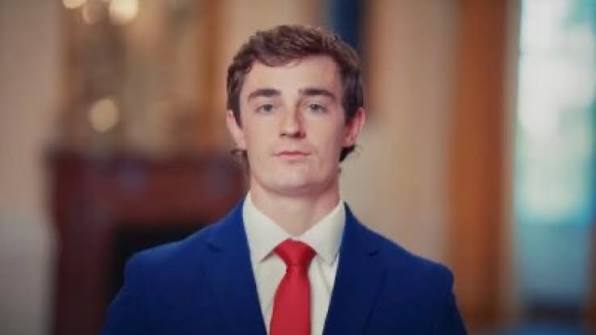
The Stop Nick Shirley Act has become the center of a brewing legal and political fight in California, after Gov. Gavin Newsom signed a privacy expansion bill that critics say could shield government-funded programs from public scrutiny.
Republicans across the state are now pushing for federal intervention before the law takes effect, setting up a potential First Amendment showdown.
What the Law Actually Does
The legislation, introduced by Democratic Assemblymember Mia Bonta, extends California’s existing address-confidentiality program to cover immigration-service workers. That program was originally designed to shield people like domestic violence survivors from having their home addresses exposed.
Supporters frame the expansion as protection against doxing and harassment for workers in a sensitive field. Critics counter that the vague scope of the law could make it significantly harder for journalists and independent investigators to examine how these programs actually operate.
Where the Nickname Comes From
The bill’s critics have attached the name Stop Nick Shirley Act, a reference to a conservative citizen journalist known for producing videos that scrutinize government-funded programs and confront workers directly at various facilities.
That framing suggests the law was crafted, at least in part, as a response to the kind of investigative work Shirley has become known for.
Republicans Mobilize Against the Law
Reaction from California Republicans was swift after Newsom signed the bill Saturday.
Assemblymember Carl DeMaio said he is formally asking the Department of Justice to intervene and block the law before it can take effect. He argued the matter will likely need to be resolved in court, expressing frustration that state lawmakers, in his view, showed little regard for First Amendment protections.
State Sen. Tony Strickland went further, accusing Newsom and legislative Democrats of undermining basic constitutional rights rather than welcoming scrutiny of how government money gets spent. He argued the law’s vague language effectively suppresses speech and press freedom, and said every taxpayer should retain the ability to question government spending.
Strickland predicted the law would eventually face a federal judge and expressed confidence it would ultimately be struck down as unconstitutional, though he acknowledged someone would first need to bring a legal challenge. He indicated his own team is examining that possibility.
He also directed pointed criticism at Newsom personally, arguing that restricting people’s ability to exercise free speech and press freedom while asking questions about public spending resembles the kind of behavior associated with authoritarian governance.
Other GOP Voices Join In
California GOP Chairwoman Corrine Rankin argued that taxpayers should be free to question how public funds are used without running into unnecessary investigative obstacles.
Gubernatorial candidate Steve Hilton connected the dispute to his broader campaign message about government waste, arguing that Californians pay the nation’s highest taxes while receiving poor results. He called for new leadership focused on identifying and eliminating wasteful spending rather than shielding it from scrutiny, tying the issue to his proposed Operation Zero Waste initiative and a plan to exempt the first $150,000 of income from state tax.
The Governor’s Office Pushes Back
Newsom’s office and Bonta have firmly rejected the idea that the bill targets Shirley or investigative journalism specifically.
A spokesperson for the governor told reporters the law has nothing to do with Shirley and exists simply to let immigration service providers shield personal information, such as home addresses, from doxing and harassment.
Diana Crofts-Pelayo, another spokesperson, was more combative, suggesting that Republican critics were either fabricating conspiracy theories or misunderstanding the bill’s actual text.
Shirley himself did not respond to a request for comment. He is scheduled to make a public appearance in Sacramento this coming Wednesday.
A Legal Scholar Weighs In
William A. Jacobson, founder of the Equal Protection Project and a clinical law professor at Cornell, offered a more pointed interpretation of the bill’s origins.
He connected the legislation to public attention surrounding alleged fraud in government service programs tied to Minnesota’s Somali immigrant community, cases that drew significant scrutiny after being documented in journalistic investigations. According to Jacobson, that coverage helped trigger law enforcement action, and he suggested California’s new law is designed to prevent similar journalism from targeting immigrant service programs within the state.
He offered his own alternative nickname for the bill, calling it, in effect, legislation aimed at stopping the uncovering of fraud rather than protecting workers from harassment.
Jacobson also raised a federal dimension to the dispute. Because federal funding frequently flows into state and local immigrant service programs, he argued the Justice Department could have legitimate grounds to examine whether the law interferes with oversight of federally funded programs.
Timeline and What Comes Next
Under the legislation as written, the expanded privacy protections are scheduled to take effect October 1, 2027, giving opponents more than a year to mount legal or political challenges before the law becomes operative.
That timeline suggests the fight is likely to play out well beyond this news cycle, potentially involving state courts, federal courts and continued political pressure from both sides. Whether the Justice Department chooses to intervene, as DeMaio has requested, remains an open question, though Jacobson’s analysis suggests federal officials may have a genuine legal basis to examine the law’s interaction with federally funded programs.
For now, the dispute sits at the intersection of privacy protection, press freedom and government accountability, three principles that rarely align neatly, and that this particular bill has placed in direct tension with one another.
Author