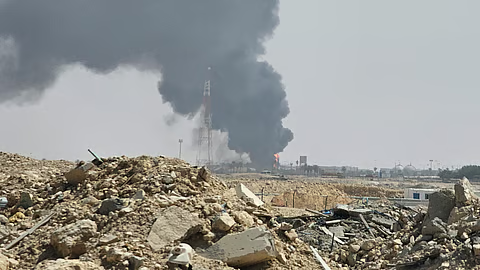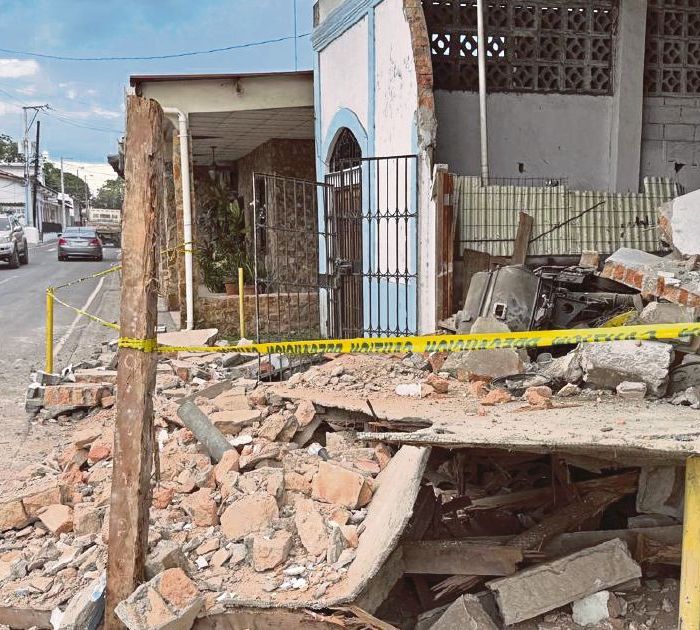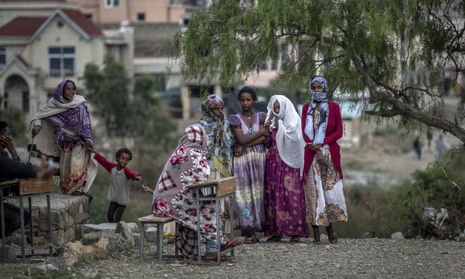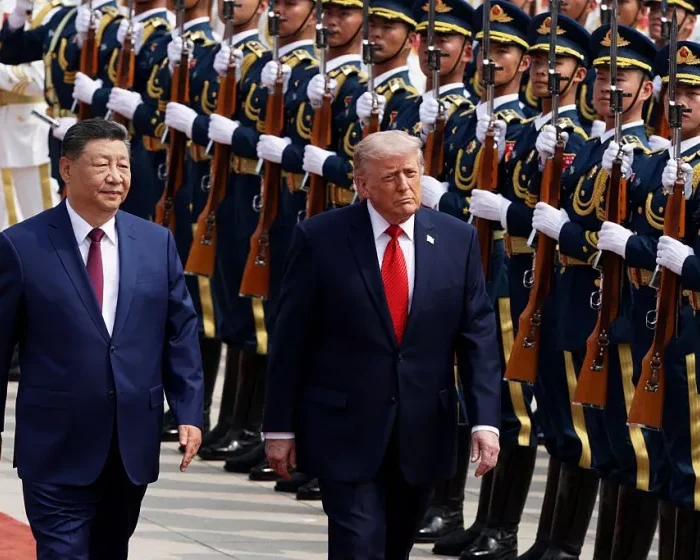
A US Iran policy shift is being communicated quietly to allied capitals, and its central message is that American military action against Iran is being set aside for now in favor of economic strangulation.
Secretary of State Marco Rubio has conveyed to several foreign counterparts in recent days that Washington does not expect to launch new strikes for the time being, according to a U.S. official and a second source familiar with the discussions. The emphasis instead falls on other instruments of pressure, chief among them the sanctions initiative unveiled this week.
Why the Timing Matters
The message lands at a moment when U.S. officials believe the pressure campaign is already working.
The naval blockade has choked Iranian revenue, while steadily larger volumes of oil move out through the Strait of Hormuz. From Washington’s perspective, the leverage has flipped.
There is also a reading of presidential temperament embedded in the shift. Trump appears exhausted by the war and eager to see it wind down, at least for the present phase.
Rubio was careful not to close the door entirely. According to the U.S. official, he made clear there are no plans to resume major combat operations, but he did not rule out strikes if Iran attacks first.
The Four-Part Policy
In his calls with foreign ministers, Rubio laid out an approach resting on several pillars.
Military action against Iran is off the table for now, though not permanently renounced.
Economic pressure intensifies through two channels: the ongoing naval blockade and the new Treasury Department sanctions push.
Oil moves. As much crude as possible flows through the strait and into global energy markets, both to stabilize prices and to demonstrate that Iran no longer controls the chokepoint.
And the timeline is political as much as strategic. A second U.S. official indicated this posture is expected to hold at least through the midterm elections, after which a renewed military campaign could return to consideration.
The Mines Were the Turning Point
One development is being treated internally as decisive.
U.S. Navy clearance of mines from most of the Strait of Hormuz is described by a U.S. official as a watershed in the conflict, because it removes what had been among Iran’s most potent forms of leverage.
Tanker traffic tells the story. Increasing numbers of vessels have been transiting the southern lane in recent weeks, which officials say substantially erodes Iran’s ability to hold global energy markets hostage.
One official put it bluntly: the Iranians have lost control of the strait, and the United States now controls it.
Iran’s Revenue Is Drying Up
The blockade’s effect on Iranian finances appears severe. Over the past two weeks, U.S. officials say almost no tankers have been observed at Kharg Island, the country’s primary oil export terminal.
For an economy dependent on crude sales, that is close to a full stop.
State Department spokesman Tommy Pigott told Axios that the Iranian economy is in free fall and that the regime’s military has been devastated, adding that Washington is severing every remaining financial lifeline available to Tehran. He reiterated that the president has been unambiguous that Iran cannot obtain a nuclear weapon and will use whatever tools are required to prevent it.
A Back Channel Through Islamabad
Diplomatic movement has not stopped entirely, even without formal talks.
Pakistan’s army chief, Field Marshal Asim Munir, traveled to Tehran on Sunday for discussions with Iranian leadership. Pakistan has functioned as a significant intermediary between Washington and Tehran since fighting began.
According to Al Arabiya, the Saudi-affiliated broadcaster, Munir spoke with Trump before departing and carried a new proposal to the Iranians.
The White House did not deny that a conversation with Munir took place, but stated that no negotiations with Iran are underway or scheduled.
U.S. officials argue that recent developments in the strait, combined with rising Gulf oil volumes, have stripped Iran of a major bargaining chip. In their assessment, any potential arrangement between Oman and Iran concerning the strait has been rendered moot.
The logic was summarized directly by one official: there are no negotiations at present, only squeezing, on the theory that sufficient pressure eventually returns Iran to the table.
What to Watch Next
White House envoys Steve Witkoff and Jared Kushner, who have led the diplomatic track with Iran, are expected at U.S. Central Command on Wednesday for briefings on conditions on the ground, according to a source familiar with the plans.
That visit is worth noting. Sending the negotiating team for operational briefings suggests Washington is keeping its diplomatic apparatus warm even while insisting no talks exist, positioning it to move quickly if Tehran signals willingness.
The Open Questions
Several uncertainties sit underneath this apparent stability.
Whether Iran accepts the new equilibrium or attempts to reassert leverage through some other means, which would test Rubio’s caveat about responding to an attack.
Whether economic pressure of this intensity produces negotiation or entrenchment, since regimes under existential financial strain do not always behave predictably.
And whether the post-midterm window genuinely reopens military options, or whether a pause of several months hardens into something more permanent.
For now, the campaign has changed instruments rather than objectives. The target remains the same.
Author