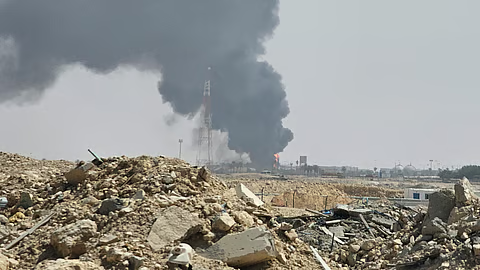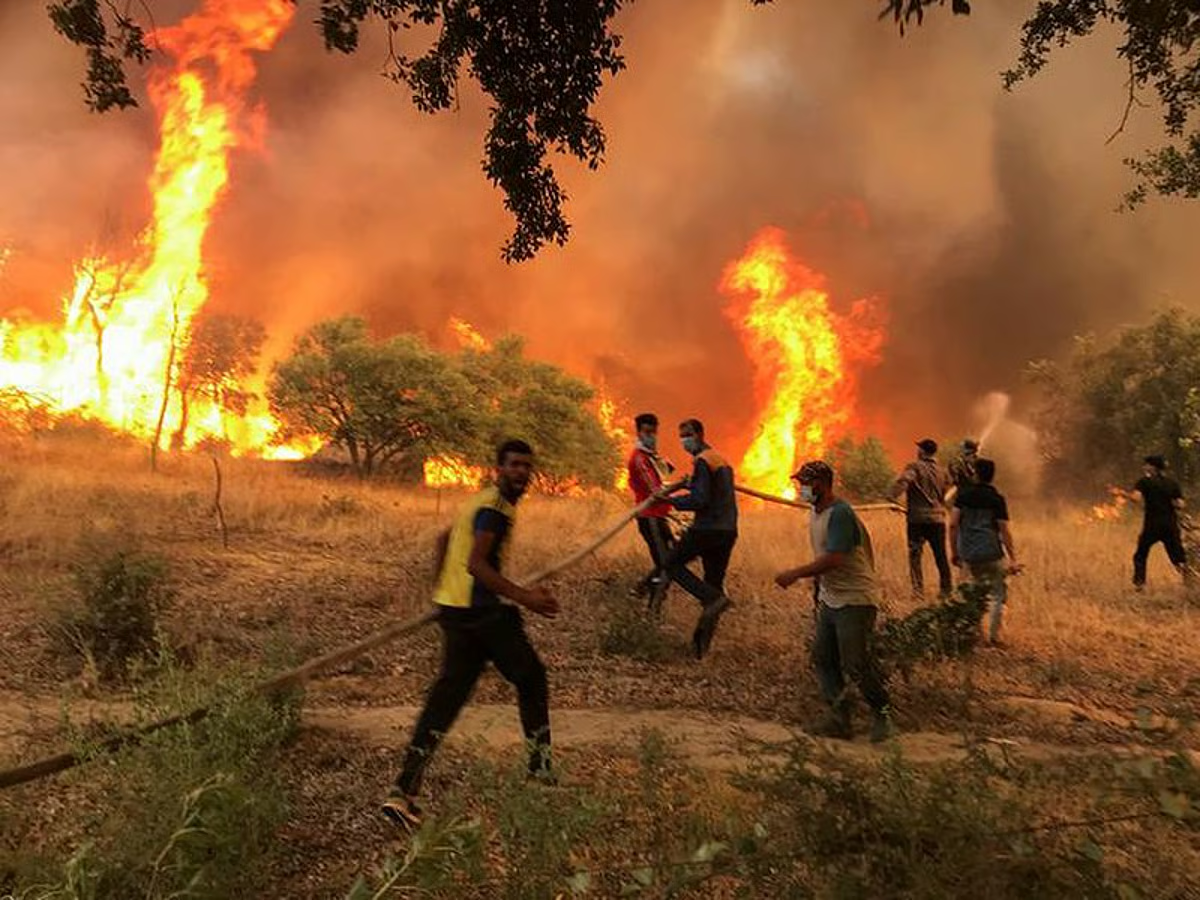
Algeria wildfires have killed twelve people across several provinces as an exceptional heatwave bakes North Africa, Interior Minister Said Sayoud announced late Wednesday.
The deaths were concentrated in the country’s northern coastal and mountainous regions, where forest cover and steep terrain combine to make fires especially difficult to contain.
Where the Deaths Occurred
Five people died in Jijel province. Four were killed in Bejaia. Three more died in Tizi Ouzou.
All three provinces sit along or near Algeria’s Mediterranean coast in the broader Kabylie region, an area that has repeatedly borne the worst of the country’s fire seasons.
The Injured
Sayoud reported that 54 people sustained burn injuries.
Six of them are in critical condition and receiving treatment in intensive care units. Burn injuries of that severity require prolonged specialist care, and the toll may still rise.
The Scale of the Outbreak
Algeria’s civil protection services logged 154 separate wildfires nationwide on Wednesday alone.
Bejaia province accounted for 36 of them. Firefighting crews had brought 18 of those under control by the time of the announcement, leaving half still active.
Fighting that many fires simultaneously stretches resources thin. Aircraft, ground crews, and water supplies must be allocated across dozens of fronts, and commanders are forced to prioritise which blazes threaten populated areas most immediately.
The Heat Driving It
The fires are burning during what officials describe as an exceptional heatwave across North Africa, with Tunisia and Algeria affected most severely.
Extreme heat contributes to fire risk through several mechanisms working together:
- Vegetation dries out, lowering the moisture content that would otherwise slow ignition
- Air temperatures raise fuel to near ignition point before any spark arrives
- Low humidity accelerates how quickly flames spread
- Heat generates unstable air movement, producing erratic winds that push fires in unpredictable directions
Under these conditions, a fire that would normally be manageable can outrun crews within minutes.
Difficult Terrain
The Kabylie region presents particular challenges for firefighting.
Its mountains are steep, its valleys narrow, and many villages sit at the end of single access roads. Fire moves uphill fast, and terrain that slows a fire engine does nothing to slow flames.
Population is also dispersed across small settlements rather than concentrated, which multiplies the number of places requiring protection.
A Recurring Emergency
Algeria has faced deadly fire seasons repeatedly in recent years, with the same northern provinces appearing in the casualty lists each time.
The pattern reflects a combination of factors: rising summer temperatures, extended dry periods, forest composition that burns readily, and communities living in close proximity to woodland.
Each severe season prompts discussion about prevention, early warning, and firefighting capacity. Each subsequent season tests whatever was implemented.
The Regional Picture
The heatwave is not confined to Algeria.
Tunisia is experiencing the same conditions, and North Africa broadly has been enduring temperatures well above seasonal norms. Fire risk rises across the entire region under these circumstances, and neighbouring countries face similar pressure on their own emergency services.
Mediterranean summers have grown longer and hotter over recent decades, extending the window during which conditions favour catastrophic fires. What was once a peak of a few weeks now stretches across months.
What Comes Next
Immediate priorities are containing the active fires and treating the injured.
Beyond that, officials will face questions about evacuation timing, whether warnings reached remote villages, and how many aerial firefighting assets were available when the outbreak began.
For families in Jijel, Bejaia, and Tizi Ouzou, those questions matter less right now than the fact that twelve people are dead and dozens more are being treated for burns.
The heat has not broken, and with more than 150 fires recorded in a single day, crews across northern Algeria are unlikely to get much rest in the days ahead.
Author