US Sanctions on Iran’s Aviation Push Airlines Toward Isolation as Flights Vanish Across the Region
US sanctions on Iran’s aviation sector are rapidly tightening the country’s isolation from the rest of the world. Flights are being cancelled, neighbouring countries are turning away Iranian aircraft and ordinary travellers are finding it harder than ever to leave or return home. While the measures target airlines accused of links to military networks, their effects are being felt most sharply by passengers, families and businesses.
What the US Has Done
Earlier in September, the US Treasury Department launched a campaign called “Operation Economic Outcast,” which took aim at Iran’s aviation industry. The sanctions target not only Iranian airlines but also companies that provide them with key services, such as ground handling, ticketing and airport support.
These businesses now face the threat of secondary sanctions, which could cut them off from the US financial system.
How Secondary Sanctions Work
Washington does not have the power to directly tell foreign airports to refuse Iranian planes. However, the risk of being hit by secondary sanctions can make it too dangerous, legally and financially, for airports, fuel suppliers and aviation firms to keep serving Iranian carriers.
For Tehran, this is one more layer of pressure added to existing US restrictions on banking, shipping, insurance and trade.
Why Washington Is Targeting Airlines
US officials argue that some Iranian airlines have served more than just civilian travellers, claiming they have also supported military and security operations.
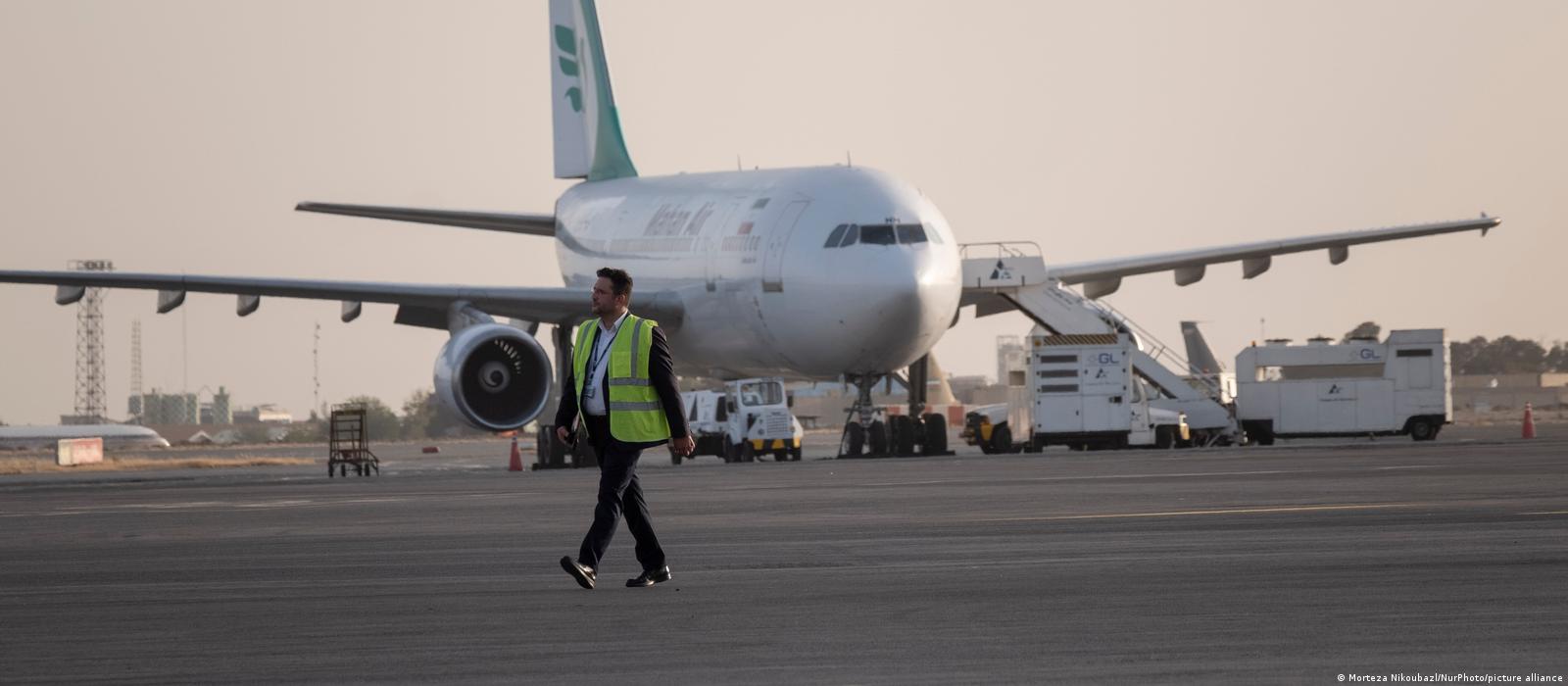
Mahan Air, for example, has been accused of assisting the Islamic Revolutionary Guard Corps by transporting personnel and equipment. The issue has even been acknowledged inside Iran. In a 2021 interview, former Foreign Minister Mohammad Javad Zarif said that the late commander Qassem Soleimani had used civilian aircraft to send troops and supplies to Syria.
For Washington, such links justify going after aviation networks. For passengers, though, the result is fewer flights and far more uncertainty.
Flights Disappear Across the Region
The impact has been swift. Several important routes have already been hit:
- Flights to Baghdad and Muscat have been suspended or cancelled
- Azerbaijan and Georgia have stopped accepting Iranian-operated flights
- Routes to Oman, Iraq, Azerbaijan and Georgia have been badly disrupted
On September 24, Turkmenistan denied an Iranian plane permission to fly through its airspace on its way from Tehran to Dushanbe, forcing the aircraft to turn back.
Uncertainty Even Where Flights Continue
Turkey, Armenia and China have not introduced blanket bans, according to an Iranian travel agency. Even so, travellers are becoming wary of buying tickets because a confirmed booking no longer guarantees the flight will actually depart. One passenger said agencies were still willing to sell tickets but could not promise that flights would take off.
The End of the J-1 License
As part of the sanctions package, the US also suspended the “J-1” general license. This had allowed some foreign aircraft to make short stops in Iran, provided certain conditions were met.
Because many commercial aircraft contain American-made parts or technology, flights involving Iran can fall under US sanctions rules. Without the J-1 license, airlines, airports, fuel suppliers and ground-handling companies now face higher legal and financial risks when dealing with Iran.
Travellers Turn to Land Borders
With air travel becoming unreliable, many Iranians are choosing to travel by land instead.
One traveller whose flight was cancelled said he crossed the border into Turkey by road before flying on to Istanbul. He described the border crossing as extremely crowded, with many people rushing to leave out of fear that routes might soon close.
The Hidden Costs
Overland travel is not an easy option for everyone. For families with children, elderly travellers, students and patients, a journey that once required a single flight can now involve:
- Long road trips to border crossings
- Overnight stays in hotels
- Additional flights from neighbouring countries
- Higher overall travel costs
Air Freight Also Hit
The disruption extends beyond passengers. Air freight is vital for urgent or sensitive goods, including certain medicines, medical equipment, industrial components and laboratory samples. Losing air connections makes it harder to move these items quickly, especially as Iran also faces tight restrictions on maritime trade.
An Industry Already Under Strain
Iran’s aviation sector was struggling long before the latest sanctions. Transport Minister Farzaneh Sadegh has previously admitted that some flights operate without radar guidance, placing greater responsibility on pilots for navigation.
Other long-standing problems include:
- An ageing fleet of aircraft
- Difficulty obtaining spare parts
- Years of sanctions pressure
- A shrinking number of working planes
Expert View: Connectivity Is the Real Loss
Alireza Salavati, managing director of London-based Middle East Analytica, said the loss of flights is unlikely to cause a major immediate hit to Iran’s economy as a whole.
He explained that Iran’s aviation industry is small compared with regional hubs such as Turkey or the UAE. Officials said in July that around 150 aircraft were available, with only about half operating at any given time.
However, Salavati stressed that the bigger impact lies in connectivity. Flights remain important for business, students, specialist workers, the Iranian diaspora and people seeking medical treatment abroad. For patients in particular, a direct trip can turn into a costly and time-consuming detour through a third country, and delays can matter just as much as money.
Cut Off by Air and Sea
Foreign airlines had already reduced services to Iran before these sanctions. Many travellers relied on Iranian carriers to reach regional hubs like Istanbul, Muscat, Baghdad or Yerevan, then continued their journeys with other airlines. If those first links disappear, Iran’s international air network could shrink to just a few politically and commercially viable routes.
At the same time, disruption around the Strait of Hormuz, rising insurance and shipping costs, and pressure on southern ports have made maritime trade more difficult.
With both sea and air routes under strain, Iran is becoming increasingly dependent on land borders and indirect routes through neighbouring countries. For ordinary Iranians, that means a world that feels further away, and journeys that are longer, costlier and far less certain than before.
Author