




“We Were Killed”: Novaya Gazeta, Russia’s Last Major Independent Newspaper, Forced to Shut Down
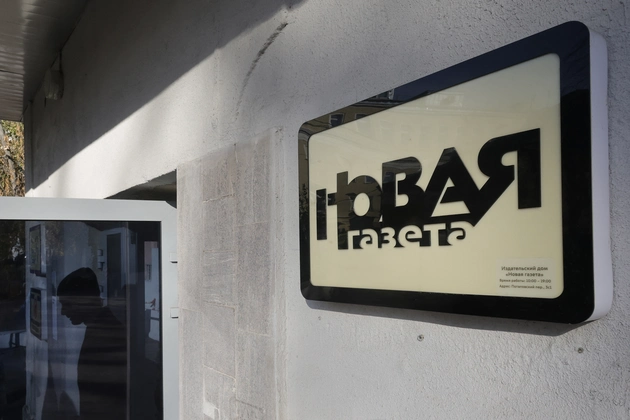
The Novaya Gazeta closure marks the end of an era for independent journalism in Russia. After three decades of investigations, exposés, and the loss of six staff members to violence, the newspaper that once earned its editor a Nobel Peace Prize announced on Friday that it is ceasing to exist. Its editorial board did not frame the decision as a choice. In a statement bluntly titled “We were killed,” the staff said the Russian state and its security services had made continued operation impossible.
A Final Statement From the Newsroom
The editorial board’s announcement left no room for ambiguity. The paper, it said, is gone, pushed out of existence by government authorities and intelligence agencies that compelled the staff to stop working.
Editor-in-chief Sergei Sokolov delivered the news in a video posted to YouTube. He confirmed that Novaya Gazeta will end operations on November 9, describing how the team will switch off the lights in the office that has been their home for thirty years, shut down the servers, and walk away.
The tone was one of exhaustion rather than defiance. After years of raids, prosecutions, and legal designations designed to cripple the outlet, the newsroom appears to have concluded that there was nothing left to fight with.
The Arrests That Preceded the End
The final blows came in quick succession. Earlier in October, Russian authorities searched Sokolov’s home and brought him in for questioning. Officials tied the search to a criminal case involving his colleague Oleg Roldugin, who was arrested in April and charged with unlawfully accessing computer data.
On October 15, Sokolov himself was arrested. That escalation prompted Reporters Without Borders to publicly ask how much further the Kremlin’s campaign against the paper could possibly go. The press freedom organisation laid out the toll in stark terms:
Six journalists and staff members murdered over the years.
The newsroom raided by security forces.
Reporters prosecuted on criminal charges.
The publication branded a “foreign agent” by the state.
Two weeks after that question was posed, the answer arrived: the campaign would go all the way to closure.
The “Foreign Agent” Label
Novaya Gazeta’s designation as a foreign agent is central to understanding how it was dismantled. The label, applied under Russian law to organisations and individuals deemed to receive foreign support or influence, carries heavy practical consequences. It imposes burdensome reporting requirements, forces outlets to attach disclaimers to everything they publish, scares off advertisers and sources, and exposes staff to criminal liability for minor violations.
Critics have long argued that the law exists not to track foreign influence but to silence domestic critics. The United Nations High Commissioner for Human Rights, Volker Türk, has repeatedly raised concerns about the statute and its impact on civil and political rights in Russia.
International Condemnation
Türk responded to Friday’s announcement by saying he was profoundly concerned and saddened, calling the closure a devastating setback for what remains of independent media in the country. He pointed out that pressure on journalists has grown sharply since Russia’s full-scale invasion of Ukraine in February 2022, driven by ever more restrictive laws, tighter state control, and direct persecution of reporters.
His office, he noted, has consistently flagged the broader crackdown on the press, including the foreign agent legislation, as a threat to fundamental freedoms.
A Newspaper That Refused to Look Away
Founded in the early 1990s, Novaya Gazeta built its reputation on fearless reporting about corruption, human rights abuses, and the wars in Chechnya. That work came at an extraordinary cost. The six staff members killed over the years include some of Russia’s most celebrated investigative reporters, and the paper became a symbol of what independent journalism could look like in a country where it was increasingly dangerous.
Dmitry Muratov, who led the paper for many years, was awarded the Nobel Peace Prize in 2021 alongside Filipino journalist Maria Ressa. The Nobel committee honoured him for his work defending freedom of expression at the helm of the publication.
That recognition came just months before the invasion of Ukraine transformed the media landscape. Once the war began, authorities revoked the paper’s media licence, and Novaya Gazeta was forced to drastically scale back its operations inside Russia. Even in that reduced form, it remained a target.
What the Closure Means for Russia
With Novaya Gazeta gone, the list of independent outlets still functioning inside Russia is vanishingly short. Since February 2022, censorship has intensified dramatically, arrests of government critics have surged, and most journalists who refused to toe the official line have either fled abroad, fallen silent, or ended up in prison.
The paper’s shutdown represents more than the loss of one publication. It closes off one of the last remaining channels through which Russians could access reporting that challenged the state’s narrative. For readers inside the country, the information environment grows narrower still.
Looking Toward November 9
When the lights go out in the newsroom on November 9, thirty years of journalism will formally come to an end. The archive of investigations will remain, as will the memory of those who died producing them. But the institution itself, the one that kept asking questions when few others dared, will no longer exist.
Whether its journalists find ways to continue their work from outside Russia, as many of their colleagues have done, remains to be seen. What is certain is that the space for a free press inside the country has shrunk to almost nothing, and the Kremlin has made clear it intends to keep it that way.
Author