A New Book by Veteran Tech Reporter David Pogue
A new book by veteran tech reporter David Pogue pulls back the curtain on five decades of the world’s most mythologized company — and some of what he found will genuinely surprise you.
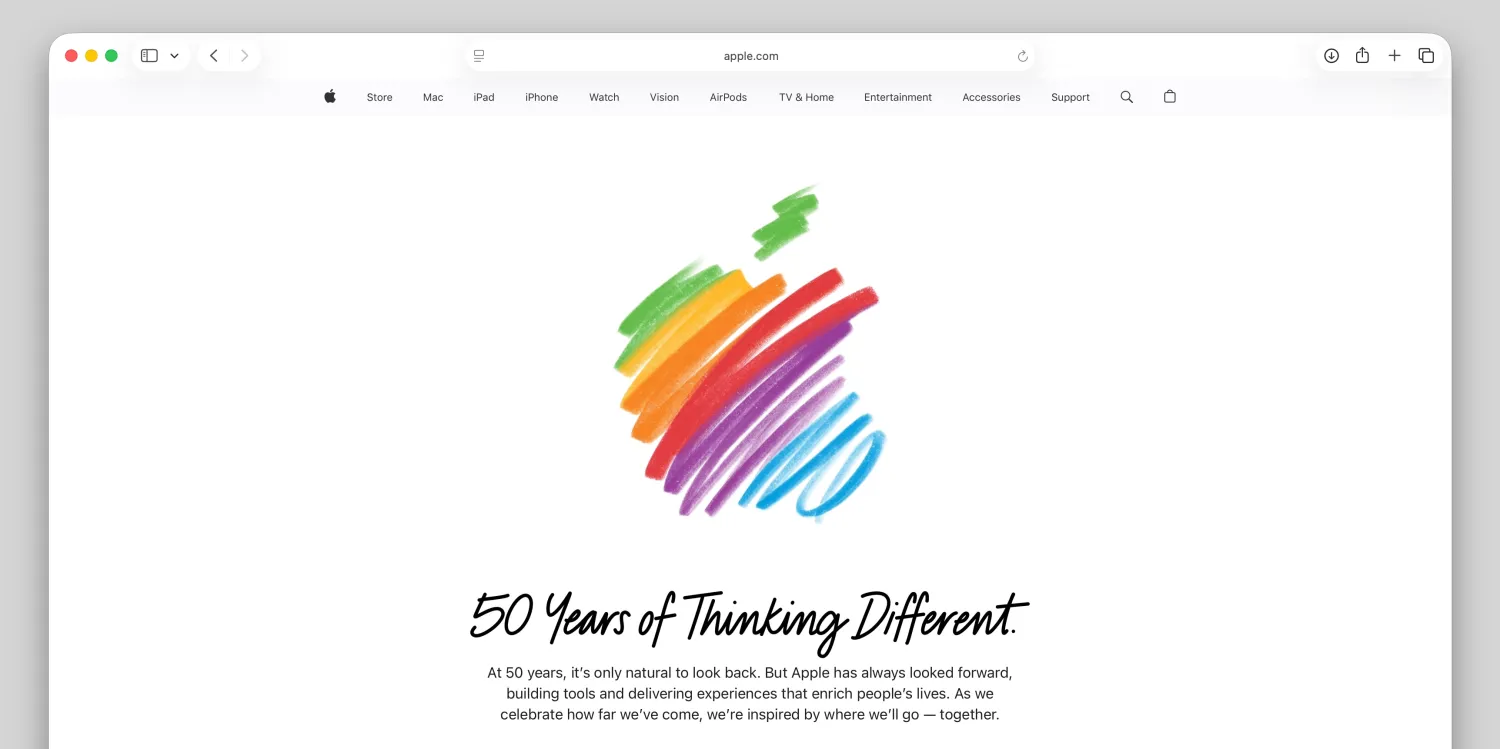
Today, April 1, 2026, Apple turns 50. Half a century. It’s the kind of milestone that invites reflection, nostalgia, and — if you dig deep enough — a healthy dose of myth-busting. Because for all the folklore that surrounds Apple’s origin story, a surprising amount of what most people “know” about the company simply isn’t true.
David Pogue has covered Apple for 41 years. His new book, Apple: The First 50 Years, is a 548-page excavation of the company’s history, and it does something rare: it tells the story straight. No hagiography, no hit pieces — just the kind of clear-eyed account that only comes from decades of proximity to the subject.
So Let’s Start with the Most Persistent Myth of Them All
No, Apple Was Not Founded in a Garage
The garage story is Silicon Valley’s favorite creation myth. It’s clean, cinematic, and deeply embedded in Apple’s public identity. It’s also not quite accurate.
Apple was officially born on April 1, 1976, when Ron Wayne — a 41-year-old senior designer Jobs had met at Atari — walked into the Santa Clara County registrar’s office with a two-page partnership agreement and made it official. Under that agreement, Steve Jobs and Steve Wozniak each held 45% of the company, with Wayne receiving the remaining 10%. There was no garage ceremony. There was a legal document and a county clerk.
That same year, the fledgling company was “thrilled to sell 150 of those Apple I boards,” as Pogue writes. Fast forward to 2026, and Apple’s annual revenue approaches $400 billion — more than Meta, Netflix, and Intel combined. The distance between those two facts is almost impossible to wrap your head around.
And while we’re correcting the record: Apple wasn’t even the Steves’ first attempt at building something. It was actually their fourth business venture together. The mythology of the scrappy first-time founders starting from zero? Not quite right either.
The “Lost Years” Were Actually Apple’s Most Important
Here’s the one that tends to get the most pushback. From 1985 to 1996, after Steve Jobs was pushed out of the company he co-founded, the conventional wisdom holds that Apple drifted — rudderless, uninspired, and largely irrelevant. Pogue pushes back hard on this.
Those eleven years, he argues, were foundational to everything Apple would later become. It was during this period that the company released the PowerBook, one of the most influential laptop designs in computing history. It also gave the world QuickTime — which Pogue points out is essentially the technological ancestor of video streaming as we know it today. The seeds of Apple’s future were planted precisely during the era everyone likes to write off.
And while we’re at it: John Sculley did not fire Steve Jobs. The board did. Jobs didn’t write the iconic “Think Different” ad campaign. And he didn’t name the Macintosh either. That name, beloved by generations of Mac users, came from someone else entirely.
These aren’t small footnotes. They reshape how we understand the company’s actual history versus the polished legend that’s been told and retold so many times it’s calcified into accepted truth.
Apple and AI: Behind, But Banking on Being Better
No honest look at Apple in 2026 can avoid the AI conversation, and Pogue doesn’t try to sidestep it. The perception, widely held and largely fair, is that Apple fumbled the AI moment. In June 2024, the company promised a revamped Siri through its Apple Intelligence platform. Nearly two years on, that promise remains largely unfulfilled — and the tech world has noticed.
Recent reporting from Bloomberg indicates Apple is now pivoting its AI focus toward hardware and services, a strategic shift that signals the company is rethinking its approach. A further report suggests Apple plans to open Siri up to third-party AI assistants, with iOS 27’s Extensions feature expected to play a central role in how that integration actually works.
What could a genuinely capable future Siri look like? Pogue sketches a compelling picture: an assistant with access to your texts, emails, calendar, and personal data — one that can synthesize all of it in real time and answer something like “what time do I need to leave to pick up my mom?” before you’ve even finished the thought. Contextual, personal, and genuinely useful rather than technically impressive but practically clunky.
It’s an ambitious vision. Whether Apple can execute it is the question that will define the next chapter of its story.
Tim Cook, for his part, offered Pogue a line that might end up being Apple’s AI epitaph — or its redemption arc, depending on how things unfold: “We aren’t always first, but we are usually the best.”
That’s the bet Apple is making. And given its history, it would be unwise to count them out.
Author