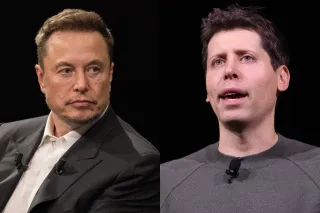
Elon Musk OpenAI Lawsuit Heads to Trial in High-Stakes Showdown
The Elon Musk OpenAI lawsuit is finally heading to trial, marking the dramatic peak of a years-long feud between two of the most influential figures in the tech world. Beginning Monday in Oakland, California, the case pits Musk against Sam Altman, OpenAI president Greg Brockman, and key partner Microsoft, with deeply consequential implications for the future of one of the most valuable AI companies on the planet.
The legal showdown will examine whether OpenAI strayed from its original founding mission when it shifted from a non-profit research lab to a for-profit corporate giant. With OpenAI reportedly preparing for a public listing at a roughly $1 trillion valuation, the timing of this trial could not be more significant.
The Origins of the Feud
To understand the bitterness between Musk and Altman, it helps to revisit how OpenAI came to be. The company was founded in 2015 as a non-profit organization committed to developing artificial intelligence safely and for the broader benefit of humanity.
Key details from those early years include:
- Musk, Altman, and several others co-founded OpenAI as a non-profit
- Musk reportedly contributed around $38 million in funding during the early years
- The original mission was rooted in transparency and public benefit, not commercial gain
That cooperative spirit didn’t last. Tensions began to surface around 2017 when Musk reportedly grew frustrated with OpenAI’s progress and attempted to gain greater control over the organization. When his bid was rejected, he stepped away from the company’s board in 2018 and stopped providing further funding.
In the years that followed, OpenAI took a dramatically different path. It launched ChatGPT, secured tens of billions in investment from Microsoft, and eventually transitioned into a for-profit business while still maintaining oversight from its original non-profit arm. The transformation was completed in 2025, when regulators gave final approval for the restructuring.
What Musk Alleges in the Lawsuit
The core of Musk’s lawsuit is that OpenAI’s transition from a non-profit to a for-profit enterprise was a betrayal of the founding agreement. He argues that the original mission of OpenAI was to develop AI for the public good, not to generate profits for a small group of executives and investors.
Musk’s complaint centers on several major claims, including:
- Breach of contract by Altman, Brockman, OpenAI, and Microsoft
- Unjust enrichment of executives through their control of the company
- A fundamental departure from OpenAI’s promise to benefit humanity
The lawsuit further alleges that Altman and Brockman personally benefited from the company’s commercial trajectory in ways that violated the spirit and substance of OpenAI’s original non-profit charter.
The Remedies Musk Is Seeking
Musk is not just looking for financial compensation. He is asking the court to reshape the company in fundamental ways. Some of the major remedies he is pursuing include:
- The removal of Sam Altman and Greg Brockman from their leadership roles
- More than $134 billion in damages, which Musk says would be redirected to OpenAI’s non-profit arm
- A reversal of the company’s restructuring into a for-profit entity
If granted, these outcomes would dramatically alter the future of OpenAI, potentially halting its planned market debut and unwinding years of corporate transformation.
OpenAI’s Response: Jealousy and Regret
OpenAI has firmly rejected Musk’s claims. The company argues that Musk himself agreed in 2017 that creating a for-profit arm would be a necessary step for the company to compete and survive in the AI race.
Some of the key points in OpenAI’s defense include:
- Musk reportedly endorsed the for-profit transition before walking away
- His funding was structured as a tax-deductible donation, not an equity investment
- Musk holds no ownership stake in OpenAI as a result
- The lawsuit is, in OpenAI’s view, driven by personal jealousy rather than legal merit
OpenAI has gone as far as accusing Musk of being “motivated by jealousy” and feeling “regret for walking away” from a company that has since become one of the most influential AI organizations in the world.
The Stakes for OpenAI
The lawsuit lands at a particularly delicate moment for OpenAI. The company is reportedly preparing to go public later this year at a valuation of around $1 trillion, a milestone that would mark one of the largest tech listings in history.
The outcome of this trial could significantly influence:
- The credibility and structural integrity of OpenAI ahead of its IPO
- Investor confidence in the company’s leadership
- The legal interpretation of mission-driven non-profits transitioning to commercial entities
- Future regulatory scrutiny of major AI organizations
Even short of a direct ruling against OpenAI, the trial may surface internal communications and decisions that could reshape public perception of the company.
A Star-Studded Witness Lineup
The trial is expected to draw an extraordinary lineup of witnesses, reflecting just how intertwined the case is with the modern tech ecosystem. Some of the prominent figures expected to take the stand include:
- Elon Musk, who is leading the legal challenge
- Sam Altman, the public face of OpenAI
- Greg Brockman, OpenAI’s president
- Satya Nadella, the CEO of Microsoft
Their testimony, combined with internal correspondence between Musk and OpenAI executives, promises to offer a rare behind-the-scenes look at how one of the most consequential AI companies in history was built and reshaped.
A Trial With Wider Implications
While the legal arguments will focus on contracts, donations, and mission statements, the trial is also poised to fuel a much broader conversation about the future of AI governance.
Some of the wider questions the case raises include:
- Can mission-driven non-profits credibly transition into commercial entities without losing their original purpose?
- How should regulators view the blurred lines between research labs and corporate giants in the AI industry?
- What protections, if any, do early donors and contributors have when an organization fundamentally shifts course?
- How much trust should the public place in AI leaders who claim long-term societal goals?
Industry watchers will be paying close attention not just to the verdict, but to the public testimony, evidence, and arguments that emerge over the next few weeks.
Two Visions of the AI Future Collide
At its core, the Musk-Altman dispute is about more than money or control. It reflects two competing visions for how powerful artificial intelligence should be developed and deployed.
Musk’s argument leans into the idea that AI should be governed by a strict, mission-driven structure that prioritises long-term public benefit. Altman, on the other hand, has championed a more pragmatic path, arguing that scaling AI safely requires the kind of capital and infrastructure that only commercial structures can sustain.
Both arguments have merit, and both have shaped the global AI conversation in significant ways. The trial may ultimately become a defining moment in determining which philosophy wins out, both legally and culturally.
Timeline of the Trial
Here’s what to expect over the next few weeks:
- Jury selection began Monday morning in a federal courthouse in Oakland
- Opening arguments from both sides are expected later this week
- The trial is anticipated to run between two and three weeks
- A flurry of expert witnesses, internal documents, and high-profile testimony will shape the proceedings
The verdict, when it arrives, could redraw the boundaries of one of the most powerful companies in modern technology.
Final Thoughts
The Elon Musk OpenAI lawsuit is shaping up to be one of the most closely watched courtroom battles in tech history. With deep personal animosity, billions of dollars on the line, and the future direction of OpenAI hanging in the balance, the trial offers a rare collision of ego, ambition, and legal scrutiny in the artificial intelligence sector.
Whether Musk succeeds in dismantling OpenAI’s for-profit structure or Altman emerges with the company’s trajectory intact, the case is set to leave a lasting mark on how the world thinks about AI, governance, and the responsibilities of those building the future.
Author