Kevin Warsh Fed Chair Pick Faces Major Hurdles Before Any Rate Cuts
Kevin Warsh Fed Chair speculation has dominated headlines in recent weeks, especially with President Donald Trump openly pushing for a rapid round of interest rate cuts once his pick takes the helm. But despite the political pressure, Americans hoping for cheaper mortgages, lower auto loan payments, or easier business borrowing may be in for a longer wait than expected.
Even if Warsh secures Senate confirmation and replaces Jerome Powell when his term ends on May 15, several powerful forces stand between him and quick rate cuts. From rising inflation to a divided Federal Open Market Committee, the road ahead looks far more complicated than Trump’s preferred narrative suggests.
Warsh’s Path to the Fed’s Top Job
Warsh’s chances of becoming the next Fed chair improved sharply on Friday after U.S. Attorney for Washington, D.C., Jeanine Pirro, announced that she would drop her probe into Powell. The investigation centered on Powell’s testimony last summer regarding the Fed’s costly building renovations, and its closure removed a notable political distraction from the transition process.
While the move clears one obstacle, it doesn’t make Warsh’s job any easier. Should he be confirmed, several major issues will be waiting on his desk:
- Persistently high inflation driven by rising gas prices
- Lingering questions about his political independence from the White House
- A Federal Reserve committee where most other voters are not yet ready to cut rates
- A Wall Street consensus that doesn’t expect rate cuts until late 2027
In other words, even with the chair’s gavel in hand, Warsh would still be only one voice in a committee of 12 — and the broader macroeconomic picture isn’t doing him any favors.
Inflation Stands in the Way
The biggest hurdle isn’t politics. It’s inflation. Rising oil and gas prices, fueled in part by the Iran war that began on February 28, sent inflation to a two-year high of 3.3 percent in March. That’s well above the Fed’s 2 percent target, and it’s exactly the kind of environment in which the central bank typically holds — or even raises — its benchmark short-term rate, currently at about 3.6 percent.
The Fed lowers rates when it wants to stimulate hiring and spending, but with inflation moving in the wrong direction, the case for easing has weakened considerably. Earlier this year, several Fed officials had been worried that slowing job growth was a sign that rates were too high. Now, with the labor market showing signs of stabilizing, that argument has lost some of its momentum.
Voices Within the Fed Are Pushing Back
Warsh’s challenge is amplified by the views of his colleagues. Even officials who supported earlier cuts are now signaling caution.
Some of the most notable Fed voices include:
- Christopher Waller, who voted for a rate cut in January, recently warned that rising inflation could force the Fed to hold steady. He also suggested that with unemployment still relatively low at 4.3 percent, more cuts may not be necessary.
- Stephen Miran, appointed by Trump last September, was the only official to vote for a rate cut in March and has consistently supported lower rates. However, Warsh will replace Miran, removing one of the committee’s most dovish voices.
- Michelle Bowman, another Trump-era appointee, has occasionally dissented in favor of cuts, though she remains more cautious overall.
- A larger faction on the committee, according to minutes from the March meeting, wants the Fed to begin considering rate hikes, not cuts, in upcoming sessions.
The committee voted 11-1 to keep rates unchanged in March, and the next meeting — likely Powell’s last — is widely expected to leave rates untouched as well. That sets a tough backdrop for Warsh to push through significant policy shifts immediately.
Treasury Secretary Offers Some Cover
In a notable signal, Treasury Secretary Scott Bessent said last week that if the Fed wanted “to wait for some clarity” before cutting rates, he understood that view. Many analysts saw the comment as a quiet bit of political cover for Warsh, suggesting that holding rates steady in the early months of his term would not necessarily trigger a public clash with the administration.
That kind of breathing room could prove valuable, especially if Warsh wants to demonstrate his independence before making any meaningful policy moves.
Why Warsh Can’t Move the Fed Alone
Even the most confident new chair can’t simply impose his views on the rest of the Fed. Each of the 12 voting members has their own perspective, shaped by economic data, regional conditions, and personal philosophy.
Several structural realities make quick policy shifts unlikely:
- The Fed’s rate-setting committee meets just eight times a year
- Each member casts an equal vote
- Most have publicly signaled they are not eager to cut rates while inflation remains elevated
- A new chair often takes time to build consensus before making bold moves
Jon Faust, a Johns Hopkins economist and former adviser to Powell, noted that the last time a chair single-handedly turned the committee was during the late 1990s, when Alan Greenspan persuaded the Fed that rising productivity from the Internet would keep inflation in check. But Greenspan had years of credibility built up before achieving that level of influence.
By contrast, Faust pointed out that Warsh enters the role without Greenspan’s gravitas — and with significant political baggage attached due to Trump’s open lobbying for quick rate cuts. To reinforce his independence, Faust and other economists suggested that Warsh may need to resist immediate cuts and instead let the data lead.
Warsh’s Senate Hearing Sent Mixed Signals
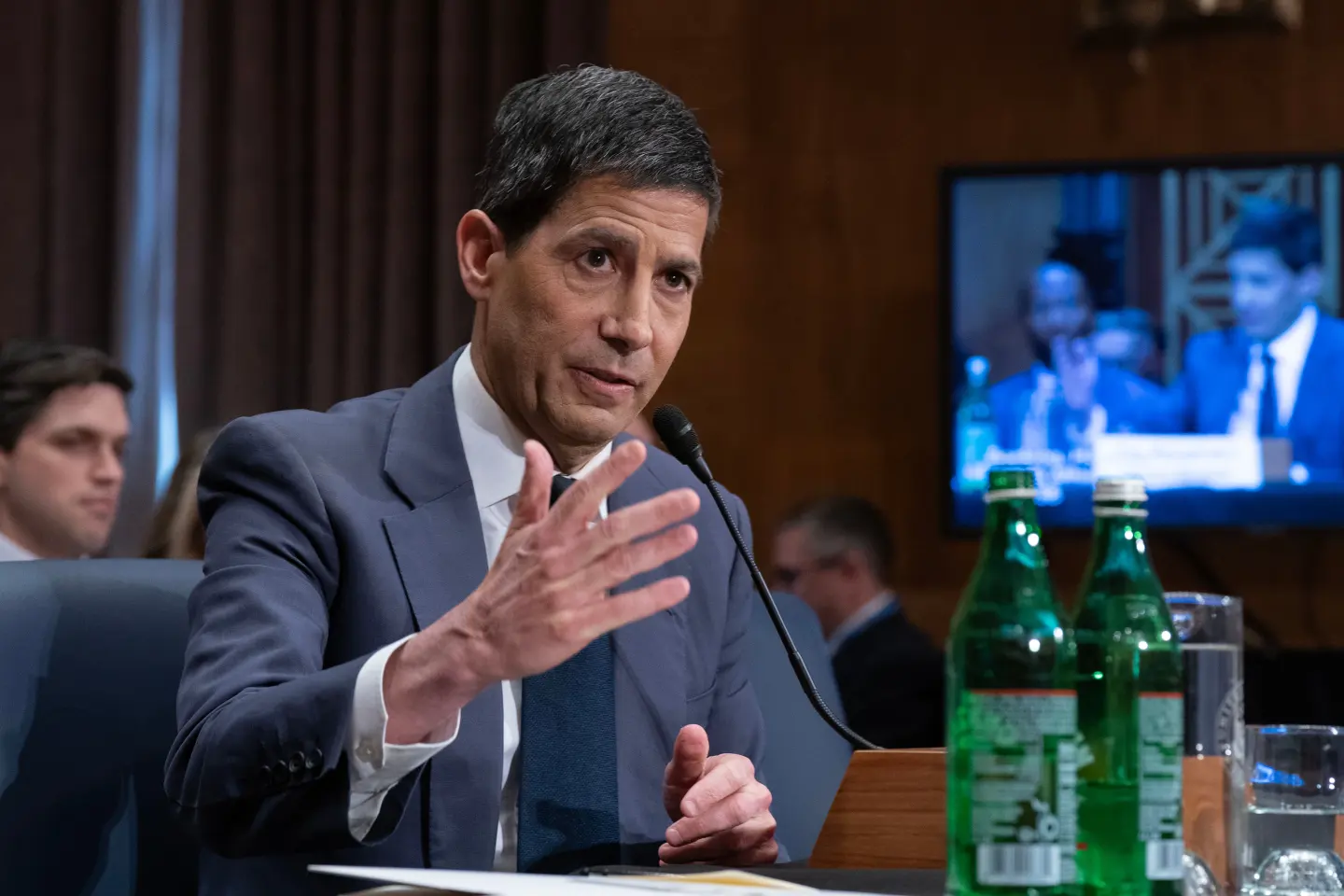
At his Senate confirmation hearing on Tuesday, Warsh made it clear that he intends to operate independently from White House pressure. However, he was notably cautious about discussing the direction of interest rates, missing what some saw as a chance to make a clear case for easing.
Some of the takeaways from his testimony include:
- He acknowledged a “short window” to bring inflation back to target, which some interpreted as more aligned with rate hikes than cuts
- He said the job market is essentially at “maximum employment,” reducing the urgency for cuts
- He stepped back from his earlier strong claims that artificial intelligence would allow the Fed to keep rates lower without inflationary risks
- He admitted that the impact of AI on inflation and growth “we can’t bank on”
That softening of his prior view drew attention. Aditya Bhave, head of U.S. economics at BofA Securities, said Warsh’s stated outlook is “much more consistent with an extended hold than additional cuts.”
Claudia Sahm, chief economist at New Century Advisers and a former Fed economist, was even more pointed, saying Warsh “muddied the waters” with a lack of specific commitments.
Trump Maintains the Pressure
While Warsh treads carefully, Trump has shown no signs of backing off. Asked last week on Fox Business whether he still expected interest rates to drop, Trump confidently said yes — predicting rates “should be much lower” once Warsh takes office.
That kind of public messaging adds an additional layer of complexity to Warsh’s situation. Acting too quickly could be seen as bowing to political pressure, while moving too slowly could fuel direct conflict with the White House.
Wall Street Isn’t Buying the Optimism
Markets seem far more skeptical than Trump. Wall Street investors currently see little chance of a rate cut until October 2027, according to futures pricing. That outlook reflects the broader belief that:
- Inflation pressures will likely persist into the medium term
- The labor market remains too healthy to justify aggressive easing
- The Fed will move cautiously to avoid undermining its inflation-fighting credibility
- Geopolitical risks could continue to drive volatility in commodity prices
This long timeline highlights just how difficult it would be for Warsh to engineer a sudden pivot, even with full political backing.
A Fluid Economic Picture
Of course, the economic situation could shift quickly. If inflation cools more than expected and the labor market weakens, the calculus could change rapidly. Some of the dynamics that could open the door to cuts include:
- A sharper drop in oil prices following any de-escalation in the Middle East
- A meaningful slowdown in hiring or wage growth
- Weaker consumer spending data
- A clear return of inflation toward the Fed’s 2 percent target
The U.S. economy has been notably volatile over the past year, oscillating between signs of strength and signs of fatigue. That unpredictability cuts both ways — it could justify cuts later in the year, or it could keep the Fed on hold even longer.
Final Thoughts
The Kevin Warsh Fed Chair transition is shaping up to be one of the most closely watched leadership shifts in modern Federal Reserve history. While Trump is publicly pushing for rapid rate cuts, the underlying realities of inflation, labor markets, committee dynamics, and central bank credibility suggest that change will come slowly, if at all.
Warsh enters the role with both opportunity and constraint. He has the chance to define a new era of Fed leadership, but he also faces the dual challenge of proving his independence and navigating an economy where political pressure and economic data are pulling in different directions.
For everyday Americans wondering when borrowing costs might finally come down, the message is straightforward: don’t pencil in lower rates just yet. The path to cheaper loans is real, but it is far from immediate.
2 / 2
Author