Microsoft OpenAI Partnership Restructure Reshapes the AI Industry
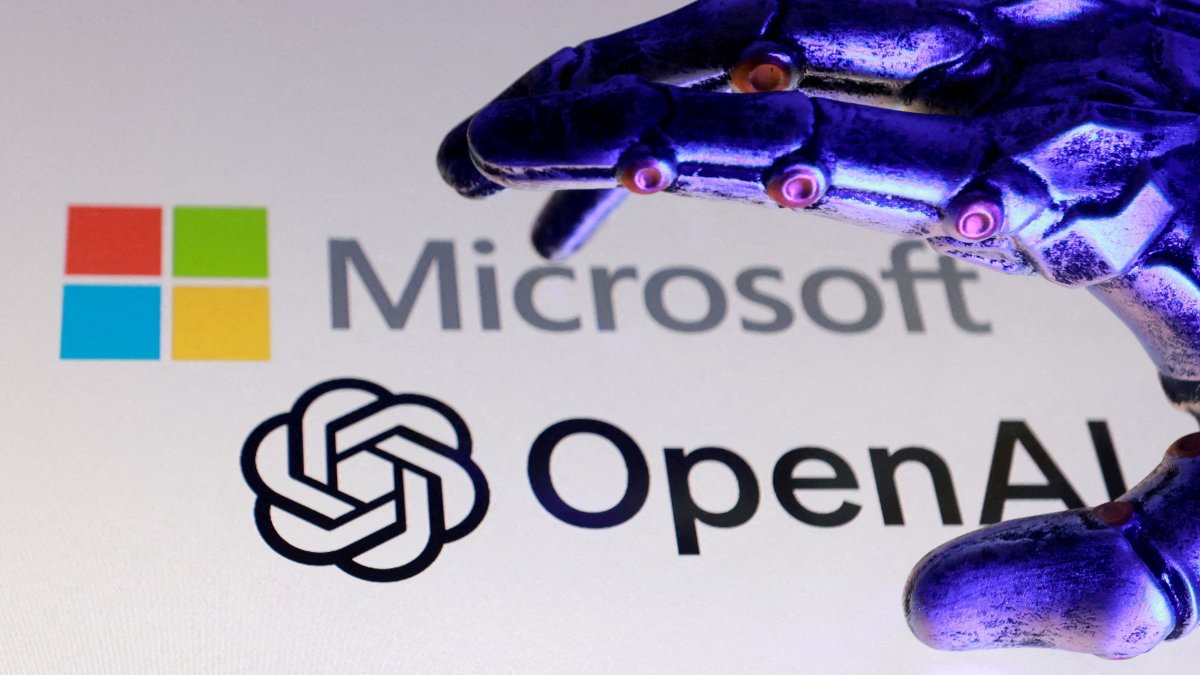
The Microsoft OpenAI partnership restructure announced on Monday marks one of the most significant shifts in the artificial intelligence industry to date. The two companies have officially overhauled the agreement that defined the modern AI commercial era, dismantling key pillars of exclusivity and revenue sharing in favor of a looser, time-limited arrangement that gives both sides much more freedom to pursue rival relationships.
The amended deal, disclosed simultaneously through blog posts on both companies’ websites, marks the most substantial restructuring since Microsoft made its initial $1 billion investment in OpenAI back in 2019. What was once one of the most consequential exclusive technology alliances of the modern era has now been reshaped into something more closely resembling a strategic but arm’s-length commercial relationship.
Key Changes Under the New Deal
The new agreement contains several major shifts that fundamentally alter the dynamics between Microsoft and OpenAI:
- Microsoft will no longer pay any revenue share to OpenAI when customers access OpenAI models through Azure.
- OpenAI will continue paying Microsoft a 20 percent revenue share through 2030, but this is now subject to an undisclosed total cap.
- Microsoft retains a license to OpenAI’s intellectual property for models and products through 2032, but the license is now explicitly non-exclusive.
- OpenAI is finally free to serve all of its products to customers across any cloud provider, including Amazon Web Services and Google Cloud.
This last change is perhaps the most consequential. For years, Azure was the only place enterprise customers could access OpenAI’s models. That gate has now been thrown wide open.
Both Sides Spin the Announcement
Microsoft framed the changes as a natural evolution. In its blog post, the company emphasized that the rapid pace of AI innovation required updates to the partnership in order to better serve customers and both companies. OpenAI offered similar diplomatic language, calling the amended agreement a move grounded in flexibility, certainty, and a focus on delivering the benefits of AI broadly.
The carefully chosen phrasing, however, masks the dramatic tension that led up to this restructuring. Months of behind-the-scenes negotiations, competing announcements, public contradictions, and even the threat of litigation reportedly brought both companies to this moment.
A Look Back at Where It All Started
To understand why this matters so much, it helps to revisit how the partnership began. When Microsoft initially poured $1 billion into OpenAI in 2019 and later expanded its investment to over $13 billion, it secured something truly extraordinary: exclusive commercial access to OpenAI’s models and intellectual property.
Azure became the only cloud provider for OpenAI’s API products. Microsoft integrated OpenAI’s GPT models into everything from Bing search to Office tools to GitHub Copilot. The arrangement was widely regarded as one of the most lopsided technology licensing deals in modern tech history.
The original deal even included an unusual safeguard. Microsoft’s exclusive rights would remain in place until OpenAI achieved artificial general intelligence, or AGI. OpenAI’s board would have the authority to declare when AGI had been reached, triggering certain changes to the commercial terms. It was, effectively, a philosophical tripwire embedded in a business contract.
Why the Old Structure Stopped Working
The original arrangement made sense when OpenAI was primarily a research lab with limited commercial reach. But once ChatGPT exploded into the mainstream in late 2022 and OpenAI’s annualized revenue rocketed into the billions, the constraints began to feel increasingly suffocating.
Enterprise customers, who quickly became OpenAI’s fastest-growing segment, overwhelmingly operate in multi-cloud environments. Locking those customers into Azure wasn’t just a technical limitation. It was actively driving them toward competitors like Anthropic and Google, both of whom emphasized cloud flexibility as a key selling point.
In an internal memo earlier this month, OpenAI’s revenue chief Denise Dresser reportedly told staff bluntly that the Microsoft partnership had limited the company’s ability to meet enterprise customers where they actually operated.
The $50 Billion Amazon Bombshell
The immediate trigger for this restructuring wasn’t philosophical. It was a $50 billion check from Amazon. In February, OpenAI announced a massive new partnership with Amazon involving $15 billion upfront and another $35 billion to follow once certain conditions were met.
In return, OpenAI agreed to expand its cloud agreement with AWS by $100 billion over eight years and, most importantly, committed to making AWS the exclusive third-party distribution provider for its new enterprise agent-building platform called Frontier.
The catch was that OpenAI’s existing contract with Microsoft almost certainly prohibited these arrangements. Microsoft held exclusive rights to any OpenAI product accessed through an API, which clearly included Frontier. On the same day OpenAI announced the Amazon deal, Microsoft issued a pointed public statement insisting that Azure remained the exclusive cloud provider for OpenAI’s APIs.
The contradiction between the two announcements created immediate legal exposure. The Financial Times reported in March that Microsoft was actively considering legal action to enforce its contractual rights, putting OpenAI in an impossible position. Monday’s restructuring effectively resolves that crisis, retroactively validating the Amazon arrangement and eliminating the legal uncertainty.
Amazon Celebrates the Win
Amazon CEO Andy Jassy didn’t waste any time celebrating. Posting on X, he expressed enthusiasm about making OpenAI’s models available directly to customers through AWS Bedrock in the coming weeks, alongside the upcoming Stateful Runtime Environment. He also confirmed that Amazon would share more details at a major event in San Francisco on Tuesday.
For AWS, this represents a significant strategic victory. The company can now position itself as a model-agnostic platform where enterprises can access both OpenAI and Anthropic models, the latter benefiting from Amazon’s existing investment of up to $4 billion.
Inside the New Financial Math
The financial mechanics of the new deal reveal a major shift in cash flow. Under the previous structure, money flowed in both directions. Microsoft paid OpenAI when enterprise customers accessed OpenAI models through Azure’s API, while OpenAI paid Microsoft a 20 percent share when customers bought ChatGPT subscriptions or accessed OpenAI models through their own applications.
The new agreement makes the cash flow one-directional. Microsoft no longer pays OpenAI anything. OpenAI continues paying Microsoft its 20 percent share, but only through 2030 and now subject to a total cap whose specific amount remains undisclosed. Given OpenAI’s rapid revenue growth, that cap could become significant relatively quickly.
For Microsoft, the trade-off is clear. The company sacrifices Azure’s exclusivity in exchange for immediate financial relief from outbound revenue-share payments. It also retains roughly 27 percent ownership of OpenAI’s for-profit entity, meaning it still benefits from the company’s growth regardless of which cloud serves the workloads. Last quarter alone, Microsoft reported $7.5 billion in revenue from its OpenAI investment.
For OpenAI, accepting continued payment obligations was a worthwhile trade for the freedom to sell across all major cloud platforms. That commercial freedom is arguably worth far more than any revenue-share savings, particularly given how aggressively competitors had been exploiting OpenAI’s Azure-only constraint.
The Disappearance of the AGI Clause
One of the more philosophically interesting aspects of the new deal is what it does to the AGI provision that once governed the partnership. Under the original agreement, Microsoft’s exclusive rights would change once OpenAI’s board declared that AGI had been achieved. That provision was meant to ensure superintelligent systems remained under nonprofit board control rather than being commercially exploited.
In practice, the clause created perverse incentives. OpenAI had financial reasons to never declare AGI, while Microsoft had reasons to argue that AGI had not been reached. The new deal sidesteps the entire problem by tying Microsoft’s license to a fixed calendar date of 2032, completely independent of OpenAI’s technological progress.
The shift reflects either a maturation or perhaps a quiet disillusionment with AGI as a meaningful commercial or governance concept. When the original deal was signed, AGI felt like a distant, almost mythical threshold. With models like GPT-5.5 demonstrating increasingly general capabilities, the term has begun to feel more like a marketing slogan than a technical milestone.
A New Era of Multi-Cloud AI Competition
The biggest immediate winner in this restructuring is the enterprise customer. For years, organizations seeking access to OpenAI’s models had essentially one choice: Azure. That constraint has now disappeared.
This multi-cloud availability arrives at a moment when the AI infrastructure market is undergoing simultaneous rapid consolidation and expansion. Meta recently committed $48 billion to cloud providers CoreWeave and Nebius. Amazon’s combined investments in OpenAI and Anthropic position AWS as a uniquely model-agnostic platform.
The competitive dynamics have become genuinely complex. Microsoft now competes with OpenAI in AI products through Copilot versus ChatGPT, partners with OpenAI’s rival Anthropic for various agentic products, and remains OpenAI’s largest shareholder all at the same time. OpenAI sells on Azure, soon AWS, eventually Google Cloud, while building its own data centers. Amazon invests in both OpenAI and Anthropic. Google develops its own models while hosting competitors on Vertex AI.
What Lies Ahead
Several important questions remain unanswered. The exact dollar amount of the revenue-share cap hasn’t been disclosed and will become enormously important as OpenAI’s revenue continues to scale. The meaning of “first on Azure,” whether it implies a meaningful exclusivity window or merely simultaneous availability, has been deliberately left ambiguous.
OpenAI’s own infrastructure ambitions, including plans to build proprietary data centers, could eventually reduce its dependence on any third-party cloud, including Azure. Microsoft’s position, while less dominant than before, is far from diminished. It remains OpenAI’s primary cloud provider, its largest shareholder, and a key licensee through the end of the decade.
Sam Altman’s Reaction
OpenAI CEO Sam Altman announced the changes on X with characteristic brevity, simply stating that the company had updated its partnership with Microsoft. The simplicity of the message belied the magnitude of what had just happened.
The Bottom Line
The Microsoft OpenAI partnership restructure represents a coming-of-age moment for OpenAI. The company that once depended on Microsoft for capital, compute, distribution, and credibility now operates as an independent force capable of striking multi-billion-dollar deals with Microsoft’s biggest rivals.
Seven years after Satya Nadella and Sam Altman first shook hands on a deal to commercialize artificial intelligence, the assumption that OpenAI needed Microsoft more than the reverse no longer holds. The partnership that launched the generative AI revolution has survived, but the power dynamics that originally created it have not.
In the AI industry, it turns out, the only thing moving faster than the technology itself is the leverage.
Author