OpenAI Smartphone AI Agents Could Reshape How We Use Mobile Devices
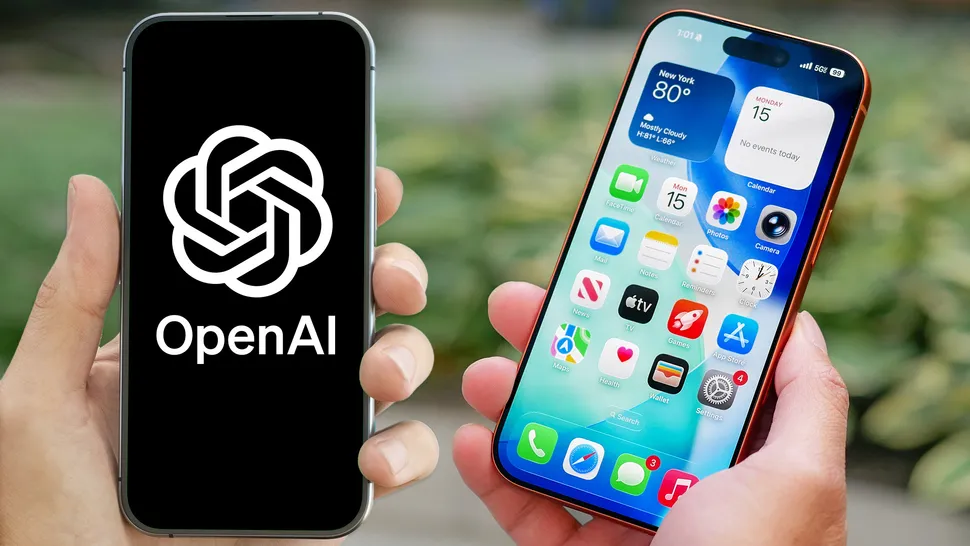
The OpenAI smartphone AI agents concept is generating major buzz across the tech world. According to a fresh report from well-known industry analyst Ming-Chi Kuo, the company behind ChatGPT may be working on a smartphone in collaboration with MediaTek, Qualcomm, and Luxshare. If the project pans out, it could mark one of the most ambitious attempts yet to reimagine what a mobile phone is and what it can do.
The idea isn’t just about launching another phone in an already crowded market. It’s about fundamentally rethinking the way users interact with technology, replacing the familiar grid of apps with intelligent AI agents capable of completing tasks autonomously.
The Players Behind the Project
Kuo, who has built a strong reputation reporting on Apple’s hardware plans over the years, suggests that OpenAI is teaming up with some heavy hitters in the chip and manufacturing world. According to his note, MediaTek and Qualcomm would jointly develop the smartphone’s chip, while Luxshare would handle co-design and manufacturing duties.
This combination of partners is significant. Qualcomm is one of the most respected names in mobile chip design, MediaTek brings additional flexibility and scale, and Luxshare has experience producing devices for major tech companies, including Apple. Together, they form a credible foundation for building a competitive smartphone from the ground up.
A Phone Without Apps?
The most fascinating element of Kuo’s report involves how OpenAI envisions its smartphone working. Instead of relying on the traditional app model, the device would be built around AI agents that can perform a wide range of tasks for users.
For decades, smartphones have been dominated by Apple and Google, who control the app ecosystems and decide how much access third-party apps get to system features. By developing its own smartphone and hardware stack from scratch, OpenAI could free itself from those restrictions and integrate AI into the device on a much deeper level.
With ChatGPT now approaching a billion weekly users, a daily-use hardware product could give OpenAI a powerful new path to reach consumers and embed itself in everyday routines.
The Industry Trend Toward AI Agents
OpenAI isn’t the only player thinking this way. The vision of a future without traditional apps has been gaining traction across the tech industry. Vibe coding app developers and several prominent founders have been openly predicting that AI agents will eventually replace many of the apps we currently rely on.
Carl Pei, CEO of the smartphone company Nothing, made waves at SXSW earlier this year when he predicted that apps would eventually disappear as AI agents take over the work they currently perform. The argument is straightforward. If an AI assistant can book your flight, order your dinner, send a message to a friend, or schedule a meeting all through natural conversation, why would you need to open a separate app for each task?
This is exactly the kind of experience OpenAI seems to be aiming for with its rumored device.
Why a Custom Smartphone Makes Sense for OpenAI
According to Kuo, OpenAI’s smartphone would be designed to continuously understand its users’ context. That kind of always-on awareness would require deep system-level access that simply isn’t available to apps running on existing iOS or Android devices.
By controlling both the hardware and software stack, OpenAI could gather far more data about user habits, preferences, and patterns than any app currently can. That information would then be used to make AI agents smarter, more useful, and more personalized.
The analyst also notes that OpenAI plans to use a mix of small on-device AI models and larger cloud-based models. The smaller models would handle quick, lightweight requests directly on the phone for speed and privacy, while more complex queries would be routed to the cloud for processing.
A Long Road to Production
Despite the excitement surrounding the rumor, this isn’t a project that’s hitting shelves anytime soon. According to Kuo’s note, the smartphone’s specifications and component suppliers are expected to be finalized by the end of 2026 or early 2027. Mass production isn’t projected to begin until 2028.
That timeline gives OpenAI plenty of room to refine its vision, but it also means the company will be playing catch-up to a market that’s evolving extremely fast. By 2028, Apple, Google, Samsung, and several Chinese manufacturers will likely have made significant progress in their own AI integration efforts.
Earbuds First, Then a Phone?
Earlier this year, OpenAI’s Chief Global Affairs Officer Chris Lehane confirmed that the company was on track to announce its first hardware product in the second half of 2026. Multiple reports at the time suggested that the initial device would be a uniquely designed pair of earbuds rather than a smartphone.
If those reports prove accurate, OpenAI’s hardware journey would begin with a smaller, more focused product before tackling the much more ambitious smartphone effort. Earbuds make sense as a starting point because they offer a natural way to interact with AI through voice without requiring users to commit to an entirely new device ecosystem upfront.
The Competition Factor
OpenAI isn’t entering this space without rivals. Several well-funded companies have been attempting to crack the AI hardware market in recent years, including Humane with its AI Pin and Rabbit with its R1 device. Both products generated massive hype before launch but received mixed reviews once they reached customers.
The lessons from those attempts will likely shape how OpenAI approaches its own hardware. Building AI-first devices is genuinely difficult, and consumers have shown they’re not always willing to give up the convenience of their existing smartphones for unproven new categories.
Why a Phone Specifically Could Work
The smartphone format gives OpenAI a unique advantage that standalone AI gadgets lack. People already carry phones everywhere, use them constantly, and trust them with their most personal data. By offering a familiar form factor with a radically rethought interface, OpenAI could ease users into an AI-first experience without forcing them to abandon what they already know.
Whether consumers will actually want a phone where AI agents replace traditional apps remains to be seen, but the bet is intellectually compelling. If the AI agents are powerful enough and the interface is intuitive enough, the experience could feel less like switching to a new device and more like upgrading to a smarter, more responsive version of the technology people already use every day.
OpenAI Stays Quiet
OpenAI itself hasn’t commented on Kuo’s report, which is consistent with the company’s general approach of staying quiet about hardware plans until official announcements are ready. That silence isn’t necessarily a denial, but it does mean the project remains firmly in the rumor stage for now.
A High-Stakes Bet on the Future
If OpenAI does follow through on this smartphone vision, the company will be making one of the boldest bets in modern tech history. Trying to break Apple and Google’s stranglehold on the smartphone market is no small task, and doing so with a fundamentally different software philosophy adds an additional layer of risk.
At the same time, the potential reward is enormous. If OpenAI can prove that AI agents can replace apps in a meaningful way, it would not only establish itself as a hardware leader but could also force the entire smartphone industry to rethink how mobile computing works.
The Bottom Line
The OpenAI smartphone AI agents concept represents a genuinely radical vision for the future of mobile devices. By replacing apps with intelligent AI agents, controlling the hardware and software stack, and partnering with proven manufacturers, OpenAI appears to be preparing for a long-term play to reshape how billions of people interact with technology.
Whether the project ultimately becomes reality, evolves into something different, or fades away entirely remains to be seen. For now, though, it’s a fascinating glimpse into how the most influential AI company on the planet might want to expand its reach into our everyday lives. The next few years will reveal just how serious those ambitions really are.
Author