Iran Nuclear and Missile Capabilities at the Center of a Tense Global Standoff
Iran’s nuclear and missile capabilities are once again at the heart of a high-stakes international showdown. In a sharply worded statement, Iran’s supreme leader Ayatollah Mojtaba Khamenei vowed Thursday to defend the Islamic Republic’s nuclear and missile programs against pressure from the United States, escalating tensions at a time when the world economy is already feeling the weight of a closed Strait of Hormuz and a fragile ceasefire.
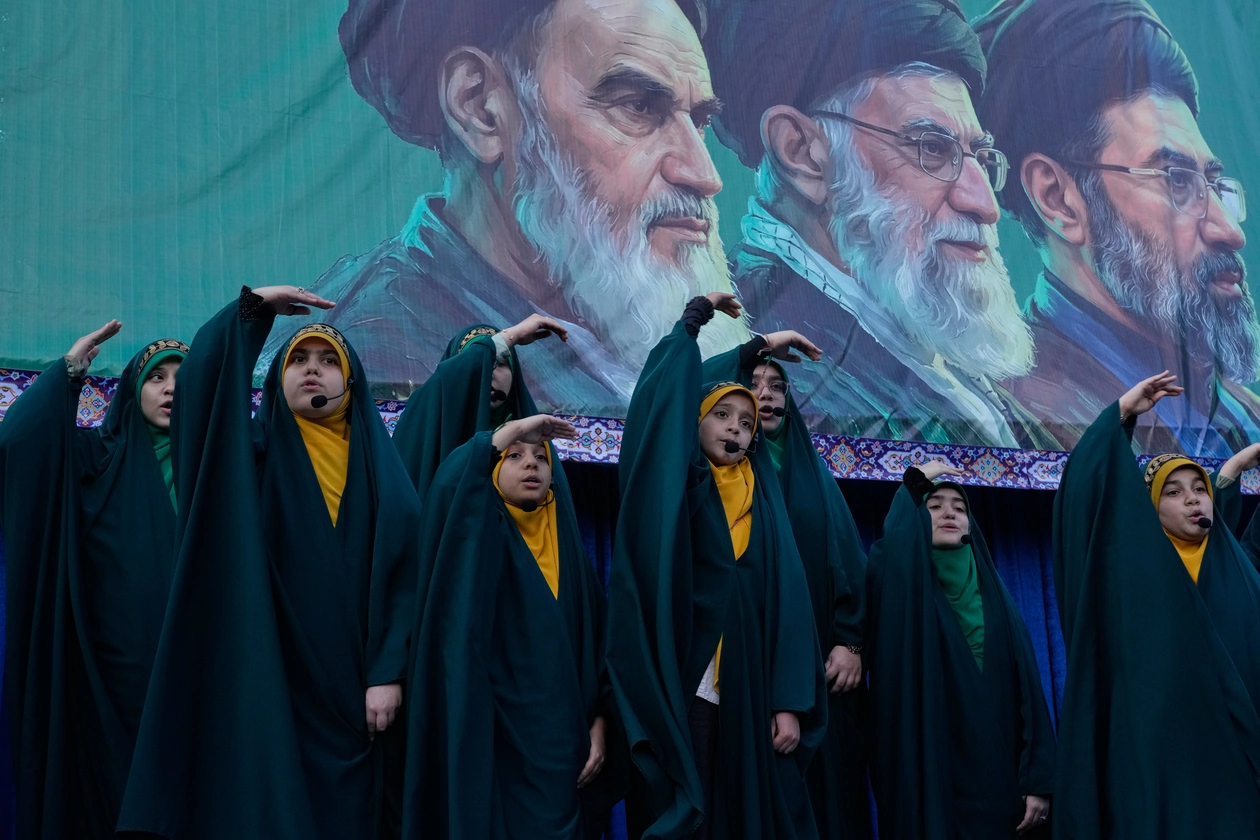
The statement, delivered as part of Iran’s Persian Gulf Day commemorations, marks one of the most defiant public messages from the country’s leadership since Khamenei took over following the killing of his father in the war’s opening U.S. airstrikes.
A Defiant Message From Tehran
Khamenei’s remarks, read out by a state television anchor, struck a hardline tone aimed at both domestic and international audiences. The supreme leader, who has not been seen publicly since assuming his role, used the address to make clear that Iran has no intention of bowing to U.S. pressure.
Highlights of his message included:
- A vow to protect Iran’s nuclear and missile capabilities.
- A declaration that Americans belong only “at the bottom of” Persian Gulf waters.
- A statement that a “new chapter” is being written in regional history.
- Renewed use of the historic insult “Great Satan” to describe the United States.
- A signal that Iran’s military and technological achievements are off the negotiating table.
Khamenei framed Iran’s nuclear, missile, nano, and biotech sectors as part of the country’s “national” identity, suggesting that 90 million Iranians at home and abroad consider these capabilities a defining feature of who they are.
What Trump Is Trying to Achieve
The Iranian leader’s statement comes as President Donald Trump pushes a broader strategy aimed at reshaping the security and economic environment in the region. Through a combination of airstrikes, blockades, and diplomatic pressure, the Trump administration is trying to limit Iran’s ability to use its nuclear and missile capabilities as leverage.
Key elements of the U.S. approach include:
- Continued airstrikes targeting Iran’s military and nuclear infrastructure.
- A naval blockade on Iranian ports.
- Tighter restrictions on Iranian oil exports.
- A push for a wider deal to reinforce a fragile ceasefire.
- A new effort to keep international shipping flowing through the Strait of Hormuz.
Trump has repeatedly insisted that one of the central reasons for the war was to prevent Iran from developing nuclear weapons. Tehran has long maintained that its nuclear program is peaceful, even though international monitors have noted that Iran has enriched uranium to nearly weapons-grade levels of 60%.
Iran’s Economy Under Pressure
Behind Khamenei’s defiance lies a country under enormous economic strain. The combination of sanctions, war damage, and the U.S. naval blockade is squeezing Iran’s economy in ways that go far beyond simple market disruption.
Pressure points include:
- A blockade halting Iranian oil tankers from reaching open seas.
- A growing risk that Iran could be forced to reduce production due to lack of storage.
- A shrinking pool of revenue for both the state and energy-dependent industries.
- Tightening conditions for ordinary Iranians already coping with inflation and unemployment.
According to U.S. Central Command, the blockade has already turned back some 44 commercial vessels — a sign of how aggressively the U.S. is pursuing its strategy of cutting off Iranian oil exports.
Global Energy Markets Feel the Strain
While Iran’s economy is struggling, the wider world isn’t escaping unscathed either. The country’s continued chokehold on the Strait of Hormuz — through which roughly a fifth of all globally traded crude oil passes — is sending shockwaves through energy markets.
Recent market developments include:
- Brent crude trading as high as $126 a barrel on Thursday.
- Heightened insurance costs for shipping in the region.
- Growing pressure on Gulf Arab oil exporters who rely on the strait.
- Renewed concerns about global inflation and energy security.
For consumers from Europe to Asia, this tension is showing up at gas pumps and in inflation indicators, putting additional political pressure on governments around the world to find a path toward de-escalation.
Trump’s New Maritime Plan
In response to the strait crisis, Trump is floating a new strategy aimed at protecting global shipping while keeping pressure on Iran.
According to a senior administration official, the plan includes:
- Continuing the blockade on Iranian ports.
- Coordinating with allies to raise the cost of Iranian disruption efforts.
- Establishing a “maritime freedom construct” to ensure free and safe shipping.
- Building broad international participation through diplomatic channels.
A State Department cable sent Tuesday instructed American diplomats around the world — except in Belarus, China, Cuba, and Russia — to seek host government support for the new initiative. Officials describe the plan as fundamentally defensive, aimed at protecting navigation rights and holding Iran accountable for actions that disrupt commerce.
Tensions With Allies in Europe
While focusing on Iran, Trump is also turning attention to U.S. troop presence in allied countries in Europe — a move that could reshape long-standing security arrangements.
Recent developments include:
- An ongoing review of potentially reducing U.S. troop presence in Germany.
- Public criticism of Italy and Spain over their handling of base access for Iran-related operations.
- Trump openly suggesting U.S. forces could also be pulled from Italy and Spain.
- A widening rift between Washington and some long-standing European allies.
For European leaders, these comments add another layer of unpredictability to an already volatile global moment, even as they grapple with their own security and energy concerns tied to the Middle East.
A Key Iranian Proposal Pushed to the Future
Iran has reportedly floated a proposal that would delay direct negotiations on its nuclear program until a later date, prioritizing other elements of any potential deal.
That timing matters because:
- Trump has explicitly tied the war to denying Iran nuclear weapons.
- Pushing nuclear talks back complicates the U.S. core objective.
- It signals that Iran wants to maintain leverage tied to its nuclear capabilities.
- It increases the likelihood of prolonged tension before any comprehensive deal.
For now, the international community appears divided on whether a phased approach to negotiations could ultimately lower the temperature or simply allow Iran to keep enriching while talks drag on.
Pakistan’s Quiet Diplomatic Role
Among the most interesting developments in the diplomatic space is the role being played by Pakistan, which on Thursday confirmed it is still facilitating indirect talks between the U.S. and Iran.
Pakistan’s foreign ministry shared several key points:
- Indirect talks are continuing under Pakistani facilitation.
- Islamabad would welcome direct communication between Washington and Tehran.
- Even a simple phone call could help ease major sticking points.
- Officials declined to share specific details of either side’s proposals.
Pakistan’s quiet diplomacy highlights how non-Western actors are increasingly important in moments of acute tension, especially when traditional channels are politically blocked.
Khamenei Signals the Strait Will Stay Shut
While much of the world hopes that Iran might eventually reopen the Strait of Hormuz, Khamenei’s remarks suggested the opposite. The supreme leader implied that Iran’s grip on the waterway would not loosen anytime soon.
His position included:
- Asserting that Iran’s control over the strait will make the Gulf more secure.
- Framing Iran’s “legal rules and new management” of the strait as beneficial to regional nations.
- Defending Tehran’s broader role in regional security.
- Reinforcing Iran’s posture as a key gatekeeper of global energy flows.
According to reports, Iran has been charging some ships as much as $2 million apiece to transit the strait — a practice that international observers and Gulf nations have strongly criticized.
The world has long viewed the Strait of Hormuz as an international waterway, free for all to use without tolls. Gulf Arab nations, especially the United Arab Emirates, have called Iran’s actions akin to piracy, raising the stakes of any future negotiation.
Crackdown Inside Iran Intensifies
While Tehran flexes its power abroad, its internal crackdown continues to draw international concern. On Thursday, Iran’s judiciary announced the execution of a 21-year-old man over charges connected to nationwide protests in January.
Key details from human rights observers include:
- The man was identified as Sasan Azadvar from Isfahan.
- He was hanged for allegedly “cooperating with the enemy” by attacking police officers.
- At least 21 people have been executed since the start of the war, according to U.N. Human Rights Chief Volker Turk.
- Activists report further intensification of executions and crackdowns since the conflict began.
Rights groups have repeatedly warned about closed-door trials in Iran, where defendants often have no meaningful opportunity to challenge the charges. Several other detainees remain at risk of execution.
Fighting Continues in Southern Lebanon
The crisis is also rippling through Lebanon, where a separate ceasefire between Israel and Iran-backed Hezbollah is showing signs of strain. Despite the truce, fighting has continued, with both sides reporting fresh casualties.
Recent developments include:
- The Israeli military reporting a soldier killed in southern Lebanon, bringing total troop casualties since the Iran war began to 17.
- Air raid sirens sounding repeatedly in northern Israeli communities.
- Israeli strikes targeting what officials described as Hezbollah military structures.
- Lebanese Health Ministry reporting 9 deaths from strikes, including women and children.
Each new flashpoint risks pulling more actors into the conflict and undermining the broader ceasefire that the international community is trying to preserve.
UAE Issues Travel Ban for Multiple Countries
The escalating tensions are also reshaping how regional governments handle citizen safety. Late Thursday, the United Arab Emirates’ foreign ministry announced a travel ban for its citizens covering Iran, Lebanon, and Iraq.
Key elements of the UAE announcement include:
- A ban on travel to Iran, Lebanon, and Iraq for UAE citizens.
- A call for citizens already in those countries to return home.
- Heightened concerns following Iranian attacks on the UAE during the war.
- A reminder that the ripple effects of the conflict are spreading across the region.
The travel ban underscores how seriously Gulf states are treating the current security environment — and how broadly the conflict is affecting daily life across the region.
What This Means Going Forward
Looking at the bigger picture, several major dynamics are shaping what comes next.
Likely developments to watch include:
- Continued U.S. blockade of Iranian oil exports.
- Ongoing battles over the Strait of Hormuz and global oil markets.
- Slow-moving but important indirect diplomatic channels via Pakistan and others.
- Internal pressure inside Iran from a struggling economy and harsh crackdowns.
- Strategic adjustments in U.S.-Europe relations over Iran-related operations.
- Persistent risk of flare-ups in Lebanon and other regional fronts.
The combination of sustained military pressure, economic strain, and high-stakes rhetoric from both sides means that even small incidents could easily escalate into bigger crises.
Final Thoughts: A Volatile Moment With Global Stakes
The latest standoff over Iran’s nuclear and missile capabilities is far more than a regional dispute. With oil prices spiking, a major shipping route effectively closed, and major powers maneuvering for influence, the consequences extend across continents.
Khamenei’s defiant message, paired with Trump’s expanded blockade strategy and a fast-moving diplomatic landscape, suggests that the world is in for a prolonged period of uncertainty. Whether negotiations succeed or tensions spiral further depends on choices being made right now in Tehran, Washington, and capitals around the globe.
For ordinary people watching from afar — at gas stations, in supermarkets, in homes feeling the pinch of higher prices — the message is clear: the decisions being made over Iran’s nuclear and missile capabilities are not just political abstractions. They are shaping the global economy, regional stability, and the daily lives of millions for the foreseeable future.
Author