Taiwan President Eswatini Visit Sets Off Sharp Diplomatic Clash With China
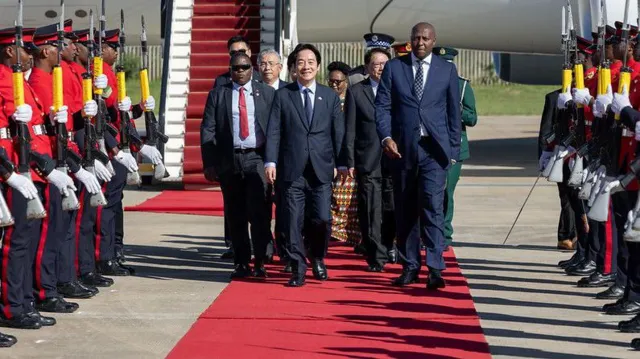
The Taiwan president Eswatini visit has triggered yet another fierce confrontation between Taipei and Beijing, with China unleashing one of its most aggressive verbal attacks in recent memory. Taiwanese President Lai Ching-te made a surprise arrival in the small southern African kingdom of Eswatini on Saturday, declaring that no country has the right to block Taiwan from engaging with the rest of the world. China responded with a stinging insult, calling him a “rat” who had skulked his way across the globe.
A Surprise Diplomatic Move
Lai’s arrival in Eswatini caught nearly everyone off guard. Neither Taipei nor the host government had announced the trip in advance, and the Taiwanese president made the journey aboard an aircraft provided by the Eswatini government. The visit was timed to coincide with the 40th anniversary of King Mswati III’s accession to the throne.
A senior Taiwan security official, speaking anonymously due to the sensitivity of the situation, explained that the unusual “arrive then announce” approach is a common practice in high-level diplomacy. The strategy helps minimize the chance of outside interference, a real concern given the lengths to which Beijing has gone to disrupt Taiwan’s international engagements.
A Trip That Almost Didn’t Happen
This wasn’t Lai’s first attempt to travel to Eswatini. Just weeks earlier, in April, Taiwan accused China of pressuring three Indian Ocean nations into withdrawing overflight permissions for the president’s aircraft, forcing him to cancel his original plans. The incident drew sharp condemnation from the United States and serious concern from the European Union, the United Kingdom, France, and Germany.
Eswatini stands out as one of just 12 countries that maintain formal diplomatic ties with Taiwan. Beijing considers the self-governing island part of its territory and has been actively working to peel away its remaining diplomatic partners.
Lai’s Defiant Message to the King
Standing alongside King Mswati III, Lai delivered a clear and confident message about Taiwan’s place in the world. According to a statement released by Taiwan’s presidential office on Sunday, he told the king that the Republic of China, Taiwan, is a sovereign nation that belongs to the global community.
He stressed that Taiwan’s 23 million people have every right to engage with the international community and contribute to the world. No country, he insisted, has the authority — or any business attempting — to keep Taiwan isolated from global affairs.
China’s Harsh Response
Beijing didn’t waste time firing back. Late Saturday, China’s Taiwan Affairs Office issued a statement filled with unusually personal language. A spokesperson accused Lai of having “skulked” his way to Eswatini and compared his behavior to a rat scurrying across the street, predicting that the international community would respond with ridicule.
The strong rhetoric reflects the deep frustration in Beijing over Taiwan’s continued ability to maintain meaningful relationships abroad despite years of pressure to isolate the island.
Taiwan’s Sharp Comeback
Taipei wasted no time hitting back. Taiwan’s Mainland Affairs Council, the government body responsible for relations with China, dismissed Beijing’s outburst with biting language of its own. Officials said Lai did not need permission from China to travel anywhere, and they brushed off the Taiwan Affairs Office’s remarks as boring “fishwife’s gutter talk.”
The exchange highlights just how strained relations between the two sides have become, with even diplomatic statements now carrying a level of personal hostility rarely seen between governments.
The Bigger Picture in Cross-Strait Relations
The dispute over Lai’s Eswatini visit is far more than a personal feud — it reflects the broader and increasingly tense reality of cross-strait politics. Beijing maintains that Taiwan has no right to conduct state-to-state diplomacy, a position Taipei firmly rejects.
China has long pressured countries around the world to cut ties with Taiwan, dangling economic incentives or political consequences depending on the situation. Eswatini, despite being a small nation of around 1.3 million people, has held firm in its alliance with Taipei.
International Backlash Against Beijing’s Pressure
The earlier cancellation of Lai’s trip in April triggered a wave of international criticism aimed at China. The United States accused Beijing of bullying African nations, while European countries voiced concerns about the precedent being set by China’s interference in another country’s sovereign decisions about overflight permissions.
This international support has emboldened Taiwan, giving it greater diplomatic confidence to push back against pressure from across the strait.
Why Eswatini Matters to Taiwan
Eswatini holds a special place in Taiwan’s diplomatic strategy. As one of only a handful of countries that still officially recognize Taipei, it serves as a symbolic anchor in a world where Beijing has steadily eroded Taiwan’s formal alliances. Losing Eswatini would deal a major blow to Taiwan’s international standing, which is precisely why these high-profile visits matter so deeply to both governments.
For King Mswati III, the relationship with Taiwan also brings tangible benefits, including investment, development assistance, and a long-standing partnership that has weathered decades of pressure from Beijing.
A Diplomatic Stand With Global Implications
Lai’s bold visit, despite Beijing’s earlier attempts to derail it, sends a strong signal that Taiwan refuses to be silenced or sidelined. By making the trip happen against the odds, the Taiwanese president has reinforced his country’s commitment to maintaining its global presence — even if it means weathering personal attacks and political pressure.
What Comes Next
The Taiwan president Eswatini visit is unlikely to be the last flashpoint between Taipei and Beijing. As China continues to expand its diplomatic and military pressure on the island, Taiwan’s leaders appear increasingly determined to demonstrate that they will not back down.
For now, Lai’s defiant stance abroad — and Beijing’s bitter response — illustrate just how high the stakes have become. Each diplomatic visit, each formal statement, and each public exchange now carries weight far beyond the immediate moment, shaping the future of one of the most consequential geopolitical relationships of the modern era.
Author