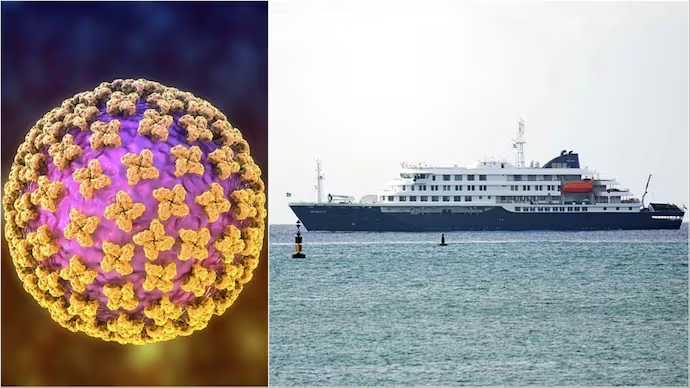
Hantavirus cruise ship outbreak continues to send shockwaves around the world as authorities scramble to contain a fast-developing health crisis aboard the MV Hondius cruise ship. The World Health Organization has now confirmed that three suspected hantavirus patients have been evacuated and are en route to the Netherlands. Meanwhile, the ship remains stranded off the coast of Cape Verde with nearly 150 people on board as global health agencies move quickly to assess the situation, identify the strain, and protect the public from a virus rarely seen on this scale.
WHO Confirms Patient Evacuation
WHO Director-General Tedros Adhanom Ghebreyesus shared the latest update through his official X account. Three patients suspected of being infected with hantavirus have been evacuated from the MV Hondius and are heading to the Netherlands.
According to Tedros, the WHO is working closely with the cruise ship’s operator to monitor the health of passengers and crew. Despite the alarming nature of the outbreak, he reassured the public that the overall public health risk remains low at this point.
The development brings some clarity to a situation that has alarmed travelers, families, and global health experts since reports first surfaced over the weekend.
A Cruise Ship Stranded in the Atlantic
The MV Hondius is currently anchored off the coast of Cape Verde, an island nation in the Atlantic Ocean. Passengers and crew remain isolated as international health teams coordinate medical responses.
The ship had originally embarked on an ambitious Atlantic cruise that began in Argentina on April 1. The itinerary included planned stops in:
- Antarctica
- The Falkland Islands
- Various ports in the Atlantic
- Several scenic island destinations
The recent outbreak has scrambled those plans, with the ship now waiting for authorization to head to Spain’s Canary Islands, where Spanish authorities have agreed to receive the vessel.
The Confirmed Cases So Far
The current outbreak has resulted in tragedy, with three confirmed deaths and at least five people sickened. So far, authorities have officially confirmed three laboratory-tested cases of hantavirus.
Some of the troubling details include:
- Three deaths linked to the outbreak
- Multiple suspected cases still under investigation
- Confirmation of the Andes strain of hantavirus
- Cases identified in passengers who were already removed from the ship
- A new infection confirmed in Switzerland
The combination of confirmed cases and additional suspected ones has placed health agencies on high alert.
The Andes Virus Identified
South African health officials identified the strain involved as the Andes hantavirus, found primarily in Argentina and Chile. This particular strain is rare but notable because it is one of the few hantavirus species capable of person-to-person transmission, although such cases are extremely uncommon.
The Andes virus typically spreads through close contact, including:
- Shared sleeping spaces
- Shared meals
- Continuous proximity for extended periods
- Family environments
- Caregiving relationships
Because the spread requires very close contact, public health experts maintain that the broader public risk remains low. However, the cruise ship environment, which involves shared cabins, public dining areas, and confined spaces, raises understandable concern.
A Swiss Man Tests Positive
Adding to the international scope of the outbreak, Swiss authorities confirmed that a man who returned from South America after traveling on the same cruise ship has tested positive for the Andes virus. He is currently being treated and isolated at University Hospital Zurich.
According to Switzerland’s Federal Office of Public Health, the man:
- Returned to Switzerland with his wife at the end of April
- Began experiencing symptoms after his return
- Consulted his doctor before going to the hospital
- Was immediately placed in isolation
- Has a wife who is self-isolating as a precaution
The wife is asymptomatic but is being monitored carefully. Officials have stated that there is no current risk to the Swiss public.
The Swiss case originated when the patient received a notification from the cruise ship operator informing passengers about the developing outbreak, which prompted him to seek medical care.
A British Man Critically Ill in South Africa
One of the most serious cases involves a British man who was previously aboard the cruise ship. After being evacuated to South Africa, he was hospitalized in intensive care. South African authorities confirmed that he tested positive for the Andes virus.
A second passenger, a woman who also traveled on the ship, tested positive posthumously after dying in South Africa. Her case underscores how dangerous hantavirus can be when symptoms progress rapidly without timely medical attention.
The South African Department of Health continues to investigate the cases and remains transparent in providing public updates.
The MV Hondius Awaits Movement to Spain
After days of uncertainty, Spain’s Health Ministry confirmed late Tuesday that it would receive the MV Hondius in the Canary Islands. The decision came after coordinated discussions involving:
- The World Health Organization
- The European Center for Disease Prevention and Control
- Spanish national authorities
- The cruise ship operator
- Local health agencies in the Canary Islands
For now, the ship remains stationary off the coast of Cape Verde, where Cape Verdean authorities have allowed limited medical evacuation activities to take place.
Concerns From the Canary Islands
Despite Spain’s willingness to receive the vessel, the regional president of the Canary Islands, Fernando Clavijo, expressed serious concern Wednesday. He worried that bringing the ship into Spanish waters might risk public health.
Clavijo demanded an urgent meeting with Spanish Prime Minister Pedro Sánchez to address the situation. He emphasized that local communities and the government should not be reassured prematurely, given the unpredictable nature of the outbreak.
His comments highlighted several major concerns, including:
- Potential exposure to local populations
- The complexity of receiving a ship with active cases
- The need for stronger preventive measures
- The capacity of local hospitals to handle critically ill patients
- The potential strain on tourism and local economies
These concerns reflect the difficult balance between humanitarian responsibility and protecting public health.
Medical Teams on Standby in Cape Verde
Cape Verde’s port of Praia became a coordination hub for medical teams as the outbreak unfolded. Associated Press journalists observed a boat approaching the ship Tuesday night before turning back. It remains unclear whether that vessel was part of the planned medical evacuation or simply checking conditions.
Medical evacuation teams remained on standby Wednesday morning, ready to respond depending on conditions aboard the MV Hondius.
A Closer Look at Hantavirus
Hantavirus is a rare but potentially deadly disease primarily transmitted through:
- Inhalation of contaminated rodent droppings
- Direct exposure to rodent urine and saliva
- Bites from infected rodents
- Touching surfaces contaminated by rodents
- In rare cases like the Andes virus, person-to-person contact
Hantavirus pulmonary syndrome can develop quickly and become severe. Symptoms include:
- High fever
- Muscle aches
- Fatigue
- Headaches
- Chills and nausea
- Severe respiratory issues in advanced stages
Because the disease has no specific antiviral treatment, supportive care is critical. Early diagnosis and intensive medical attention significantly improve survival outcomes.
Why the Cruise Ship Environment Is Especially Risky
The MV Hondius outbreak has drawn significant attention because of the unique dynamics of cruise ship environments. Several factors raise the risk of disease transmission:
- Shared cabins and quarters
- Crowded dining and recreational areas
- Recirculated air systems
- Long voyages with limited fresh air access
- Difficulty isolating sick passengers
- Limited access to advanced medical care
While the public health risk overall remains low, these factors explain why authorities are taking extra precautions.
A Multinational Response
The outbreak has triggered a coordinated multinational response involving:
- The World Health Organization
- The European Center for Disease Prevention and Control
- The Netherlands, where the ship is flagged
- South African health authorities
- Spanish national and regional governments
- Cape Verdean port authorities
- Swiss health officials
This kind of coordinated effort is typical when an outbreak crosses borders, but the involvement of so many nations underscores the severity of the situation.
A Closer Look at the MV Hondius
The MV Hondius is a Dutch-flagged expedition cruise ship designed to operate in remote and challenging environments. While the ship is well-equipped for high-latitude voyages, its current situation has placed it under unprecedented strain.
Some of the operational realities include:
- Limited onboard medical resources for an outbreak of this scale
- A multinational mix of passengers and crew
- The need to keep passengers in their cabins
- Constant communication with health agencies
- Coordination with the operator to monitor and update affected individuals
The ship’s operator has been cooperating closely with WHO and other health bodies to manage the outbreak transparently.
Why Authorities Say the Public Risk Remains Low
Despite the alarming nature of the outbreak, authorities continue to insist that the broader public health risk is minimal. Several reasons support this assessment:
- The Andes virus rarely spreads between people
- The infections so far are tied directly to the cruise ship
- Identified cases are being isolated quickly
- International coordination is active and strong
- Surveillance systems are tracking exposure routes
Hantavirus does not transmit casually, and outbreaks rarely lead to wider public infection beyond the individuals directly exposed.
Public Reaction Around the World
News of the outbreak has spread rapidly across global media, prompting significant public concern. Common reactions include:
- Worry about cruise ship safety
- Curiosity about the rarity of hantavirus
- Concern for the families of the deceased
- Questions about how the outbreak began
- Increased awareness about hantavirus generally
Hashtags about the outbreak have been trending in multiple languages, and travel forums are filled with discussions about the situation.
A Difficult Wait for Passengers
For the nearly 150 passengers and crew aboard the MV Hondius, the wait has been emotionally draining. Many remain isolated in their cabins, while others worry about the health of their loved ones. The lack of certainty regarding when the ship can dock adds another layer of stress.
Passengers must navigate:
- Limited contact with the outside world
- Strict isolation rules
- Worries about exposure
- Concerns about long-term effects of any potential infection
- Anxiety about ongoing transit conditions
The cruise operator has provided continuous updates, and medical staff onboard are working to maintain calm and order.
A Reminder of How Quickly Outbreaks Can Spread
Although hantavirus does not spread easily, the situation aboard the MV Hondius highlights how quickly any infectious disease outbreak can intensify in confined spaces. It also reminds the public of the importance of:
- Strong global health surveillance
- Effective international coordination
- Transparent public communication
- Rapid response capabilities
- Strict quarantine procedures during emergencies
These lessons echo experiences from other outbreaks in recent years, especially during the COVID-19 pandemic.
The Role of Modern Cruise Ship Health Protocols
Modern cruise ships have adopted advanced health and sanitation protocols, but no system is foolproof. The MV Hondius outbreak underscores the need for ongoing improvements in:
- Pest and rodent control
- Cabin sanitation
- Air filtration systems
- Crew training for outbreak response
- Coordination with international health bodies
As the cruise industry continues to recover from earlier global disruptions, this outbreak may prompt new protocols across the sector.
Final Thoughts
The hantavirus cruise ship outbreak has emerged as one of the most concerning maritime health crises in recent memory. With three confirmed deaths, multiple sickened individuals, and confirmed cases in South Africa, Switzerland, and aboard the MV Hondius, global health authorities are working tirelessly to keep the situation under control.
Despite the alarming developments, WHO maintains that the broader public health risk remains low. The identification of the Andes virus, while rare, gives investigators valuable insight into how the outbreak unfolded. The ongoing isolation of passengers, the careful evacuation of seriously ill individuals, and the cooperation between multiple nations highlight the importance of strong international health coordination.
For the passengers and crew aboard the MV Hondius, the next several days will be decisive. With Spain ready to receive the ship and medical teams on standby in Cape Verde, the situation may soon enter a new phase. Until then, the world watches as one of the most remarkable global health responses of the year continues to play out.
What began as a routine Atlantic cruise has become a global health story, a stark reminder that even in modern times, ancient and rare diseases can disrupt life in unexpected ways. As authorities continue to act swiftly, the hope is that the outbreak will be contained, the patients will recover, and lessons learned will help shape stronger protocols for the future.
For now, the message is clear. Cooperation, transparency, and rapid response remain the most powerful tools in protecting global health. And in the case of the MV Hondius, those tools are being put to work in real time.
Author