Israel Strikes Beirut Suburbs Targeting Hezbollah Commander, Threatening Ceasefire
Israel strikes Beirut once again, marking the first attack near the Lebanese capital since a fragile US-brokered ceasefire took effect last month. The strike, which targeted a senior commander of Hezbollah’s elite Radwan Forces, has reignited fears of a full-scale return to war between Israel and the powerful Lebanese militant group.
Targeted Strike in Haret Hreik
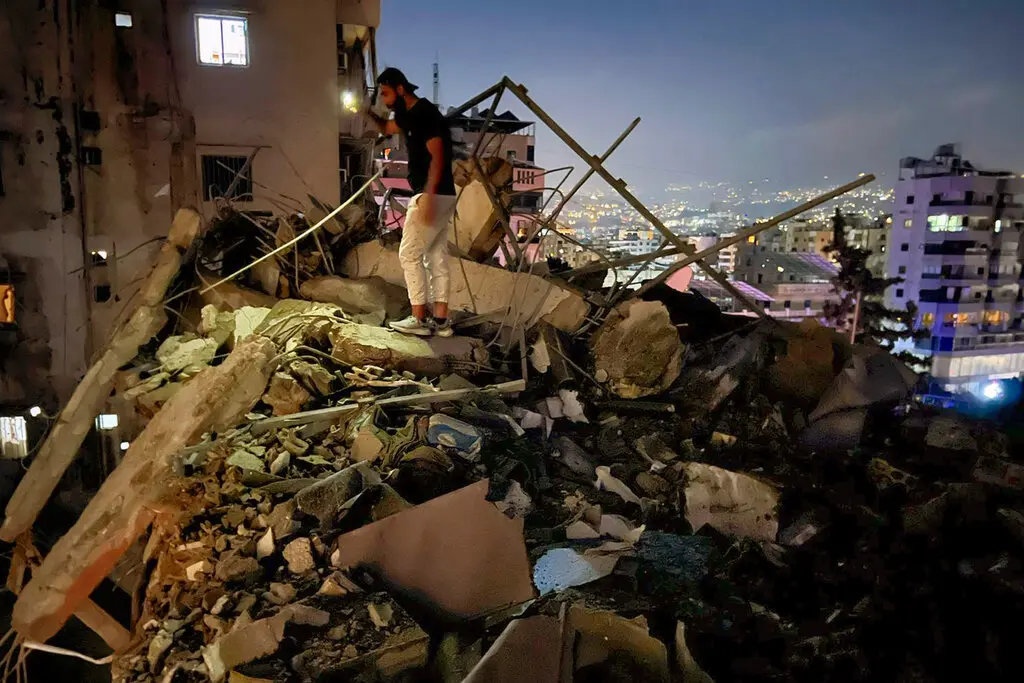
The airstrike landed in the Haret Hreik neighborhood, located in Beirut’s densely populated southern suburbs. According to local officials, at least one person was killed in the attack. Search-and-rescue operations were quickly launched, with emergency teams and excavators digging through rubble in hopes of finding survivors or recovering bodies.
The target appeared to be a 10-story residential building situated next to a school, based on satellite imagery and open-source analysis. Photos from the scene showed roughly half the structure flattened, with debris scattered across the area. A Hezbollah official confirmed that rescue efforts were ongoing, although the identity of the targeted commander was not immediately released.
Israel Defends the Operation
In a joint statement, Israeli Prime Minister Benjamin Netanyahu and Defense Minister Israel Katz made it clear that the strike was deliberate and aimed at sending a strong message. They declared that no individual labeled a terrorist would be granted immunity and that Israel’s reach extends to every enemy it deems responsible for past attacks.
The Israeli government has long made the Radwan Forces a top target. The unit is considered Hezbollah’s most capable fighting force and has played a central role in the militant group’s military operations.
A Ceasefire Already Hanging by a Thread
The strike comes at a delicate moment for the region. The United States brokered a temporary ceasefire between Israel and Hezbollah in mid-April after years of intense fighting. While both sides had continued to exchange fire in southern Lebanon, Israel had refrained from striking the capital, and Hezbollah had stopped launching rockets into Israeli territory.
Wednesday’s attack marks a serious escalation. People who had cautiously returned to their homes in Beirut’s southern suburbs after the ceasefire began rushing to check into hotels in safer parts of the city. The fear of further strikes has once again sent ripples of panic through Beirut’s neighborhoods.
The ceasefire was originally announced shortly after Lebanese and Israeli diplomats held their first direct talks in decades in Washington. It was later extended by three weeks following a high-level meeting between the two sides and US President Donald Trump in the Oval Office.
Why Haret Hreik Matters
Haret Hreik is far more than just a residential district. It houses many of Hezbollah’s main offices and has long been considered one of the most important areas for the militant group. The neighborhood has been a frequent target of Israeli operations.
In 2024, the Israel Defense Forces destroyed at least four large buildings in the same area during the assassination of Hezbollah’s longtime leader Hasan Nasrallah. Late last year, Israel also killed Radwan Forces commander Ali Tabatabai in another strike on the neighborhood. The pattern suggests that Wednesday’s attack continues a long-standing Israeli strategy of targeting Hezbollah’s senior figures inside their own strongholds.
Who Are the Radwan Forces
The Radwan Forces are not an ordinary military unit. Formed in 2006, the group serves as Hezbollah’s elite fighting wing and has gained significant battlefield experience in recent years.
Several aspects make the unit stand out:
- Many fighters were hardened during years of combat against the Islamic State in Syria
- The group is named in honor of slain Hezbollah commander Imad Mughniyah, who used the nom de guerre Radwan
- Members are widely viewed as the best-trained and most disciplined fighters in Hezbollah’s ranks
- The unit has been a primary target of Israeli intelligence operations
In late April, Israeli officials announced that a Radwan fighter had surrendered and was being questioned, signaling continued pressure on the group even during the ceasefire period.
Background to the Latest Conflict
The current round of fighting began in early March, after Hezbollah launched a barrage of rockets and drones at Israel. The attack came in response to the killing of Iranian Ayatollah Ali Khamenei, who had long been the group’s most important sponsor.
Since then, the human cost has been enormous. Lebanon’s Health Ministry reports that at least 2,700 people have been killed in the country. The figure does not separate combatants from civilians, but it underscores the scale of destruction Lebanon has endured.
On the Israeli side, 20 people have lost their lives, including 17 soldiers, one security personnel, and two civilians.
A Region on Edge Once Again
The renewed strike on Beirut raises serious questions about whether the ceasefire can hold. Diplomats from the United States, Lebanon, and Israel had hoped that the temporary truce would create space for longer-term negotiations and pull the region back from the brink. That hope now appears more uncertain than ever.
Civilians on both sides of the border remain caught in the middle. Many in southern Lebanon and northern Israel had only just begun returning to their homes, daring to imagine that the worst was behind them. Wednesday’s strike has shattered that fragile sense of calm.
Looking Ahead
What happens next will depend largely on how Hezbollah responds and whether US mediators can prevent the situation from spiraling. Past patterns suggest that targeted Israeli strikes on senior Hezbollah figures are often met with strong retaliation, which could pull both sides back into open conflict.
For now, residents of Beirut, families across Lebanon, and communities in northern Israel are bracing for what may come. The ceasefire that once seemed like the beginning of a slow recovery now stands at a dangerous crossroads, with the world watching closely to see whether diplomacy or further violence will define the days ahead.
Author