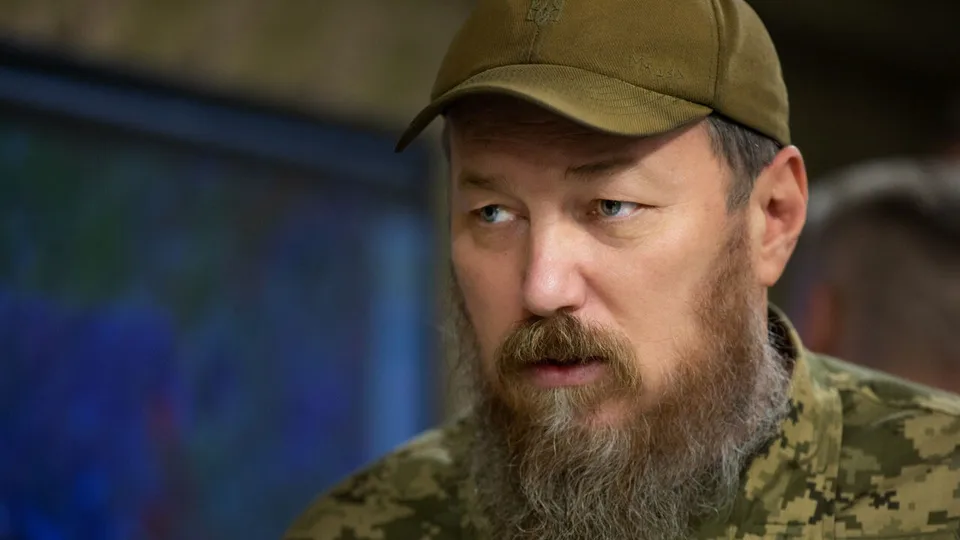
Ukrainian Drone Commander Madyar: The Man Reshaping Russia’s War
The Ukrainian drone commander Madyar has emerged as one of the most consequential figures in the ongoing war, and the Kremlin knows it. Robert Brovdi, the man behind the call sign, leads an elite drone unit whose long-range strikes have rattled Russia so deeply that Moscow scaled back its iconic Victory Day parade for the first time in nearly two decades. No tanks. No missile launchers. Just a quieter, more nervous celebration shaped by fear of what Brovdi’s machines might do.
A Quiet Red Square and a Loud Message
For years, Vladimir Putin has insisted that Russian victory in Ukraine is only a matter of time. Yet the absence of heavy military hardware on Red Square this year tells a different story. The Kremlin’s caution reflects the growing reach of Ukrainian drones, particularly those operated by Brovdi’s group, Madyar’s Birds.
Brovdi himself acknowledges that hitting Red Square would generate global headlines, but he prefers a more strategic approach. Rather than wasting drones on Moscow’s heavily fortified core, he focuses on softer, high-value targets where Russian air defenses are stretched thin. To him, a strike on energy facilities or military infrastructure carries more weight than a symbolic blow to the capital.
Strikes That Reach Deep Into Russian Territory
Brovdi’s 414th brigade has built a reputation for crippling precision. Their drones have repeatedly hit ports, oil refineries, and weapons production sites far inside Russia. Targets within a 1,250-mile radius of his underground command center are now considered fair game, including some of Putin’s prized infrastructure.
Recent operations include four strikes in two weeks on the Black Sea oil terminal in Tuapse, leaving much of the facility in ruins. Similar damage has been reported at Baltic ports such as Primorsk and Ust-Luga. Ukrainian drones have even reached the Urals, striking an oil refinery in Perm and fighter jets stationed in Chelyabinsk, more than a thousand miles from the front line.
Targeting Russia’s Economic Lifeline
For Brovdi, the path to victory runs through Russia’s wallet. With 40 percent of the country’s roughly 530 billion dollar annual budget devoted to the military, choking off oil revenue could starve the war machine. He estimates that around 100 million tonnes of Russian oil, valued at roughly 100 billion dollars, leaves through ports within his drones’ striking range each year.
He also points to staggering Russian troop losses. According to Ukrainian estimates, Russia has been losing between 30,000 and 34,000 soldiers per month for the fifth consecutive month, more than it can replace. In Brovdi’s view, this steady drain is gradually eroding Russia’s offensive power.
Inside the Bunker of Russia’s Top Target
Meeting Brovdi is no simple affair. After Volodymyr Zelenskyy, he is reportedly Moscow’s most wanted man. Visitors are escorted through layers of security and driven in vehicles with blacked-out windows before reaching his deep underground operations hub.
The space is part command center, part workshop, and part shrine to modern warfare. Drones dangle from the ceiling, walls feature Ukrainian art, and live video feeds stream constantly. An electronic dashboard tracks Russian losses in real time, from soldiers to radar systems and armored vehicles.
Once a clean-shaven grain trader, Brovdi now wears military green and sports a long beard. Speaking rapidly in Ukrainian and offering tea between drags of a cigarette, he rattles off statistics from a meticulous archive that logs every drone mission since the full-scale invasion began in early 2022.
Why Russia Is Suddenly on the Defensive
Several developments help explain Russia’s growing unease and Ukraine’s rising confidence. Chief among them is Ukraine’s transformation into a genuine drone superpower. Its counter-drone systems are now being exported to Gulf nations responding to threats from Iran, signaling international recognition of Kyiv’s expertise.
Big data also plays a role. A platform called Delta records every mission, including failures, and Brovdi says he reviews up to 15 terabytes of raw footage daily. This level of analysis allows for rapid adjustments and constant improvement.
On the battlefield, Ukraine has clawed back small but meaningful gains. Earlier this year, it retook a dozen villages in Zaporizhzhia and Dnipropetrovsk. In April, Russian forces lost more ground than they captured for the first time since 2024, according to the Institute for the Study of War.
Drones Are Rewriting the Rules of War
Captain Oleg Kopan, deputy commander of an artillery reconnaissance division in the 148th brigade, credits Ukraine’s progress entirely to its evolving drone capabilities. From a hidden dugout beneath a tree line, his team launches reconnaissance drones to spot Russian positions and guide artillery strikes with surgical accuracy.
He warns, however, that Russia is learning fast. Moscow has factories, manpower, and a willingness to copy Ukrainian innovations at scale. The technological race is therefore as relentless as the fighting itself.
Brovdi argues that drones now account for around 80 percent of battlefield destruction, replacing tanks and rifles as the dominant tools of war. A traditional blitzkrieg, he says, is no longer possible. If Russia tried to storm Kyiv again with a massive armored force, it would face swarms of drones capable of turning the assault into a catastrophe.
A Warning to NATO
Brovdi believes Western militaries have yet to fully understand the shift underway. Many of their senior commanders, he says, were trained in an era when drones were an afterthought. To stay relevant, NATO armies must build ecosystems similar to Ukraine’s, where video, coordinates, and verified kills feed into a unified operational picture.
His message is blunt: Russia will not stop, and neither Ukraine nor its allies have time to waste.
No Quick End in Sight
Despite his confidence, Brovdi is realistic. Ukraine, he says, remains far from victory. Any near-term halt in the fighting would likely be a temporary pause shaped by political or geopolitical pressures rather than a true peace.
He warns that any such pause would only allow Putin to regroup, describing the Russian leader as a man consumed by an unhealthy obsession with power and dictatorship. For Brovdi and his drones, the war is far from over, but the skies above Russia have already changed forever.
Author