Péter Magyar Sworn In: Hungary Begins a Bold New Political Chapter
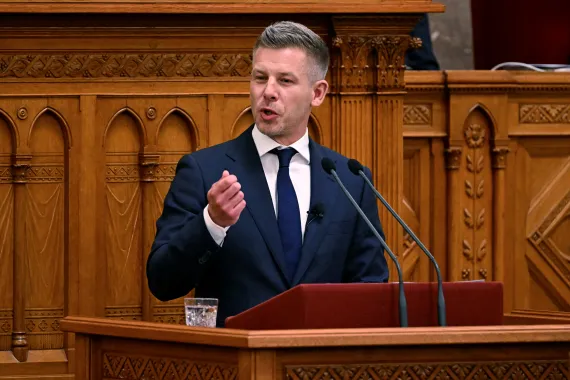
Péter Magyar sworn in as Hungary’s new prime minister marks one of the most dramatic political shifts in the country’s modern history. The pro-European, centre-right leader officially took the helm on Saturday, closing the curtain on Viktor Orbán’s 16-year reign and stepping into a moment that supporters have hailed as the dawn of a long-awaited regime change. With Budapest filled with cheers, flags, and emotional reflections, the day felt less like a routine inauguration and more like a national reset.
A Symbolic Day of Celebration in Budapest
The streets and squares around Hungary’s neo-Gothic parliament filled early in the morning as people gathered to watch the ceremony broadcast on giant screens. The mood was electric. Every glimpse of Magyar drew waves of cheers, while lawmakers from Fidesz and the far-right Our Homeland party were greeted with boos.
For many in the crowd, the moment was deeply personal. Some had traveled for hours to witness it firsthand. One 68-year-old retired teacher said it was the first time she felt proud to be Hungarian, recalling years of frustration over an underfunded education system. Another woman, 70, said she finally felt that her children and grandchildren would have a future inside Hungary rather than abroad.
These reactions captured a powerful sentiment moving through the country: hope, relief, and a renewed sense of belonging.
The Triumph of Tisza
The ceremony came almost exactly a month after Magyar’s Tisza party stunned the political world by winning a landslide victory in parliamentary elections. The party clinched 141 of the 199 seats in parliament, an extraordinary outcome for a political force that had only existed for two years.
Magyar, 45, was once a relatively unknown figure within Fidesz’s inner circle. That changed dramatically in early 2024 when he broke from the party, exposing what he called a corrupt and self-serving political machine. His criticism resonated quickly with millions of Hungarians who felt left behind by the Orbán government, and his unexpected rise reshaped the country’s political identity.
The End of the Orbán Era
For the first time since Hungary’s democratic transformation in 1990, Viktor Orbán will not sit in parliament. The 62-year-old, once a young pro-democracy activist who eventually became a global icon of right-wing populism and a friend of the U.S. MAGA movement, has chosen to focus on rebuilding what he calls the national side instead of remaining in active legislative politics.
His departure leaves an enormous political void. Orbán spent years cultivating a tightly controlled system, embedding loyalists across the judiciary, media, academia, and state institutions. Magyar has openly described the past two decades as a national nightmare and has vowed to begin dismantling these networks of influence.
A Symbolic Return to Europe
The ceremony itself carried strong symbolic gestures aimed at restoring Hungary’s place within the European Union. Multiple anthems were played, paying tribute to Hungary’s EU membership, its Roma minority, and ethnic Hungarians living abroad. The crowd erupted with applause when newly elected speaker Ágnes Forsthoffer announced that the EU flag would be returned to parliament after Fidesz removed it back in 2014.
Magyar has long pledged to repair Hungary’s tense relationship with the EU and to work with Brussels to unlock billions of euros in frozen EU funds. The new tone is already being noticed across European capitals, where many leaders welcome the chance to rebuild a stable partnership with Budapest.
A Government Built on Inclusion
Magyar’s government is also signaling a clear break from the past in terms of representation. The cabinet includes Vilmos Kátai-Németh, a lawyer who becomes Hungary’s first visually impaired minister, taking on the social and family affairs portfolio. The new parliament features more women than ever before, with over a quarter of lawmakers being female, a record in the country’s post-communist history.
These details may appear small individually, but together they paint a picture of a Hungary that wants to look more like the diverse and inclusive Europe it hopes to rejoin fully.
Magyar’s Whirlwind First Month
Even before being sworn in, Magyar wasted no time setting the tone. He pledged to suspend broadcasts from state media outlets that had served as mouthpieces for Orbán’s government, called for the resignation of officials appointed during the previous era, and met twice with EU leaders to begin restoring Hungary’s international standing.
He also made headlines by returning a sizable donation from an Orbán-linked supporter, signaling his commitment to break with the patronage culture that defined Hungarian politics for years. Each of these moves reinforced the idea that Magyar intends to govern with sharp ethical boundaries.
Personal Stories Behind the Political Shift
The mood on the ground reflected just how deeply the political shift is being felt at a personal level. Marianna Szűcs, a 70-year-old in the crowd, shared how two of her children had been forced to move abroad after she spoke out against the Fidesz government. With Magyar in office, she now hopes they may finally return.
Stories like hers were repeated throughout the gathering. Many Hungarians said they had felt politically silenced, professionally limited, or emotionally exhausted under the previous administration. The inauguration offered a sense of catharsis, a chance to breathe and look forward.
The Challenges Ahead
The new government faces a steep climb. Magyar has promised to revitalize public services, fix the country’s crumbling infrastructure, and overhaul institutions that had been shaped by years of Fidesz appointments. But these ambitions collide with the realities of a stagnating economy and a stubbornly high budget deficit.
There is also the question of how loyalists embedded in the media, the judiciary, and academic institutions will respond to the changes. Years of consolidated power do not unwind overnight. The transition will likely face resistance, both quiet and overt, as the new government works to reset Hungary’s institutional balance.
A New Chapter for Hungarians Abroad
Hungarians who left the country during the Orbán years are watching closely. For many, returning home depended on whether the political environment improved. Magyar’s commitment to revitalizing public services, supporting independent journalism, and restoring trust in institutions has already sparked conversations among the diaspora.
Some families are already considering moves back, especially those tied to professionals working in healthcare, education, and the arts, sectors that had suffered during the Fidesz era.
A Voice From Budapest’s Liberal Mayor
Even though liberal and left-of-centre parties will be absent from parliament for the first time since 1990, Budapest’s liberal mayor Gergely Karácsony, a longtime critic of Orbán, called for unity and reflection. He highlighted the everyday people, including teachers, journalists, and civilians, who had spent years standing up to the previous system.
His message captured the bittersweet feeling of the day. While the country celebrates the end of an era, it also takes time to honor those who endured years of pressure, censorship, or marginalization.
Hungary’s Hopeful New Beginning
Saturday’s ceremony marked more than a transfer of power. It represented a generational shift, a renewed European outlook, and a clear desire to rebuild trust between the government and ordinary Hungarians. Whether Magyar can deliver on his many promises remains to be seen, but the energy of the moment was undeniable.
For now, Hungary is stepping into a new chapter with cautious optimism, deep emotion, and a strong sense that the country is ready to rewrite parts of its story. As Péter Magyar takes his place at the helm, the message echoing through Budapest is unmistakable. The era of Orbán is over, and a new Hungary is just getting started.
Author