The Venice Biennale 2026 has opened its doors in one of the most turbulent moments in the contemporary art world’s history. Geopolitical tensions, protest movements, and the unexpected resignation of the entire jury have transformed this year’s edition into the most chaotic and contested in recent memory. With no Golden Lions to be awarded by the usual panel and ongoing protests outside several national pavilions, the international art event has become a striking reflection of the global political climate.
A Jury That Walked Away
The drama began even before the official opening when the jury collectively resigned in protest of the participation of both Israel and Russia. Their objection was rooted in concerns about countries currently under investigation by the International Criminal Court for human rights abuses.
However, the decision to limit their stance only to those two nations sparked further debate. Critics, including renowned British artist Anish Kapoor, argued that the United States should also have been pulled into the discussion. Kapoor pointed to what he described as the long-standing politics of hate and war that have plagued global affairs.
A New Voting System for a New Era
In an unprecedented move, visitors themselves have been handed the power to decide who deserves recognition. Attendees of the Giardini and Arsenale venues will be invited to vote for the best national pavilion among 100 participants, as well as the standout artist in the main curated exhibition titled “In Minor Keys.”
The voting process will be anonymous and conducted via email, in a format reminiscent of the Eurovision Song Contest. Winners will not be revealed until the closing day on November 22, adding suspense to an already dramatic edition.
Protests Outside the Pavilions
The lead-up to the opening was marked by visible unrest. Demonstrators opposed to Israel’s participation clashed with police just a day before the event began. Earlier in the week, feminist groups from both Ukraine and Russia gathered at the Russian Pavilion, while Palestinian artists and supporters held tributes to artists killed during the conflict in Gaza.
These scenes underscored how deeply art and activism are now intertwined within the Biennale’s walls.
“In Minor Keys” — A Tribute to Overlooked Voices
At the heart of this year’s event is the main curated exhibition, “In Minor Keys.” Visitors are welcomed by an arresting red feathered sculpture decorated with intricate beaded embroidery, drawing inspiration from New Orleans Black Masking traditions, which trace their roots back to enslaved Africans.
The exhibition was curated by Koyo Kouoh, the first African woman ever chosen to lead the main Biennale show. Sadly, Kouoh passed away a year ago, but her vision lives on through the work of five dedicated co-curators who completed her mission of spotlighting underrepresented voices. Co-curator Marie Helene Pereira described her as someone who created spaces where everyone could shine, a sentiment reflected throughout the 110 artists and artist collectives featured.
Britain’s Lubaina Himid on Belonging
Turner Prize-winning artist Lubaina Himid takes center stage at the British Pavilion with her exhibition “Predicting History: Testing Translation.” Through vivid, colorful paintings of couples wrestling with the challenges of starting over in unfamiliar lands, Himid explores the emotional landscape of newcomers.
One striking piece depicts two architects torn between building something that affirms their cultural contribution and constructing something they can flee in if necessary. Born in Zanzibar and based in Britain for over seven decades, Himid brings deeply personal insight into themes of migration, identity, and belonging.
The Vatican’s Mystic Gardens
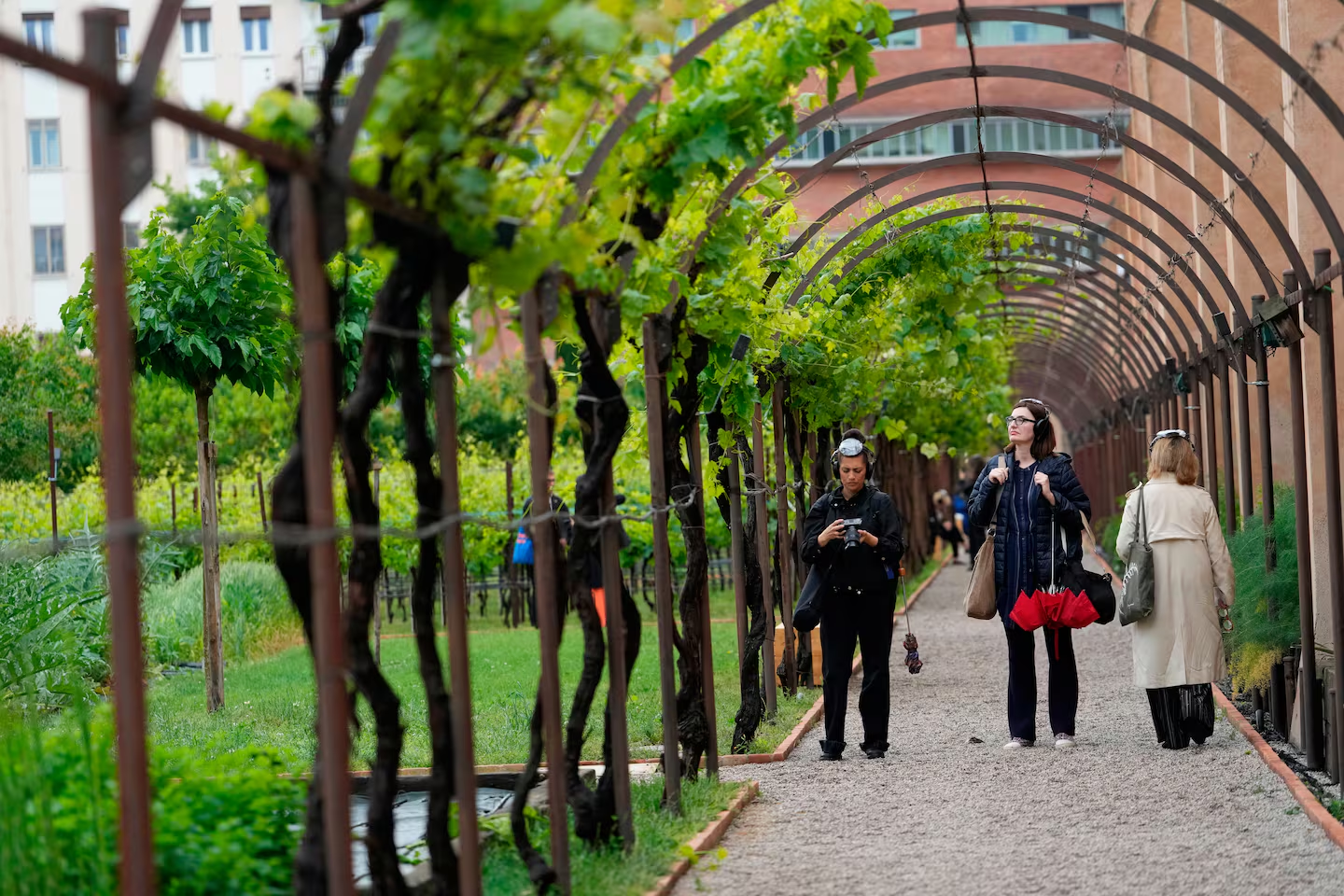
Offering a peaceful counterpoint to the political tensions surrounding the Biennale, the Vatican has opened the Mystic Gardens of the Discalced Carmelite order near Venice’s main train station. Visitors are invited to wander through vineyards, past pomegranate trees and aromatic herb beds, while wearing headphones playing the music of 12th-century mystic St. Hildegard of Bingen.
Notably, this sacred soundtrack has been reimagined by modern artists like Brian Eno and Patti Smith. Rev. Ermanno Barucco, prior of the Carmelite order, said music helps people connect with what Hildegard called the “symphony” placed within each life.
Austria’s Provocative Statement
The Austrian Pavilion has emerged as one of the most talked-about exhibits this year. Created by Florentina Holzinger, the installation features a naked woman hanging from a bell as a living clapper. Inside, another performer rides a Jet Ski in a giant water tank, satirizing Venice’s transformation into an over-touristed spectacle.
Even more striking, a third tank features a nude woman breathing through scuba gear, surrounded by water that has been recycled from nearby toilets and filtered for the exhibition. Holzinger calls the entire piece “Seaworld Venice.”
Israel’s Reflection on Love and War
Inside Israel’s pavilion, Romanian-born artist Belu-Simion Fainaru has created a meditative installation. Water drips rhythmically into a pool, pausing every 42 seconds — a number meaningful in Jewish mysticism. Surrounding the space are locks engraved with the Hebrew commandment “Love thy neighbor as thyself” and the comforting words “This too shall pass.”
Fainaru pushed back against the jury’s stance, calling their exclusion of Israel a form of discrimination and reaffirming his belief in dialogue over boycott.
Estonia’s Daily Devotion to Art
Estonian artist Merike Estna brings a quieter, more reflective approach to the Biennale. Throughout the event, she will continually work on an enormous wall painting inside a community center gymnasium that once functioned as a church.
Her gradual layering technique mirrors the spirit of daily creative labor. Curator Natalia Sielewicz described the process as a tribute to “the everyday feminism of sustaining life,” highlighting the often-overlooked routine work performed by women across the world.
A Biennale Like No Other
The Venice Biennale 2026 has clearly evolved into more than just an art exhibition — it has become a global stage where politics, identity, and creativity collide. From silent protests to bold provocations, this year’s edition reminds the world that art remains one of the most powerful forms of expression in turbulent times.
Author