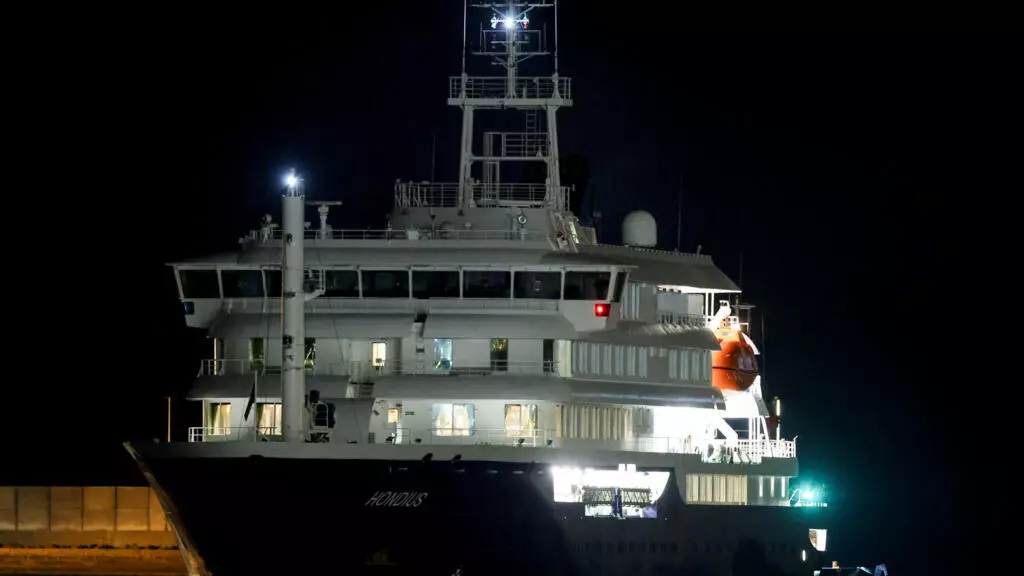
The hantavirus outbreak cruise ship at the center of an international health emergency has finally reached Spanish shores. Early on Sunday morning, the luxury vessel MV Hondius arrived near the Port of Granadilla in Tenerife, where authorities are now preparing a carefully coordinated evacuation of passengers and some crew members.
A Tense Arrival in the Canary Islands
Footage captured by reporters showed the ship anchoring offshore as Spanish health and emergency teams stood ready to manage what could become one of the most complex maritime evacuations in recent years. None of the passengers currently on board are showing symptoms of infection, but officials are taking no chances.
Spanish health workers will conduct medical tests on every traveler to confirm they remain asymptomatic. Once cleared, passengers will be ferried to land in small boats, ensuring controlled and contained movement throughout the process.
Tight Logistics and Sealed Transport
To minimize any potential risk of further spread, sealed-off buses will transport passengers from the docking area to Tenerife’s main airport, located only about ten minutes away. From there, travelers will board flights heading back to their respective home countries.
European public health authorities have classified all passengers aboard the MV Hondius as high-risk contacts. Although purely a precautionary measure, the designation reflects the seriousness with which the outbreak is being treated. The official evacuation timeline puts the operation between 7:30 and 8:30 a.m. local time, with Spanish nationals expected to disembark first, followed by passengers from other countries in organized groups.
A skeleton crew of about thirty members will remain on board to sail the ship onward to the Netherlands, where it will undergo full disinfection.
Why Spain Is Leading the Response
The MV Hondius set sail toward Spain on Wednesday from the waters off Cape Verde after global health authorities formally requested Spanish assistance. Both the World Health Organization (WHO) and the European Union urged Spain to take charge of managing the evacuation due to the country’s strong infrastructure and proximity to the affected region.
Underscoring the significance of the situation, WHO Director-General Tedros Adhanom Ghebreyesus arrived in Tenerife on Saturday evening to personally oversee the response. He was joined by senior Spanish officials, including the interior minister, health minister, and minister for territorial policy, who together have been coordinating arrival procedures and public safety measures.
The Outbreak So Far
According to information shared by the WHO on Friday, a total of eight people aboard the ship have fallen ill since the outbreak was detected. Tragically, three of them have died — a Dutch couple and a German national. Of the remaining cases, six have been confirmed as hantavirus infections, while two others are still being investigated as suspected cases.
The deaths and confirmed infections have raised alarm not only because of the immediate human toll but also because hantavirus outbreaks aboard cruise ships are extremely rare. In fact, this is being considered the first known ship-borne outbreak of the virus, prompting health experts to draft fresh guidance on how to handle similar incidents in the future.
Understanding Hantavirus
Hantavirus is a group of viruses primarily spread to humans through contact with infected rodents, particularly through their urine, droppings, or saliva. While person-to-person transmission is possible, it remains exceptionally rare and is generally limited to specific strains found in parts of South America.
Symptoms can range from flu-like signs in the early stages to severe respiratory or kidney complications in later phases. Without prompt medical intervention, certain forms of the disease can be fatal, which is why authorities are treating the outbreak with such urgency.
Risk to the Public Remains Low
Despite the seriousness of the situation aboard the MV Hondius, the WHO has emphasized that the risk to the global population remains low. The greatest risk is currently confined to those who were physically on the ship, where authorities have rated the threat as moderate.
This distinction is important because it helps prevent unnecessary panic while still allowing experts to apply rigorous protocols where they are most needed. The careful screening, sealed transport, and dedicated airport routing all reflect a containment strategy designed to protect both passengers and the wider public.
A Coordinated International Effort
The evacuation is shaping up to be a major example of international cooperation in modern public health crises. Several European nations — including Germany, France, Belgium, Ireland, and the Netherlands — have already dispatched aircraft to bring their citizens home safely. Each step of the process, from boat transfer to boarding flights, has been mapped out to maintain strict health standards.
For Spain, hosting this operation is no small task. Tenerife, a popular tourist destination, must balance its busy travel season with the seriousness of an active health emergency. Yet, officials have so far demonstrated a measured and well-organized response.
What Comes Next
Once all passengers are safely evacuated, attention will shift to the disinfection of the MV Hondius in the Netherlands and the broader investigation into how the virus made its way onto the ship in the first place. Public health experts will likely study the case closely, hoping to develop better safeguards for future cruise voyages.
For now, the world watches as the hantavirus outbreak cruise ship completes a journey that has already proven both tragic and historic. While the loss of life cannot be undone, the swift and coordinated response in Tenerife offers a blueprint for handling rare but serious outbreaks in confined travel settings.
Author