Russia Victory Day parade unfolded in Moscow this year on a noticeably smaller scale, as President Vladimir Putin used the occasion to remind the nation of its Soviet-era triumph over Nazi Germany while simultaneously rallying support for his ongoing military campaign in Ukraine. The annual celebration, long regarded as Russia’s most important secular holiday, came amid heightened security concerns and a fragile ceasefire that has already shown cracks.
A Quieter Red Square
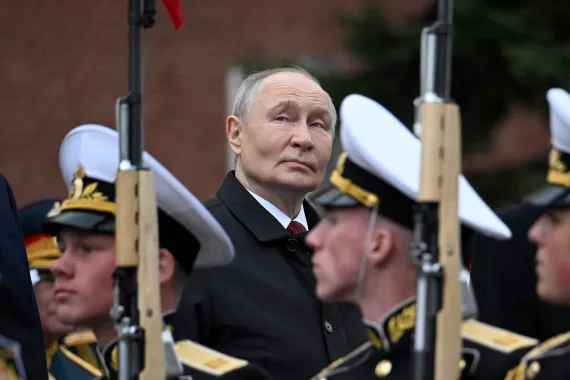
The parade kicked off at around 10am local time on Red Square, beginning with a military formation proudly carrying the Russian national flag. Despite its symbolic importance, this year’s event looked very different from previous editions.
For the first time in nearly two decades, no tanks, missiles, or heavy military hardware rolled across the square. The only display of military power came from a traditional flyover by combat aircraft. Instead of physical equipment, organizers played a video showcasing Russian weaponry currently deployed in Ukraine.
According to Al Jazeera’s Yulia Shapovalova, reporting from the capital, the absence of armored vehicles reflected a practical reality — the Russian military feels its tanks are more useful on the front lines than parading through Moscow.
Security Concerns Force a New Format
The Kremlin attributed the changes to the “current operational situation,” citing the looming risk of Ukrainian attacks during the festivities. Kremlin spokesperson Dmitry Peskov confirmed that authorities had implemented additional layers of security to safeguard the event.
The 45-minute ceremony unfolded under a heavy security blanket, with Putin addressing the nation as troops stood in formation. Declaring that “victory has always been and will be ours,” he praised the courage, unity, and moral strength of the Russian people.
Putin Links WWII to the Ukraine War
Putin, who has held power for more than 25 years, has frequently used Victory Day to amplify both Russia’s military pride and his own political message. This year was no exception. Standing before troops — including soldiers from North Korea — Putin connected the Soviet victory over Nazi Germany to the modern war in Ukraine.
He stated that the heroic generation that defeated fascism continues to inspire today’s Russian soldiers fighting in what the Kremlin calls a “special military operation.” He further claimed that Russian forces are confronting an opponent backed by the entire NATO alliance, yet pressing forward regardless.
“I firmly believe that our cause is just,” Putin declared, drawing applause from the assembled audience.
A Fragile Ceasefire
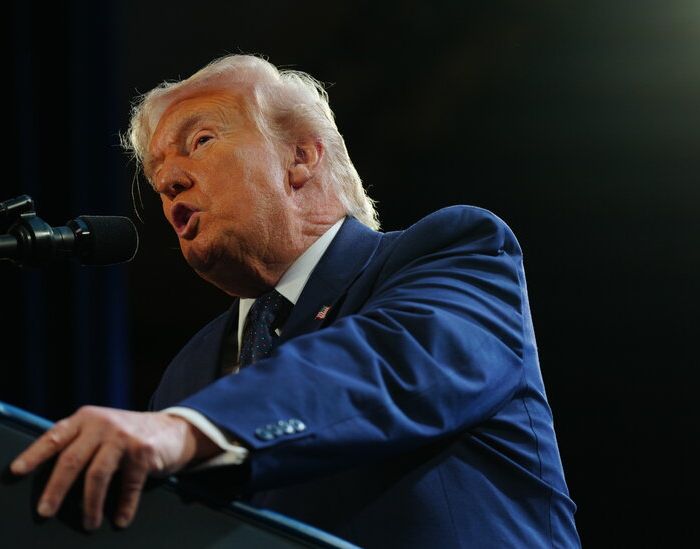
The parade took place against the backdrop of a newly announced ceasefire. On Friday, US President Donald Trump revealed that Russia and Ukraine had agreed to halt fighting from Saturday through Monday, alongside a prisoner exchange. Trump optimistically described the truce as possibly being the “beginning of the end” of the conflict.
However, the goodwill barely lasted hours. Both sides quickly accused each other of breaching the ceasefire. Ukraine’s General Staff reported that Russian forces had launched 51 attacks since the truce began, while Russia’s Defence Ministry insisted that Ukrainian troops had carried out drone and artillery strikes on Russian positions despite the agreement.
Putin Hints War Is Nearing Its End
Speaking to reporters after the parade, Putin offered a striking statement — that he believes Russia’s war in Ukraine is approaching its conclusion. He also said he would be willing to meet Ukrainian President Volodymyr Zelenskyy face-to-face, but only after a lasting peace agreement is finalized.
This marks a notable shift in tone, even if it remains unclear how soon any meaningful diplomatic breakthrough might occur.
Zelenskyy’s Mocking Decree
In the days leading up to the parade, Zelenskyy added a satirical twist to the tense situation. He had earlier suggested that Russian officials feared Ukrainian drones might buzz over Red Square on May 9. Following Trump’s ceasefire announcement, the Ukrainian leader issued a tongue-in-cheek “decree” granting Russia permission to celebrate Victory Day, jokingly declaring Red Square temporarily off-limits to Ukrainian strikes.
The Kremlin dismissed the gesture as nothing more than a “silly joke.” Russian officials had previously warned that any attempt to disrupt the parade would be met with a massive missile strike on central Kyiv.
Foreign Attendance and Symbolism
This year’s celebration drew a much smaller group of international guests compared to previous editions. The event still featured allied troops, including North Korean soldiers, reinforcing Moscow’s growing reliance on a narrow circle of partners.
Victory Day remains a deeply emotional occasion not just in Russia but also in former Soviet republics such as Belarus and Kazakhstan. The Soviet Union lost an estimated 27 million people during what it refers to as the Great Patriotic War between 1941 and 1945. That staggering loss continues to shape the country’s collective memory and represents one of the few unifying chapters in its often-divisive history.
A Day of Pride and Politics
Closing his address, Putin emphasized that the day is observed with pride and devotion, urging citizens to recognize their shared responsibility to defend Russia’s interests and secure its future.
While the Russia Victory Day parade may have looked smaller this year, its political weight was anything but diminished. With war still raging, ceasefires faltering, and diplomacy uncertain, the symbolism of Red Square continues to carry enormous meaning — both for Russia’s leadership and for the world watching closely.
Author