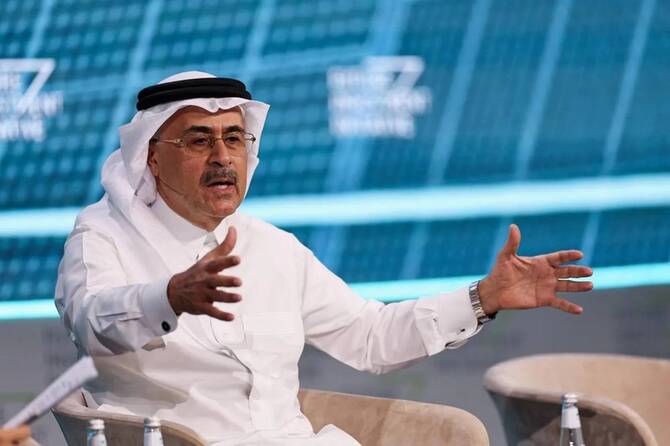
The Aramco oil market recovery is expected to take significantly longer than many had hoped, according to a strong warning from Saudi Aramco’s CEO Amin Nasser. Speaking in Dubai on Sunday, Nasser revealed that the world has effectively lost around one billion barrels of oil over the past two months — a staggering shortfall that he says will not be quickly reversed even if global supply routes return to normal.
A Massive Loss in Global Oil Supply
Nasser’s comments come at a time when the global energy industry is grappling with one of its most severe disruptions in years. The combination of geopolitical conflict, blocked shipping lanes, and years of underinvestment has created a perfect storm that continues to choke supply and elevate prices.
According to Nasser, even reopening trade routes will not instantly heal the damage. The market, he explained, has been deprived of around one billion barrels of oil, a deficit that cannot be made up overnight. He emphasized that the strain on global inventories — already operating at historically low levels — has been compounded by long-standing underinvestment in the energy sector.
Strait of Hormuz Disruptions at the Core of the Crisis
At the heart of the current crisis is the blockade of the Strait of Hormuz, one of the world’s most critical oil shipping passages. Iran’s actions have severely limited the ability of tankers to pass through the strait, putting tremendous pressure on global shipping and driving energy prices higher.
The disruption follows the recent U.S.-Israeli war, which has sent shockwaves throughout international markets. With approximately one-fifth of the world’s oil typically passing through the Strait of Hormuz, even partial blockades have an outsized effect on global supply and prices.
Although ongoing diplomatic efforts continue to seek a path forward, the immediate impact on the energy market has been undeniable. Buyers have been forced to scramble for alternative routes, and producers are racing to keep critical supply chains intact.
Aramco’s East-West Pipeline as a Lifeline
In response to these challenges, Aramco has been relying heavily on its East-West Pipeline, a strategic asset that allows the company to transport crude oil from the country’s eastern fields to the Red Sea. This pipeline has effectively bypassed the troubled Strait of Hormuz, helping ensure that some level of supply continues to reach global markets.
Nasser described the pipeline as a “critical lifeline” during these turbulent times, highlighting its importance not just for Aramco but for the broader global energy system. With other shipping routes either disrupted or unreliable, this infrastructure has become more vital than ever in maintaining energy flow.
Aramco’s Strong Financial Performance
Despite the volatile environment, Aramco’s financial results remain remarkably strong. The company recently reported a 25 percent jump in net profit during the first quarter of 2026, fueled in part by higher sales volumes and elevated global energy prices.
These earnings highlight Aramco’s ability to weather geopolitical storms better than most of its peers, thanks to its diversified infrastructure, vast reserves, and consistent operational efficiency. While many oil companies have struggled with disruption, Aramco has continued to deliver value to its shareholders even as the global energy landscape grows more unstable.
Asia Remains a Top Priority
While shipping routes have shifted dramatically, Nasser confirmed that Asia continues to be a top market for Aramco. The region’s massive energy demand, driven by major economies such as China, India, Japan, and South Korea, remains central to the company’s long-term strategy.
Aramco has long viewed Asia as a key growth area, especially as Western markets focus more on renewable energy transitions. Despite the difficulties of moving oil through traditional routes, the company has worked tirelessly to maintain its commitments to Asian buyers, who depend heavily on Saudi crude for their industrial and economic activities.
The Bigger Picture: Years of Underinvestment
Beyond the immediate disruptions, Nasser pointed to a deeper structural issue plaguing the global oil industry — chronic underinvestment over the past several years. Many major oil-producing nations and energy companies have scaled back exploration and infrastructure spending, partially due to political pressure to transition toward cleaner energy sources.
While that shift has long-term environmental benefits, the short-term consequences are now being felt sharply. With limited spare capacity and reduced new development, even relatively small disruptions can lead to dramatic price swings and supply gaps.
Implications for Global Energy Prices
The combination of war-related disruptions, blocked shipping routes, and a thinly stocked global supply has already pushed energy prices upward. Drivers have seen gasoline prices climb at the pump, while industries reliant on petroleum-based products are dealing with rising costs that ultimately affect consumers.
Airlines, in particular, have been hit hard, with jet fuel prices rising significantly. This has impacted everything from international travel costs to the operations of major freight and logistics companies. Beyond transportation, the ripple effects have extended into manufacturing, agriculture, and household energy bills around the world.
A Slow Path to Stability
Nasser made it clear that even if peace talks succeed and shipping resumes, the journey back to a stable oil market will be long. Rebuilding lost inventories, restoring shipping confidence, and replenishing global supplies takes far more than a simple political resolution.
He emphasized that Aramco’s mission during this period remains straightforward — to keep energy flowing, even when the system is under enormous strain. While the company cannot single-handedly solve a global supply crisis, its infrastructure and operational resilience are playing a crucial role in keeping energy markets functioning during one of the most difficult periods in recent memory.
A Cautious Outlook for the Months Ahead
Looking forward, the future of the global oil market remains uncertain. While Aramco’s strong financial position offers some reassurance, the broader supply landscape will continue to be shaped by geopolitical decisions, shipping safety, and the willingness of oil-producing nations to invest in new capacity.
Industry analysts are watching closely for any signs of de-escalation in the Middle East, as well as movement on global energy diplomacy. Even small steps — such as reopening certain shipping lanes or releasing strategic reserves — could help ease pressure, but they will not solve the deeper supply gap created by months of disruption and decades of underinvestment.
Final Thoughts
The Aramco oil market recovery story is one of resilience meeting reality. While Saudi Aramco continues to operate at full strength, the global energy market is dealing with consequences that extend far beyond its borders. With one billion barrels lost and supply chains still under pressure, the world is being reminded just how fragile the global oil network truly is.
For consumers, businesses, and governments alike, the message is clear — energy security cannot be taken for granted. As Aramco navigates these turbulent times, its ability to maintain stability through assets like the East-West Pipeline and its long-standing partnerships in Asia will play a critical role in shaping how quickly the world can return to balance.
Until the global market recovers fully, every barrel matters more than ever — and the world will be watching closely as Aramco and other major energy players work to restore order in an increasingly volatile landscape.
Author