Starmer Pro-Palestine March Ban Threat Triggers Heated Debate Over Free Speech
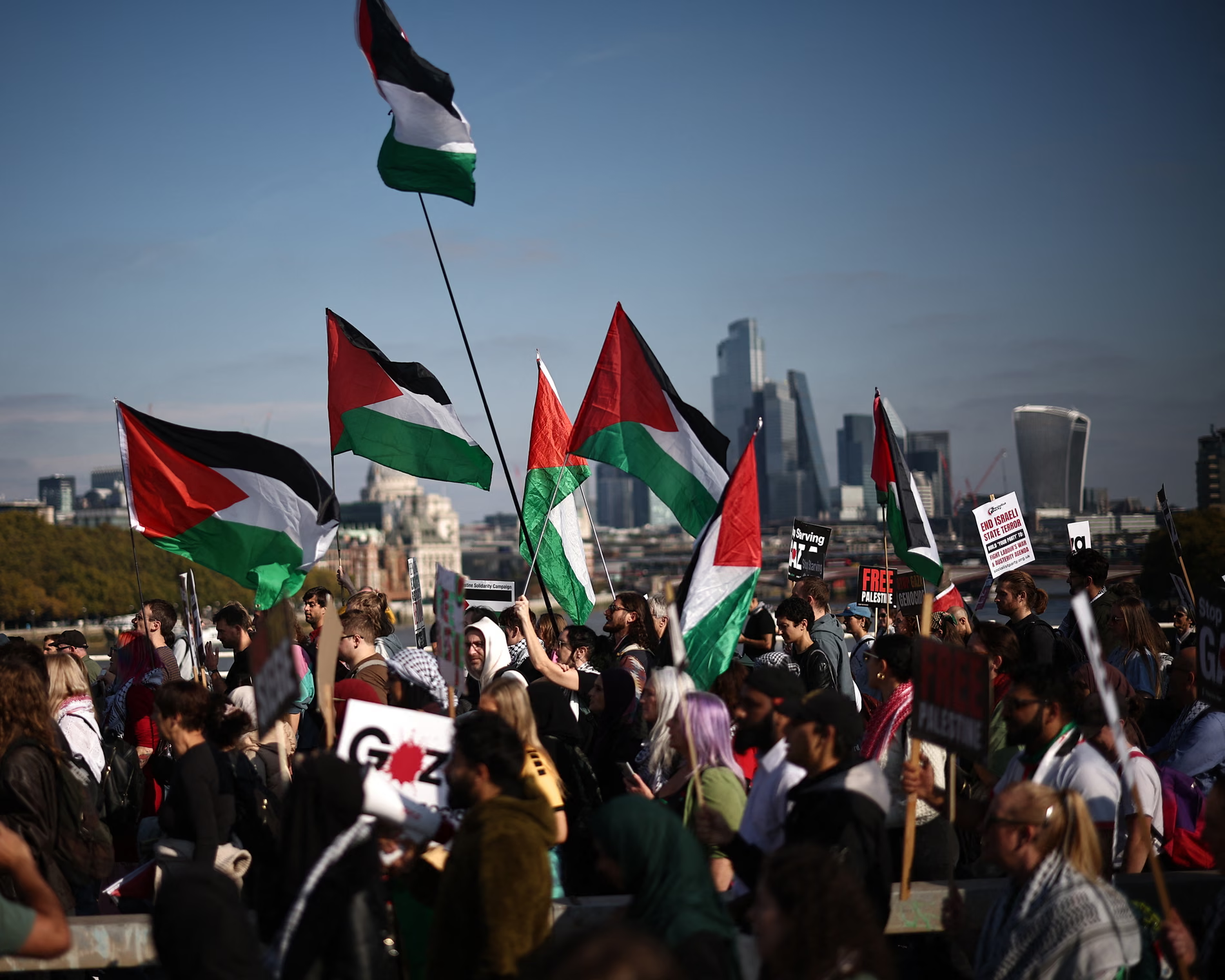
The Starmer pro-Palestine march ban threat has ignited a sharp national debate over the limits of protest in the United Kingdom, with organisers warning that any move to silence demonstrations would strike at the very heart of free assembly and free speech. Prime Minister Keir Starmer’s comments, made amid rising antisemitism and a recent stabbing attack on Jewish men in London, have placed his government in a difficult balancing act between protecting communities and preserving civil liberties.
Starmer Signals Tougher Approach to Some Protests
Speaking on BBC Radio 4’s Today programme on Saturday morning, Starmer made clear that there are situations in which he would support outright bans on certain pro-Palestine protests. He also called for tougher action against specific chants, singling out the phrase “globalise the intifada” as one that should attract stronger consequences.
The Arabic word intifada translates to uprising or “shaking off.” For some pro-Palestine voices, the chant represents solidarity with Palestinians resisting occupation. For many Jewish groups and leaders, however, it is interpreted as a call to violence — a divide that lies at the centre of the current controversy.
A Backdrop of Rising Antisemitic Violence
Starmer’s remarks landed just days after a deeply alarming series of incidents involving Britain’s Jewish community. The most shocking among them was the stabbing of two Jewish men in Golders Green in north London on Wednesday. Both men have since been discharged from hospital, but the incident has left the community badly shaken.
These events have intensified pressure on the government to act decisively, and Starmer’s comments appear designed to address growing public concern about the safety of British Jews.
Organisers Strongly Reject the Idea of Bans
The reaction from protest organisers has been swift and forceful. John Rees, co-founder and national officer of the Stop the War coalition, which helps organise major pro-Palestine demonstrations in central London, treated Starmer’s comments as a direct threat to the movement.
Speaking on Sky News, Rees argued that any ban would strike at the root of free assembly and free speech in Britain. He insisted that as long as the conflict in the Middle East continues, demonstrators will keep showing up, holding both the British and Israeli governments accountable for the violence and its global consequences.
Rees emphasised that protesters are unwilling to back down simply because of past tensions or political pressure. He framed the marches as a vital channel for ordinary citizens to express opposition to a war that, in his view, has destabilised entire regions and harmed lives far beyond the immediate conflict zone.
Defending the Movement Against Accusations
When asked about a small minority of demonstrators who have expressed support for Hamas or shouted controversial chants, Rees pointed out that arrests for such offences remain extremely rare relative to the total number of attendees, which has run into the millions over time.
He explained that when stewards at protests notice inappropriate slogans, they typically ask participants to stop using them — and most people comply without incident. Rees also stressed that thousands of British Jews have themselves attended the marches in opposition to Israel’s actions, undermining claims that the demonstrations themselves pose any threat to the Jewish community.
Conservative Leader Calls for a Total Ban
The political response has not been limited to the prime minister. Conservative leader Kemi Badenoch went further on Saturday afternoon, calling for pro-Palestine marches to be banned altogether. She claimed the demonstrations are being used as cover for promoting violence and intimidation against Jewish communities.
Her remarks reflect a wider Conservative push for tougher restrictions and represent one of the strongest political stances yet against the ongoing protests.
A Strong Pushback From Civil Liberties Voices
Defend Our Juries, an organisation that supports demonstrations where people show solidarity with the proscribed group Palestine Action, also weighed in on Starmer’s comments. The group posted a sharp message on X, urging the government to “end the genocide, not our freedoms to oppose it.”
The phrase captures the broader argument from civil liberties advocates — that the answer to extremism and violence is not to dismantle the right to protest, but to address the underlying causes driving public anger.
Starmer Defends His Position
Starmer pushed back against the suggestion that his comments were a sudden reaction to recent events. He insisted that conversations about restricting certain marches had been ongoing with police for some time. He cited concerns from members of the Jewish community who have repeatedly raised the issue of the cumulative impact of weeks of demonstrations.
When asked whether he supported a full moratorium on pro-Palestine marches, as recommended by his independent adviser on terrorism Jonathan Hall, Starmer stopped short of giving a clear yes. Instead, he urged a wider review of protests and asked some demonstrators to reflect on the toll the marches are taking on Jewish communities.
The View From the Police
Metropolitan Police Commissioner Mark Rowley, however, offered a more nuanced view in remarks to The Times on Friday night. He said he does not believe a temporary ban on pro-Palestine marches is practical, but argued that the police need additional powers to manage them more effectively.
Rowley said that the existing laws surrounding protests are messy, complicated, and in need of clearer guidance. He raised particular concern about repeated attempts by march organisers to route demonstrations near a synagogue, even after police intervention. According to Rowley, this kind of repeated behaviour sends a troubling message — one that, fairly or unfairly, can feel like antisemitism.
He has also warned of a dangerous mix of hate crimes, terrorism, and the involvement of hostile foreign states, which together are creating an unsettling environment for Britain’s Jewish community.
A Disputed Link Between Marches and Attacks
One of the central tensions in this debate is whether there is a meaningful connection between protests and individual acts of antisemitic violence. Rees firmly rejected this idea, arguing that linking them suggests a causal relationship that simply does not exist.
Pointing to individuals like Essa Suleiman, who has been charged with three counts of attempted murder after attacking a longtime friend before stabbing two Jewish men in Golders Green, Rees insisted such people are not affiliated with the Palestine movement. He stressed that there is no evidence these attackers attend marches, support the cause, or are tolerated in any way by organisers. Drawing such a connection, he said, is fundamentally misleading.
A Tense Crossroads for British Politics
The Starmer pro-Palestine march ban controversy reflects a country wrestling with extraordinarily difficult questions. How should a democracy respond when public protests over a foreign conflict become entangled with rising domestic violence against a minority group? How does a government protect both freedom of expression and physical safety in equal measure?
There are no easy answers, and the debate has exposed real divisions in British society. Some believe the protests have crossed a line and must be restricted to protect vulnerable communities. Others argue that bans would set a dangerous precedent and silence legitimate political voices.
What Comes Next
Downing Street has been approached for further comment, but Starmer’s remarks have already shifted the political conversation. With pressure mounting from across the political spectrum, including calls from Conservatives for total bans and resistance from civil liberties groups and protest organisers, the prime minister faces a delicate path forward.
What is clear is that the issue will not fade quickly. As long as the war continues, as antisemitism rises, and as protest movements grow, Britain will need to navigate one of the most sensitive intersections of political life — the boundary between expression and safety, between dissent and danger.
For now, both sides are digging in. And the country is left to consider not just what its laws should say, but what kind of society it wants to be.
Author