US Gas Prices Surge to Four-Year High as Iran Tensions Stall Oil Talks
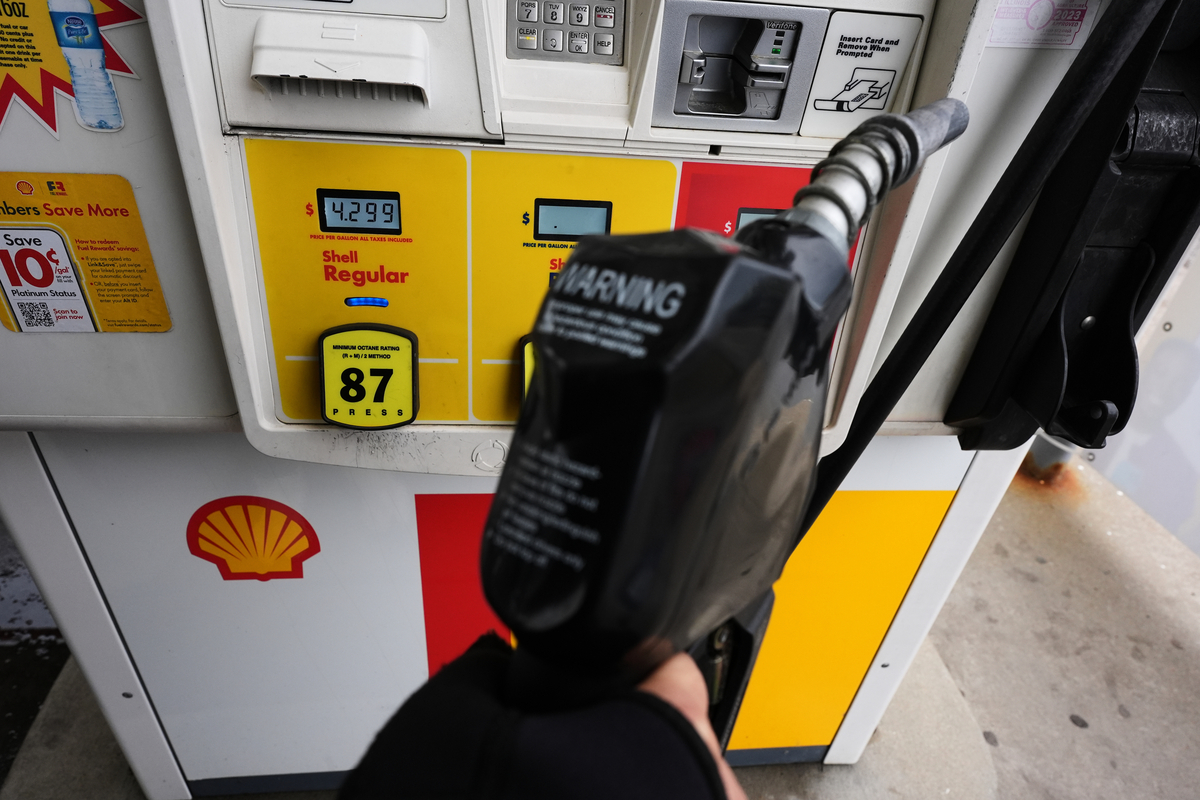
Drivers across America are feeling the squeeze again. The latest US gas prices surge has pushed the national average to $4.18 a gallon as of Thursday — the highest level seen in four years. The spike comes as ongoing peace negotiations between the United States, Israel, and Iran continue to stall, leaving global oil markets rattled and consumers paying the price at the pump.
The last time the country saw averages cross the $4.15 mark was back in April 2022, when oil markets were sent into chaos following Russia’s invasion of Ukraine. Compared to just one year ago, when gasoline averaged around $3.15 a gallon, drivers are now shelling out roughly a dollar more for every gallon they buy.
Big Differences Between States
While the national average paints a sobering picture, the reality on the ground varies dramatically depending on where you live. States that produce their own oil tend to enjoy considerably lower prices, while states that rely heavily on imports are bearing the brunt of the surge.
In Texas, where domestic oil production is plentiful, drivers are still paying around $3.72 a gallon. Compare that to California, where the average has climbed all the way up to $5.96 a gallon — a staggering $2 difference between the two states. For California families and commuters, the rising costs are translating into hundreds of additional dollars per month in fuel expenses alone.
Global Oil Markets in Turmoil
The fuel price spike is being driven largely by what’s happening in international oil markets. By Tuesday morning, Brent crude — the global benchmark — climbed to $111 a barrel. While this remains slightly below its recent peak of $119 a barrel last month, it is still nearly 60% higher than pre-war averages.
Meanwhile, West Texas Intermediate (WTI), the U.S. benchmark, hovered close to $100 a barrel on Tuesday. These elevated levels are a clear signal that global supply concerns are far from resolved.
A major source of anxiety is the ongoing standoff over the Strait of Hormuz — a critical maritime passage through which roughly one-fifth of the world’s oil and natural gas typically flows. Negotiations to reopen the strait remain stuck, and traders are bracing for continued volatility until a resolution is reached.
Trump Pushes Back on Iran’s Proposal
According to recent reports, President Donald Trump told his advisers on Monday that he is unhappy with Iran’s latest proposal regarding the Strait of Hormuz. The plan reportedly demands that the United States lift its own naval blockade in the area but stops short of addressing the larger and more contentious nuclear weapons issue.
On Tuesday, Trump took to social media to share his perspective, claiming that Iranian leaders had told him their country was in what he described as a “state of collapse.” He added that Iranian officials want to reopen the strait as quickly as possible while they attempt to stabilize their internal leadership situation — a development he expressed cautious optimism about.
The political messaging marks the latest twist in an ongoing diplomatic standoff that continues to influence the global oil supply chain and, by extension, fuel prices for everyday Americans.
UAE Walks Away From OPEC
In another major development, the United Arab Emirates announced on Tuesday that it would officially leave OPEC, the influential oil cartel. The UAE’s exit comes amid growing internal frustrations, including the cartel’s struggles to move oil exports through the troubled Strait of Hormuz.
The move is being viewed as a significant political win for Trump, who has long criticized OPEC for what he describes as price collusion that hurts global consumers. Trump has accused the group of unfairly inflating oil prices to enrich its members at the expense of the rest of the world.
The UAE’s departure could weaken OPEC’s grip on global oil pricing in the long run, potentially shifting the balance of power in international energy markets — though short-term effects remain uncertain given the current geopolitical instability.
Western Oil Companies Cashing In
While American consumers are dealing with painful prices at the pump, Western oil companies are reaping the rewards. The combination of high crude prices and disruptions affecting Middle Eastern producers has given large Western firms a powerful market advantage.
British oil giant BP reported on Tuesday that its profits more than doubled in the first quarter of the year, reaching an impressive $3.2 billion, equivalent to roughly £2.4 billion. The dramatic jump in earnings underscores how the ongoing conflict and supply disruptions have transformed market conditions in favor of large producers based outside the conflict zone.
Other major oil companies are expected to post similarly strong quarterly results in the days ahead, as investors closely watch how energy giants benefit from the rising barrel prices.
What Drivers Should Expect Next
Unfortunately for American consumers, there appears to be little immediate relief in sight. As long as negotiations over the Strait of Hormuz remain stalled and tensions between the U.S., Israel, and Iran persist, oil markets are likely to remain volatile.
Analysts caution that any sudden escalation in the Middle East could push crude prices even higher, with corresponding effects at the gas pump. On the other hand, a diplomatic breakthrough — particularly one involving the reopening of the strait — could quickly bring relief to global oil supply chains and ease price pressure.
Until then, the US gas prices surge is expected to continue impacting household budgets, transportation costs, and overall inflation across the country. Drivers planning summer travel, businesses managing logistics expenses, and policymakers weighing inflation risks are all watching the situation carefully.
For now, motorists should prepare for sustained high prices and keep an eye on the diplomatic developments that will ultimately determine when — and if — relief arrives at the pump.
Author