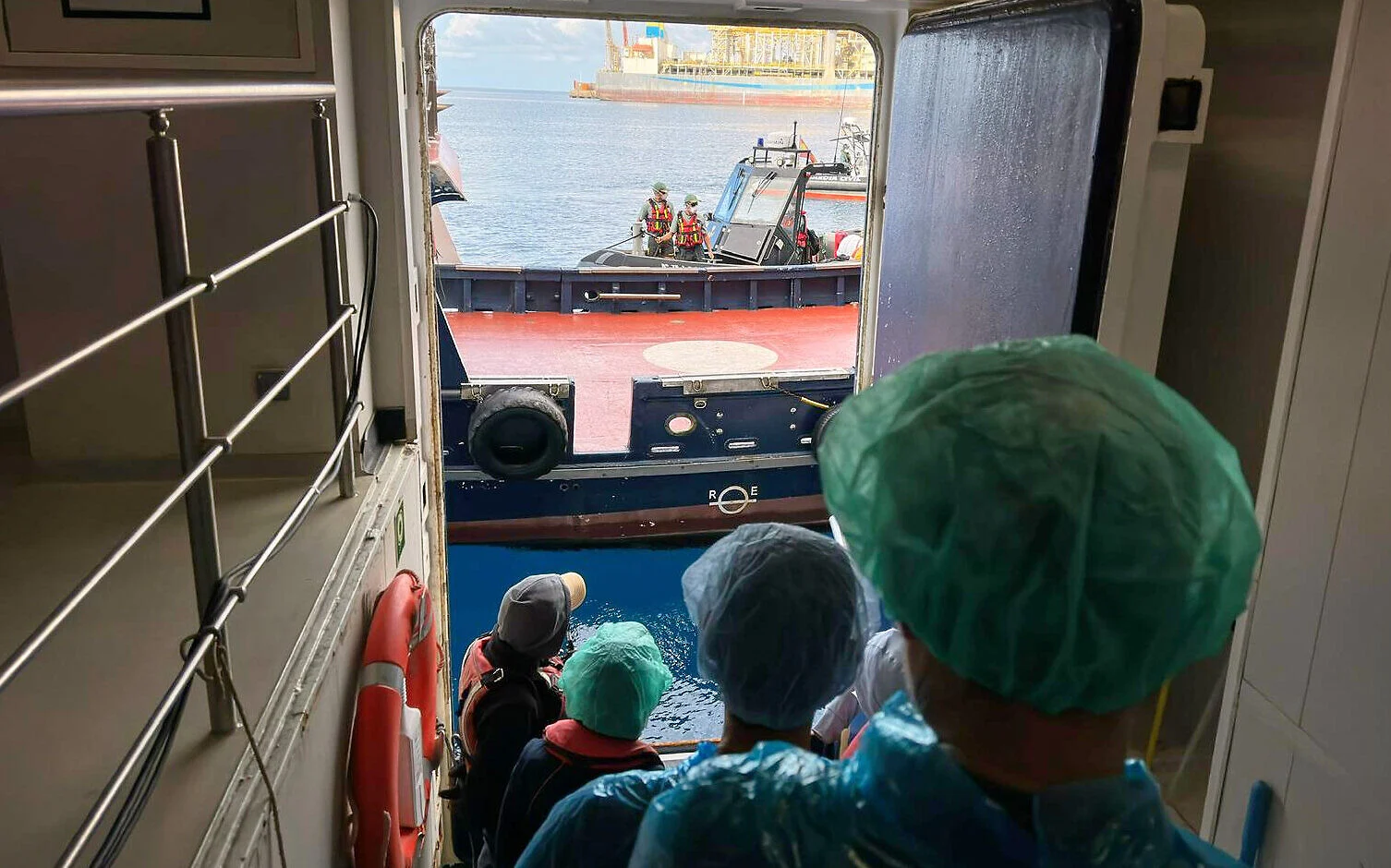
The hantavirus cruise ship passengers from the MV Hondius finally began disembarking on Sunday morning, marking a major turning point in one of the most closely watched maritime health situations in recent memory. After nearly six weeks at sea and one month after the first death linked to the deadly outbreak, the ship anchored off Spain’s Canary Islands, where international health officials are working to ensure that the evacuation proceeds safely and without further spread of the virus.
A Long-Awaited Arrival in Tenerife
The MV Hondius reached the port of Granadilla de Abona in Tenerife, the largest of the Canary Islands, early Sunday. The vessel had been the subject of intense international concern after a hantavirus outbreak claimed lives onboard and triggered a coordinated response from global health agencies.
Mónica García, Spain’s health minister, confirmed that everyone aboard was asymptomatic at the time of arrival. Health workers boarded the ship shortly after it dropped anchor to begin a detailed epidemiological evaluation. Officials said that passengers and crew members would begin disembarking in small, controlled groups, with the entire process expected to conclude by Monday evening.
A Carefully Coordinated Evacuation
The MV Hondius is currently carrying around 150 people, including passengers, crew members, and four medical staff members who had boarded the vessel earlier when it was anchored near Cape Verde. Spanish officials emphasized that all evacuations would take place under strict supervision, ensuring no unnecessary contact between passengers and the public.
Once individuals leave the ship, they will be transferred via small boats to a controlled landing point. From there, they will be transported to an airport and eventually flown to their home countries. The vessel itself is anchored offshore in an industrial port area where no civilians are present, helping minimize any risk of contact with the surrounding community.
Spain’s health minister assured residents and international observers that the entire process is being managed responsibly. She emphasized that there will be no additional public contact beyond what has already occurred on the ship.
WHO Steps in to Calm Public Fears
As the ship approached Spanish waters, Dr. Tedros Adhanom Ghebreyesus, the World Health Organization’s director-general, addressed concerns from residents of Tenerife. Many in the local community had voiced fears reminiscent of the early days of the COVID-19 pandemic.
In a public statement, Dr. Tedros acknowledged the difficult emotions tied to outbreaks and ships approaching shores, but he firmly reassured residents that the situation surrounding the hantavirus is fundamentally different from the global COVID-19 crisis. His message aimed to balance urgency with calm, reminding the public that this outbreak, while serious, is contained and being managed with strong public health measures.
Spain Overrides Regional Veto
The arrival of the MV Hondius was not without political tension. The leader of the regional government of the Canary Islands had attempted to block the ship’s docking, citing concerns about insufficient information regarding public safety.
However, Spain’s central government overrode the veto, ensuring that the operation could proceed. Spanish officials made it clear that the situation called for a national-level coordinated response and that residents could trust the layered safety procedures put in place.
The Outbreak in Numbers
According to the WHO, three passengers have died and five others have fallen ill after showing symptoms of hantavirus since April 11. Of those affected, six cases have been confirmed through laboratory testing, while two additional cases are listed as “probable” pending further investigation. Two of the deceased passengers are among the confirmed cases.
Despite the seriousness of the situation, global health officials have predicted that the outbreak will remain limited as long as proper public health measures are followed. Their early actions, including precautionary monitoring, quick evacuation logistics, and international coordination, are expected to play a major role in keeping the situation under control.
Plans After Evacuation
Once all passengers and some crew members are safely off the ship, the MV Hondius will sail to the Netherlands, where it will undergo a thorough disinfection process. Spain’s interior minister Fernando Grande-Marlaska confirmed that the operation has been carefully planned, with vessel cleaning being a critical part of preventing any further spread of the virus.
The body of one of the three passengers who died during the outbreak will remain on board the ship, with arrangements for repatriation expected to follow at a later stage.
Australia and Spain Lead the Final Phases
Spanish citizens are scheduled to be the first group to leave the ship, followed by passengers from other countries. The final evacuation phase is expected on Monday evening, when a flight sent by Australia will depart Tenerife carrying the last remaining passengers. This final coordinated step underscores how the response to the outbreak has spanned multiple continents and required international cooperation at every stage.
A 42-Day Monitoring Window
Maria Van Kerkhove, the WHO’s director of epidemic and pandemic preparedness and prevention, confirmed that everyone on board is being treated as a high-risk contact. While the global risk of hantavirus remains low, this internal classification ensures that all individuals receive enhanced monitoring throughout their post-disembarkation period.
The WHO has recommended an active monitoring and follow-up period of 42 days for every person leaving the ship. If any passenger develops symptoms during the screening process, they will be flown directly to the Netherlands for medical treatment aboard a separate aircraft, ensuring full isolation from those without symptoms.
Concerns About the Andes Strain
While most strains of hantavirus do not spread between humans, officials confirmed that the strain identified on the MV Hondius is the rare Andes strain — currently the only known type capable of human-to-human transmission. This makes the situation more sensitive, although officials continue to stress that overall public risk remains minimal as long as preventive measures are in place.
A Global Tracing Effort
Authorities in multiple countries are now working to trace anyone who may have come into contact with infected individuals. The MV Hondius set sail from Argentina in early April, stopping at several islands across the southern Atlantic Ocean before approaching Europe.
Health officials in Canada, Denmark, France, Singapore, South Africa, Spain, Switzerland, Turkey, and the United States are actively monitoring people who were either passengers on the ship or had contact with someone who fell ill. This widespread effort highlights how interconnected modern travel has become and how quickly health authorities must mobilize when a pathogen emerges aboard an international vessel.
France Takes Strong Precautions
The French government confirmed that five French citizens aboard the ship will be flown back to Paris on Sunday. Upon arrival, they will be admitted to a hospital and placed in quarantine for three days for active health monitoring. Following this, they will be required to isolate at home for an additional 45 days. So far, no confirmed cases of hantavirus have been reported in France.
This level of caution reflects how seriously countries are taking the outbreak, even with limited human-to-human transmission risk. The combination of medical observation and home isolation reflects best practices learned from previous global health emergencies.
A Reminder of Modern Health Vulnerabilities
The hantavirus cruise ship passengers’ situation has reignited public concerns about the rapid spread of disease in tightly enclosed environments such as ships, airports, and resorts. While the outbreak appears to be limited and contained, it serves as a powerful reminder of how quickly health emergencies can develop and how essential international cooperation has become.
It also highlights the importance of immediate, transparent communication during health crises. The WHO’s quick response, combined with the Spanish government’s firm but compassionate handling, has helped reduce panic and provided a clear path forward for those affected.
A Hopeful End to a Difficult Voyage
For the passengers and crew members aboard the MV Hondius, this disembarkation marks the beginning of the end of a long and traumatic journey. After spending nearly six weeks at sea — much of it under tight medical supervision — they can finally take steps toward returning home, even if those steps include extended monitoring and isolation periods.
For global health officials, the situation underscores the value of preparation, coordination, and decisive action. Although the hantavirus outbreak has been deeply tragic for the families of those who lost loved ones, the broader response has shown how modern public health systems can adapt to unique and unexpected challenges.
Looking Ahead
As the MV Hondius prepares to head to the Netherlands for disinfection and the last passengers complete their evacuation, the world will continue watching for any signs of further spread. Public health agencies, governments, and travelers alike will likely take valuable lessons from this experience — about preparedness, communication, and the power of coordinated action during international health events.
For now, the focus remains on ensuring the safe return of every passenger, supporting their physical and emotional recovery, and preventing any further chapter of the outbreak from unfolding.
Author