Trump Invites Nvidia CEO Jensen Huang on China Trip After Snub Coverage Sparks Controversy
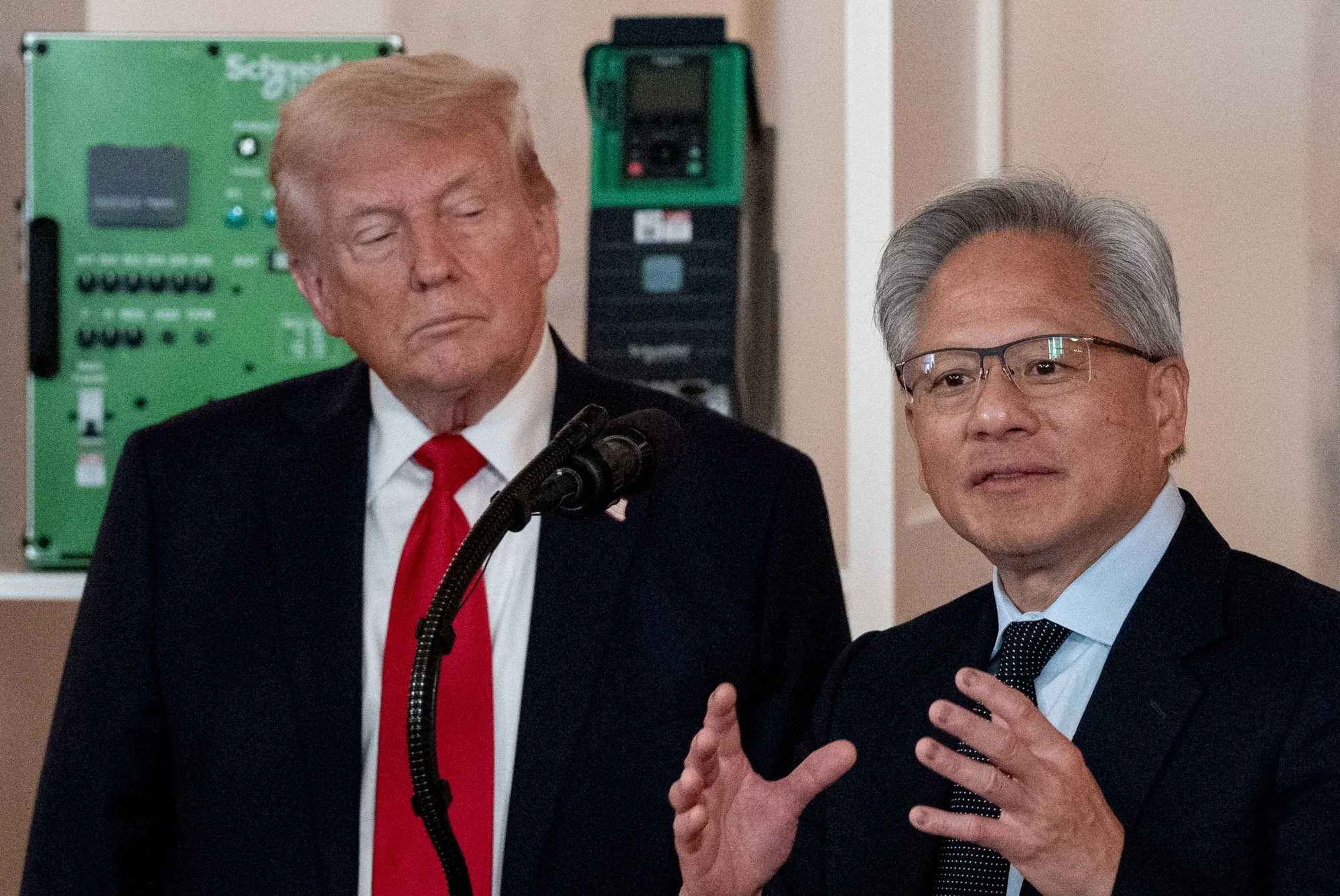
Trump Invites Nvidia CEO Jensen Huang to join his high-profile China trip, and the move quickly became one of the most talked-about moments of the entire visit. What started as a routine business delegation announcement turned into a small media storm, fuelled by speculation that one of the most powerful tech executives in the world had been left off the guest list. By the time the dust settled, Huang was already on board Air Force One, and President Trump was publicly slamming the coverage that suggested otherwise.
A Last-Minute Addition That Made Headlines
The Nvidia CEO was photographed boarding Air Force One during a refueling stop in Anchorage, Alaska, on Tuesday evening as the presidential delegation made its way to Beijing. By Wednesday evening, Huang was seen stepping off the plane in the Chinese capital, walking alongside Tesla CEO Elon Musk, both following closely behind the president as he was greeted by Chinese officials.
According to a source familiar with the trip, Huang’s presence was the result of a direct invitation extended by Trump himself.
An Nvidia spokesperson confirmed his attendance, telling The Hill that Huang was joining the summit at the president’s invitation to support both America and the administration’s broader goals during the visit.
Why the Invitation Drew So Much Attention
The fact that Huang ended up on the trip might have been a routine note in the larger China summit story if not for one detail. He had not appeared on the White House’s initial list of business leaders accompanying Trump.
That earlier list included some of the most influential figures in American business:
- Tim Cook, CEO of Apple
- Larry Fink, CEO of BlackRock
- Kelly Ortberg, CEO of Boeing
- Dina Powell McCormick, executive at Meta
- David Solomon, CEO of Goldman Sachs
Notably absent from that lineup was Huang, the man at the helm of Nvidia, a company that has been at the centre of nearly every conversation about AI, chips, US-China trade, and global technology policy for the past two years. His absence quickly drew attention from media outlets that began questioning why one of the most influential leaders in artificial intelligence would not be part of such an important trip.
The CNBC Report and Trump’s Reaction
CNBC was among the first outlets to report that Huang had not been invited on the trip. The story positioned the apparent omission as a deliberate snub, sparking commentary across the technology and business communities.
That coverage clearly did not sit well with Trump. Once Huang was officially aboard Air Force One, the president responded sharply on Truth Social, calling out CNBC by name.
In his post, Trump declared that the network had incorrectly reported that Huang had not been invited. He called Huang “the Great Jensen Huang” and described the China trip as “the incredible gathering of the World’s Greatest Businessmen and women.”
He went on to add that Huang was actually on board Air Force One at that very moment, and that unless he personally asked Huang to leave, which he said was “highly unlikely,” the CNBC story was, in his trademark phrasing, “FAKE NEWS.”
It was classic Trump, blending personal endorsement, public scolding of a major news outlet, and a high-profile photo op all into a single moment.
Why Nvidia Matters in the Bigger Picture
To understand why this small staffing detail became such a major story, you have to look at how essential Nvidia has become to almost every major global technology conversation. Its chips power most of the AI systems being built today, and the company has become one of the most valuable corporations on Earth. That puts Huang in a uniquely powerful position, especially when it comes to discussions involving:
- US chip export controls
- AI development and safety
- Manufacturing partnerships in Asia
- Global supply chain dependencies
- Competition between American and Chinese tech sectors
A US president visiting China for a major summit without Nvidia at the table would have raised eyebrows for sure. The eventual decision to bring Huang along, even if it came late, signals that both the White House and Nvidia recognise just how central the company is to the unfolding US-China economic relationship.
A Power-Packed Tech Delegation
With Huang now officially on the trip, the technology heavyweight presence in Beijing is undeniable. The image of Trump being greeted by Chinese officials with both Elon Musk and Jensen Huang trailing closely behind him sent a clear message to the world. The world’s most influential AI hardware leader and the world’s most outspoken tech entrepreneur were standing shoulder to shoulder in Beijing on the same day.
It is the kind of optics that summit organisers dream of. Whether it leads to substantive announcements or remains primarily a visual moment will become clear as the trip unfolds.
The Political Subtext
The Huang invitation also reflects something larger about how Trump is approaching this trip. He clearly wants to project an image of unrivalled American business strength while sitting across from Chinese President Xi Jinping. Bringing some of the most recognisable names in global tech and finance helps reinforce that message.
It also signals a particular kind of diplomacy. Rather than rely solely on traditional government channels, Trump is leveraging the influence and visibility of America’s top corporate leaders to set the tone for negotiations. Whether the strategy will produce major deals during the trip remains to be seen, but the optics alone have already grabbed global attention.
Tensions With the Media Continue
The episode also serves as a reminder of how quickly Trump is willing to engage in direct confrontation with media outlets when he feels reporting does not align with his narrative. His response to CNBC was swift, public, and aggressive, characteristics that have defined his media relationships for years.
For better or worse, Trump remains highly attuned to coverage, especially when it touches on his personal relationships with business leaders or his ability to command loyalty from the corporate world.
A Symbol of How High-Profile This Trip Has Become
When the smallest detail about who is or is not on Air Force One becomes a major news story, it shows just how much weight this particular trip is carrying. From the Iran war shadow to trade negotiations, AI policy discussions, and even Taiwan-related concerns, every interaction in Beijing is being watched closely.
Huang’s last-minute inclusion fits perfectly into that high-stakes environment. His presence makes the delegation feel even more like a who’s who of the global economic landscape, and it adds another layer of significance to the meetings unfolding in China.
What This Means Going Forward
Whether Huang plays a public role during the summit or simply lends his presence to the delegation, his attendance carries weight. Nvidia’s ability to navigate increasingly strict US export controls while still serving major Chinese clients makes him one of the most strategically positioned executives on Earth.
If anything notable comes out of the trip regarding AI cooperation, chip exports, or tech partnerships, expect Huang’s name to be near the centre of the conversation. For now, the takeaway is simple. After a brief stir over whether he was invited, Jensen Huang is most certainly in Beijing, standing alongside Trump and one of the most consequential business delegations the United States has assembled in years.
Author