SpaceX CRS-34 Cargo Launch: ISS Hums With Advanced Research as Dragon Heads to Space Station
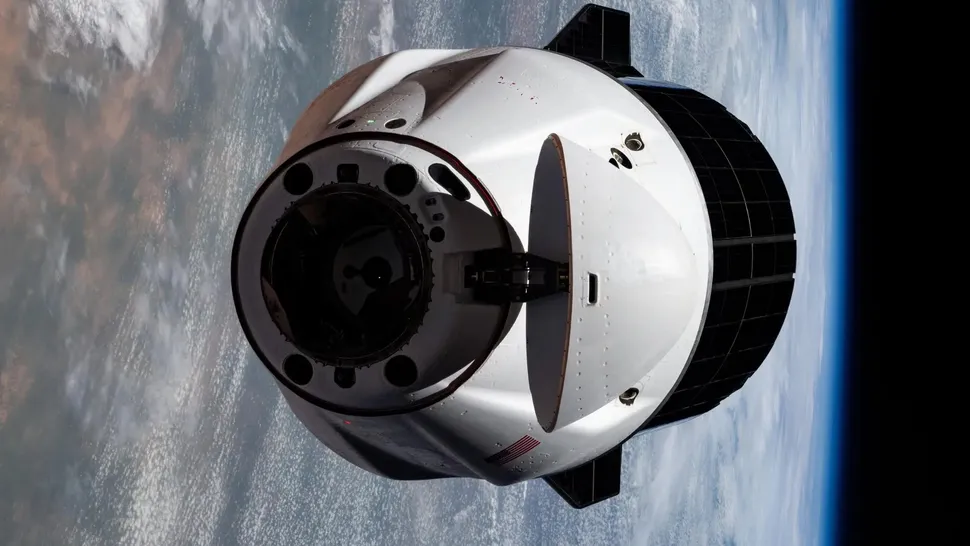
SpaceX CRS-34 Cargo Launch is here, and the International Space Station is buzzing with activity as it prepares for the arrival of one of its most important supply missions of the year. The uncrewed Dragon cargo spacecraft is scheduled to lift off at 7:16 p.m. EDT on launch day, weather permitting, atop a Falcon 9 rocket from Launch Complex 40 at Cape Canaveral Space Force Station in Florida. The mission is set to deliver roughly 6,500 pounds of cargo, including critical science experiments, crew supplies, and lab hardware, to the Expedition 74 crew.
For both NASA and the broader space community, this mission represents another major milestone in the ongoing partnership between commercial spaceflight and human spaceflight research. With Dragon set to dock at 9:50 a.m. EDT the following day, anticipation aboard the station is high.
Why CRS-34 Is a Big Deal
The CRS series of cargo missions has become essential for maintaining the steady flow of scientific work happening aboard the ISS. Every Dragon arrival brings new tools, new experiments, and supplies that allow long-duration crew members to continue their wide-ranging research.
The CRS-34 mission includes:
- About 6,500 pounds of science experiments and crew supplies
- Lab hardware to support ongoing research projects
- Time-sensitive samples that will be unpacked within hours of docking
- New tools that will help astronauts continue physics, biology, and material science work
Without these consistent deliveries, the kind of advanced research currently underway on the ISS simply would not be possible.
The Astronauts Behind the Mission
Flight engineers Jack Hathaway of NASA and Sophie Adenot of ESA will monitor Dragon’s automated rendezvous and docking. They will be supported by NASA flight engineers Jessica Meir and Chris Williams, who will join them in a cargo readiness review the day before Dragon arrives.
Once Dragon docks, the crew will begin unpacking time-sensitive materials about two and a half hours later. These items are usually:
- Stored inside portable science freezers
- Designed to maintain biological viability
- Critical for completing key experiments on tight scientific timelines
This kind of careful coordination shows just how much choreography goes into making every cargo mission a success. Every astronaut on board has a clearly defined role, and the entire operation runs with the precision of a finely tuned scientific orchestra.
Hathaway Tackles Life Support Upgrades
While the crew prepares for Dragon’s arrival, the day-to-day work on board the station continues at full speed. Hathaway focused on installing new life support hardware inside the Tranquility module on Tuesday. The work involves updating the orbital outpost’s water recycling system, which is one of the most important systems on the station.
A more efficient water recycling system means:
- Less water needs to be resupplied from Earth
- Long-duration missions become more sustainable
- The station can support more crew time for science instead of logistics
These upgrades may sound technical, but they have huge long-term implications. Future deep space missions, including those to the Moon and Mars, will rely on lessons learned from the ISS water recycling system.
Adenot Tends to Space Gardens and Logistics
ESA astronaut Sophie Adenot had a varied day of work. She watered and photographed alfalfa plants growing as part of the Veg-06 space agriculture study. The Veg series of experiments has become especially important as space agencies work to understand how to grow fresh, edible food in microgravity environments.
After her plant care duties, Adenot reorganised the Quest airlock and Harmony module to make space for the new cargo coming aboard Dragon. With every resupply mission, the crew must carefully manage the available storage space to keep the station running smoothly.
Meir Dives Into Physics and Quantum Research
Jessica Meir began her shift inside the Destiny laboratory module by swapping sample hardware in the Microgravity Science Glovebox. The experiment she supported studies how weightlessness affects tiny particles suspended in a gel-like substance known as a colloidal solid.
This kind of fundamental physics research is helping scientists better understand how matter behaves outside the influence of gravity, which is valuable for everything from medicine to materials science.
But that was not the only major task on her plate. Meir also completed the installation of the new science module for the Cold Atom Lab, a quantum physics research facility. This advanced module was delivered to the ISS aboard Northrop Grumman’s Cygnus XL cargo spacecraft on April 13.
The Cold Atom Lab studies atoms cooled to near absolute zero, allowing researchers to explore quantum effects that are impossible to observe in the same way on Earth. The work being done here has implications for future technologies including:
- Ultra-precise atomic clocks
- Quantum computing
- Advanced sensor systems
Williams Tests Robotics and Maintains Critical Hardware
NASA astronaut Chris Williams spent his day testing a small robotic arm inside the Kibo laboratory module. The technology demonstration explored automated, precision manipulation capabilities, which could one day support a wide range of in-orbit operations.
After completing the test, Williams uninstalled and stowed the equipment before moving on to scientific maintenance tasks, including:
- Servicing a research freezer
- Checking a centrifuge
- Removing a carbon dioxide meter from an incubator
These kinds of upkeep tasks are vital. Without them, even the most advanced science experiments could lose data or be compromised.
Russian Crew Members Stay Busy Too
The international nature of the ISS was on full display Tuesday as Roscosmos cosmonauts handled major resupply and engineering duties. Station commander Sergey Kud-Sverchkov worked inside the newly arrived Progress 95 cargo spacecraft, unpacking critical supplies.
Flight engineer Sergey Mikaev was working on a different supply vehicle, the Progress 94, where he transferred water into station tanks. Mikaev also handled computer networking hardware that supports Earth observation operations.
Kud-Sverchkov also began configuring the Poisk airlock, where two cosmonauts will exit the space station for a scheduled upcoming spacewalk. Spacewalks remain one of the most demanding and important activities for ISS crew members, and the planning behind them is meticulous.
Fedyaev Handles Dehumidifier and Safety Systems
Andrey Fedyaev had a hands-on day with the station’s plumbing and safety systems. He focused on:
- Replacing hoses, connectors, and valves that carry water removed from the station’s air by the Zvezda service module’s dehumidifiers
- Cleaning and replacing smoke detectors inside the Rassvet module
These are the kinds of routine tasks that keep the station safe and habitable. Air quality, water management, and fire safety are non-negotiable priorities on a vehicle orbiting hundreds of kilometres above Earth.
A Glimpse of the Bigger Picture
The flurry of activity aboard the ISS this week shows just how alive and productive the orbital lab continues to be. Every astronaut, every cosmonaut, and every team member on Earth plays a part in keeping research moving forward.
The CRS-34 mission is more than just a delivery. It represents:
- The continued partnership between NASA and SpaceX
- The international cooperation that makes the ISS one of humanity’s greatest achievements
- The ongoing march of scientific discovery in microgravity
- The preparation for longer, more ambitious missions in the future
When Dragon docks with the station, the crew will gain not just supplies, but renewed momentum for the experiments and projects that define life aboard the ISS.
What Comes Next
After Dragon arrives, the crew will spend several weeks unloading, conducting experiments, and eventually preparing the spacecraft for its return trip to Earth. Time-sensitive samples will be processed quickly, while broader scientific work will continue at a steady pace.
Spacewalk preparations also continue, with cosmonauts set to step outside the station soon for important external work. Every detail of the upcoming activities is planned to maximise safety and scientific value.
A Snapshot of Modern Spaceflight
What makes this moment so striking is just how seamlessly cutting-edge science, international cooperation, and commercial spaceflight have come together. From quantum physics research to space plant growth, from life support upgrades to robotic arm testing, the ISS continues to deliver the kind of work that can only happen in microgravity.
Whether you are a longtime space enthusiast or a casual observer, the CRS-34 mission is a reminder that humanity’s presence in space is not slowing down. With every Dragon launch, every spacewalk, and every science experiment, the ISS continues to push the boundaries of what we know about ourselves, our universe, and our future among the stars.
Author