A top commander of the Islamic State has been killed in Nigeria following a joint operation by U.S. and Nigerian forces, officials from both countries announced — a strike they are hailing as a serious setback for the militant group’s worldwide network.
The death of an Islamic State leader killed in Nigeria marks the most significant result yet of a counterterrorism push that has unfolded over the past several months, drawing in helicopters, warplanes, and ground troops from both nations.
Who Was Killed
The man targeted in the raid was Abu-Bilal al-Minuki, a Nigerian national whom President Donald Trump described as the “second in command of ISIS globally” in a post on his Truth Social platform.
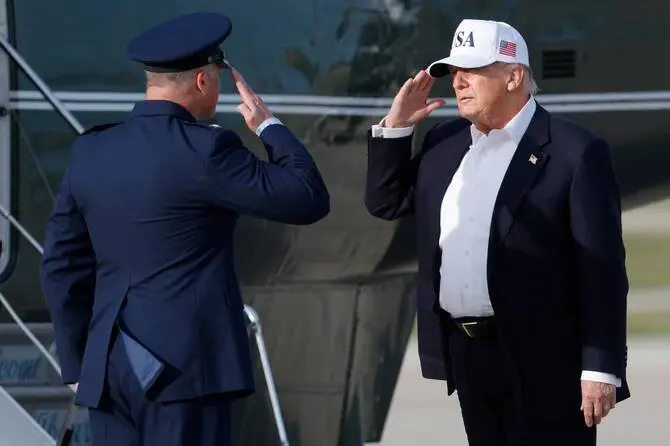
According to Trump, the operation was carried out at his direction and was “meticulously planned.” He thanked the Nigerian government for its cooperation in what he called a “complex mission,” adding that the militant group’s reach has been “greatly diminished” with the commander’s removal.
Minuki was not an obscure figure. The U.S. State Department had designated him a “specially designated global terrorist” back in 2023, during the Biden administration, citing his leadership role within the Islamic State. Based in the Sahel region, he had risen to lead the group’s al-Furqan office — described by the Counter Extremism Project, a nonprofit that monitors militant organizations, as one of the Islamic State’s most established and active networks.
How the Operation Unfolded
The raid took place at a compound in the Lake Chad basin, an area straddling the borders of several West African countries that has long been a stronghold for militant activity.
According to a U.S. official familiar with the mission, who spoke on condition of anonymity because of its sensitivity, the operation combined air power with troops on the ground:
- Helicopters and warplanes were deployed during the strike
- A ground assault force, which included U.S. troops, coordinated closely with Nigerian officials
- The ground force was reportedly positioned in case there was a chance to capture Minuki alive
As events played out, however, no capture took place. U.S. forces instead carried out airstrikes. Video released by U.S. Africa Command, which oversees American military activity in the region, showed at least one aircraft firing on targets below, followed by what appeared to be a missile or rocket strike.
U.S. Air Force Gen. Dagvin Anderson, who commands Africa Command, said early assessments indicated that several other Islamic State leaders had also been killed. He confirmed that no American service members were harmed.
Nigeria Confirms the Strike
Nigerian President Bola Ahmed Tinubu publicly confirmed the operation in a post on X, calling it a “daring joint operation” that struck hard at the Islamic State’s leadership ranks.
Tinubu said early assessments confirmed that Minuki had been eliminated along with several of his lieutenants during the strike on his compound. He praised the cooperation with Washington, saying Nigeria valued the partnership in pursuing shared security goals.
Nigeria’s armed forces went further in describing Minuki’s role within the organization. They portrayed him as a central figure who advised Islamic State groups on media operations and on the production of weapons, explosives, and drones. His death, they said, removes a key channel through which the group coordinated operations across different parts of the world.
According to the Nigerian army, citing intelligence reports, Minuki had overseen Islamic State-linked activity throughout the Sahel and West Africa, helped funnel fighters into Libya, and may recently have been promoted to the group’s global second-in-command.
A Months-Long Pressure Campaign
The strike did not come out of nowhere. It follows an earlier round of U.S. strikes against the Islamic State in Nigeria in December, which itself capped a sustained pressure campaign in the United States focused on the safety of Nigerian Christians.
Before those December strikes, Trump had publicly accused Nigeria’s government of permitting the killing of Christians and warned that the U.S. might intervene “guns-a-blazing” — a threat that caused considerable alarm and confusion within the country. He had also threatened, in November, to cut off all aid to Nigeria.
Defense Secretary Pete Hegseth pointed back to those warnings in a statement, saying Trump had pledged to help protect Christians in Nigeria and had ordered the Pentagon to prepare for action. Hegseth said the U.S. had spent months hunting the commander before killing him “and his entire posse.”
Africom said Minuki had a “significant history” of planning attacks, taking hostages, and providing strategic direction to the Islamic State’s global operations.
A Shift in U.S.-Nigeria Relations
The operation also appears to mark a turning point in relations between Washington and Abuja, which had grown tense amid Trump’s earlier threats.
Daniel Bwala, a spokesman for President Tinubu, said the killing of Minuki demonstrated the Nigerian leader’s commitment to tackling insecurity and reflected a marked improvement in ties with the United States. He emphasized that the two countries had worked together from the earliest planning stages through to the final execution of the raid.
Bwala noted that Nigeria’s government still disputes the claim that Christians in the country are being killed in disproportionate numbers. Even so, he said, Nigerian officials had been confident that Trump would prove to be a strong leader and a reliable partner.
What It Means Going Forward
Both governments are presenting the strike as a strategic blow to the Islamic State — one that eliminates not just a single commander but a crucial coordination point in the group’s international structure.
Whether the operation produces a lasting effect on the militant group’s capabilities in West Africa remains to be seen. For now, it stands as a high-profile example of close U.S.-Nigeria military cooperation, and a sign that the strained relationship between the two countries has, at least for the moment, found firmer footing.
Author