The ongoing Delaney Hall protest in Newark, New Jersey has become one of the most visible flashpoints in the national debate over immigration enforcement. For five consecutive days, activists, federal agents, and detained migrants have all played roles in a charged confrontation unfolding in a parking lot outside the federal detention center. What began as a vigil has now escalated into a tense, multi-day standoff drawing national attention.
A Scene of Rising Tension
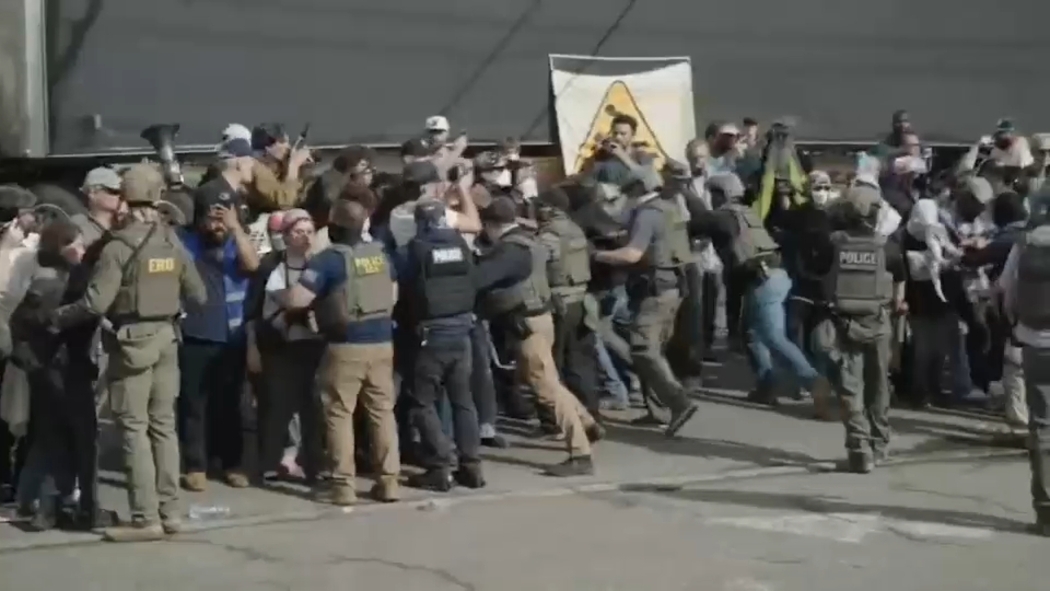
At dawn on Tuesday, dozens of demonstrators arrived carrying handmade cardboard signs. They gathered on an empty stretch of pavement directly opposite a line of federal agents in full tactical gear. The agents, armed with rifles and metal batons, wore helmets, flak vests, and balaclavas that concealed their identities. An armored vehicle reinforced their presence, signaling that authorities were prepared for trouble.
The atmosphere was emotionally charged. Some protesters shouted at the agents, while others quietly wept inside makeshift tents. The summer heat intensified the discomfort, and the stench from the nearby Passaic River, polluted by raw sewage, hung heavily in the air.
Why Activists Are Gathered at Delaney Hall
Delaney Hall has become a powerful symbol of President Donald Trump’s renewed immigration crackdown. The federal facility, part of the Immigration and Customs Enforcement (ICE) detention network, has drawn growing criticism from migrant rights advocates and Democratic lawmakers.
Activists say they are standing in solidarity with detainees who, according to their accounts, launched a hunger strike to protest:
- Reports of rotten or inadequate food being served inside the facility
- Concerns about poor medical care for those detained
- Living conditions described as inhumane by detainees and their families
- Limited access to communication with loved ones and legal representation
Several Democratic elected officials in New Jersey have echoed these concerns publicly, calling for greater accountability and even the closure of the facility.
Federal Officials Push Back
The Department of Homeland Security (DHS), which oversees ICE, has firmly rejected the protesters’ claims. In a statement released Tuesday afternoon, the agency denied that any hunger strike was taking place at Delaney Hall at that time. Officials also urged detained migrants to consider voluntarily leaving the country.
DHS went further, defending the conditions inside the facility. The agency claimed that for many of those detained, the medical care they receive in ICE custody is better than what they had access to in their everyday lives. They also argued that ICE maintains higher detention standards than many U.S. prisons holding American citizens.
ACLU and Activists Tell a Different Story
The American Civil Liberties Union of New Jersey responded swiftly with a sharply contrasting account. According to the organization, hundreds of detainees at Delaney Hall had participated in a hunger strike for days as a form of protest against mistreatment. The ACLU added that similar acts of resistance have been reported at other immigration detention centers around the country.
This stark divide between official statements and on-the-ground reporting has fueled even more frustration among activists, who view the federal response as dismissive of legitimate human rights concerns.
Democratic Leaders Speak Out
A growing list of New Jersey Democratic officials have publicly opposed the operation of Delaney Hall since the Trump administration reopened the facility last year. Among those calling for its closure are:
- Governor Mikie Sherrill
- Senator Andy Kim
- Representative LaMonica McIver
- Representative Analilia Mejia
- Representative Rob Menendez
- Representative Frank Pallone
- Representative Nellie Pou
Senator Kim, who has been actively trying to de-escalate the tension on site, was among those affected by pepper balls and pepper spray during a clash with federal agents on Monday.
Voices From the Protest
The personal stories from the protest paint a vivid picture of why so many have chosen to stand outside the detention center day after day.
Rebecca Brunner, a 37-year-old volunteer with the Radical Hospitality Zone, spent her time comforting families of those held inside. With tears in her eyes, she explained that she cared deeply about the detainees and their loved ones, warning that the situation seemed poised to escalate further.
Cori Herbig, a 49-year-old government affairs worker from Parsippany, described a jarring contrast in her weekend. One moment she was watching her son march in a Memorial Day parade, and the next she was being tear-gassed outside Delaney Hall. She said that if federal agents were willing to use such force against protesters in public view, she could only imagine what conditions might be like inside, away from any oversight.
Abdur Yasin, a 47-year-old firefighter from West Orange, joined the protest to demand dignity for the detainees, calling the facility’s conditions outrageous.
Conflicting Accounts of Monday’s Clash
The most intense moment so far came on Monday, when federal agents and protesters clashed directly. DHS insisted that no one was struck by projectiles and described the protesters as rioters who obstructed law enforcement officers attempting to leave the facility.
According to DHS, agents asked the crowd to move at least twice before resorting to physical force. The agency maintained that officers used only the minimum force necessary to protect themselves, the public, and federal property. DHS emphasized that the First Amendment protects peaceful assembly but does not extend to rioting.
Protesters and witnesses dispute this version of events, describing the use of force as disproportionate and unprovoked.
Representative Menendez Demands Answers
Representative Rob Menendez, who has spent hours at the protest site since Friday, criticized both the federal government’s deportation agenda and the operation of the privately run detention center. Speaking at a Tuesday news conference, he questioned why neighbors and community members were being held at a facility that, in his view, has consistently fallen short on basic standards.
Menendez also accused federal officials of trying to shift the narrative toward the protest itself in order to distract from the deeper issues happening inside the facility’s walls.
A Larger Battle Over Immigration Policy
The Delaney Hall protest is more than a local dispute. It reflects a much wider national struggle over how the United States handles immigration enforcement, detention practices, and the rights of migrants. As protests continue and federal agents maintain their presence, the standoff shows little sign of cooling down.
What unfolds in the coming days could shape not only the future of Delaney Hall but also the broader conversation about how America treats those caught in its immigration system.
Author