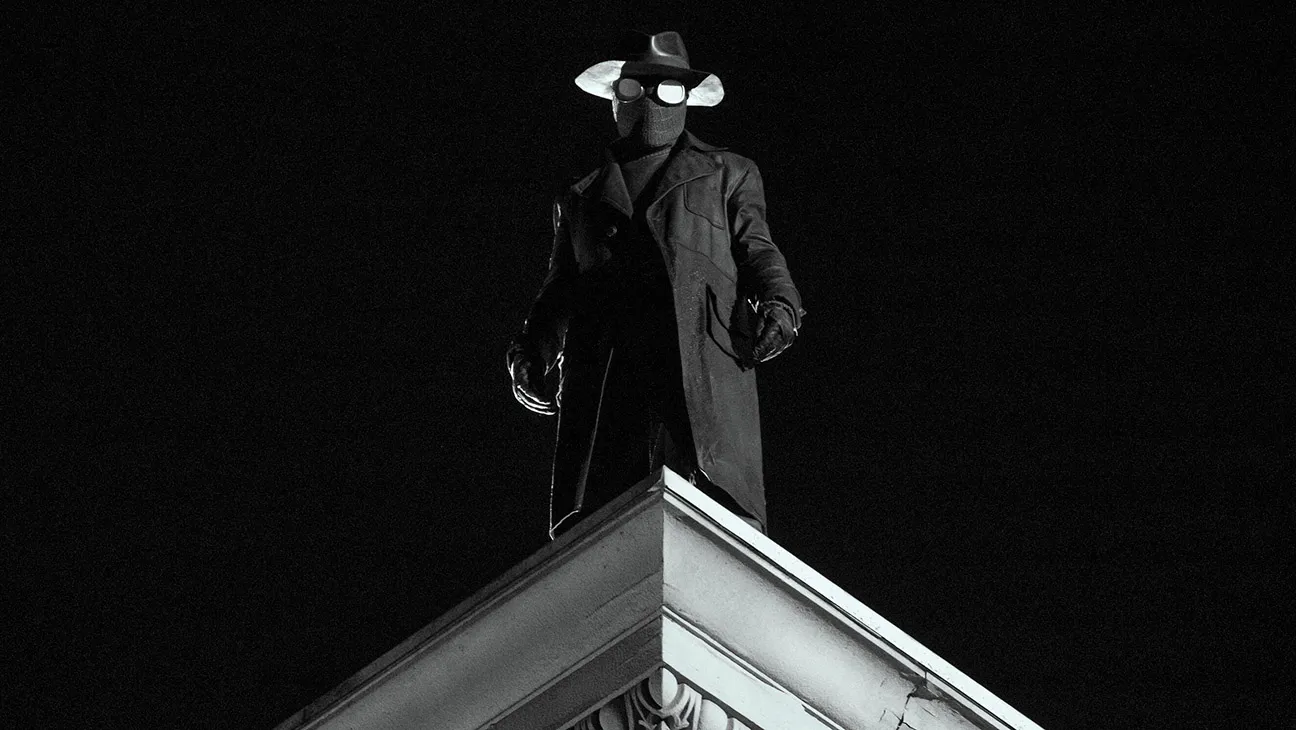
This Spider-Noir review examines a curious experiment in genre-blending, one that asks what happens when the world of comic-book superheroes collides with the shadowy fatalism of film noir. The answer, as it turns out, is a series that looks the part and leans heavily on the considerable charm of its leading man, Nicolas Cage, even when the story underneath fails to deliver much excitement.
When Superheroes Meet Gumshoes
At first glance, triumphant comic-book heroes and brooding film-noir detectives seem to have little in common beyond their shared opposition to villains. One is superhuman, gifted with extraordinary powers, while the other is merely extra-human, armed with nothing more than stubborn idealism.
Yet these two archetypes have long held a parallel grip on the imaginations of young people, some of whom grow up to become artists who wonder what might happen if the two worlds were combined. Occasionally, superheroes are born from this very fusion, with characters like the Spirit, Daredevil, and Jessica Jones drawing on noir sensibilities from the start.
Spider-Man, however, represents a different path. The character had existed for nearly half a century before a darker, more hardened, Depression-era version was introduced in 2008 as the web-slinging hero of an alternate Earth. In this case, noir was thrust upon a familiar figure rather than woven into his origins.
From Animation to Live Action
This shadowy version of Spider-Man first reached wide audiences in the animated film “Spider-Man: Into the Spider-Verse” in 2018, where Nicolas Cage lent his distinctive voice to the character. Now, in the live-action series “Spider-Noir” on Amazon Prime Video, Cage provides not only the voice but the face and body as well.
Still, it is the voice that registers first. Cage has openly described his vocal approach as a blend of noir icons Humphrey Bogart, James Cagney, and Edward G. Robinson, with a particularly heavy emphasis on Robinson’s guttural growl. That voice serves as a fitting emblem for a show that pushes affectionate Hollywood pastiche to ambitious new heights.
A Beautifully Artificial World
The series unfolds in a 1930s New York stitched together from soundstages, special effects, and the occasional Los Angeles location. This look is central to the show’s mild appeal, and it is noticeably more artificial than comparable series like “The Penguin” or “Daredevil: Reborn.”
That artificiality, however, feels intentional and appropriate. The show dresses its superhero story in classic-Hollywood costume, complete with gangster violence, smoky musical numbers, screwball banter, and touches of mad-doctor horror. It is a loving, if surface-level, tribute to a bygone era of cinema.
One stylistic gimmick, though, falls flat. The series offers viewers the option to watch in either “True-Hue Color” or “Authentic Black and White.” After sampling both in the opening episode, the verdict is clear: without a master cinematographer crafting light specifically for black-and-white, the monochrome version simply looks like someone forgot to turn on the color. The color presentation is the better choice.
Meet Ben Reilly
Notably, the angsty teenage Peter Parker familiar to most Spider-Man fans does not exist in this world. Instead, Cage plays Ben Reilly, a weary and sardonic private detective who seems permanently fused to his fedora and trench coat.
Reilly’s backstory includes a spider bite of sorts and a former career as a crime fighter known as the Spider, a chapter that has already concluded by the time the series begins. This framing positions him squarely within noir tradition, a man with a complicated past trying to navigate a morally murky present.
He is surrounded by a cast of recognizable archetypes, including:
- Janet, his feisty receptionist, played by Karen Rodriguez, who fields the steady stream of visitors to his office.
- A femme-fatale nightclub singer portrayed by Li Jun Li.
- A larger-than-life crime boss brought to life by Brendan Gleeson.
- An eager reporter played by Lamorne Morris.
Eventually, these characters compel Reilly to dust off his old Spider suit, a stylish black leather outfit accented with opalescent white goggles.
A Story That Plays It Safe
The plot draws from both of its parent genres. From the comic-book side come threads of biological experimentation and the abuse of superpowers. From the noir side arrive doomed romance and noble suffering.
Unfortunately, the combined result is largely free of surprise or genuine excitement. The story’s central emotional gambit, the seemingly inevitable attraction between Reilly and the nightclub singer, never quite ignites. In the language of noir itself, that romance arrives essentially dead on arrival.
What saves the show from outright failure is its easygoing nature and its willingness to laugh at itself. That self-awareness, paired with the impressive production design, can gently lull a viewer into acceptance. The series’ evocation of film noir may be only skin deep, occasionally borrowing visual flourishes from classics like “The Night of the Hunter” and “The Lady From Shanghai,” but it never becomes off-putting.
The Cage Factor
The show’s true source of suspense has little to do with its plot. Instead, it lies in waiting to see what Cage will do when handed the chance to play a human laced with insect genes.
Both Cage and the writers are keenly aware of his reputation as a gloriously unrestrained performer, and they tease the audience accordingly. For the most part, Cage plays Reilly straight. On select occasions, however, the inner spider erupts, and Cage unleashes the twitching, prancing, grimacing display that viewers may, against their better judgment, secretly crave.
In this incarnation, Reilly comes across less as a hardened cynic or wounded romantic and more as a delightful ham, a quality the script happily embraces. In one memorable scene, Reilly launches into a drunken, Eugene O’Neill-style rant in a saloon, only to be met with a beat of silence before the surrounding barflies burst out laughing in his face. The show even winks at Cage’s own acting process, depicting Reilly practicing his Cagney impression while watching the noir film “Great Guy.”
Style Over Substance
For all its fun, the series ultimately has little to do with authentic film noir. The original masters like Bogart, Cagney, and Robinson were stylized performers in their own right, and so is Cage, but his style belongs to a modern, more self-aware and self-mocking tradition. Dropping him into their classic surroundings feels more like a clever stunt or a thought experiment than a serious dramatic undertaking.
Yet something valuable does emerge through the relative restraint of Cage’s performance: his inherent likability. It is a quality he often seems eager to flee from in his more chaotic roles, but here it anchors the entire production.
The Verdict
“Spider-Noir” is a minor pleasure rather than a major achievement. Its noir credentials are thin, its story predictable, and its central romance inert. But the show compensates with handsome design, a knowing sense of humor, and a leading man who remains endlessly watchable.
Spending eight episodes in Cage’s company turns out to be a genuine pleasure, even when the material surrounding him refuses to rise to his level. For viewers drawn to stylish pastiche and the singular presence of Nicolas Cage, this Spider-Noir review lands on a gentle recommendation: approach it not as a gritty noir masterpiece, but as an affectionate, lightweight homage carried almost entirely by its star.
Author