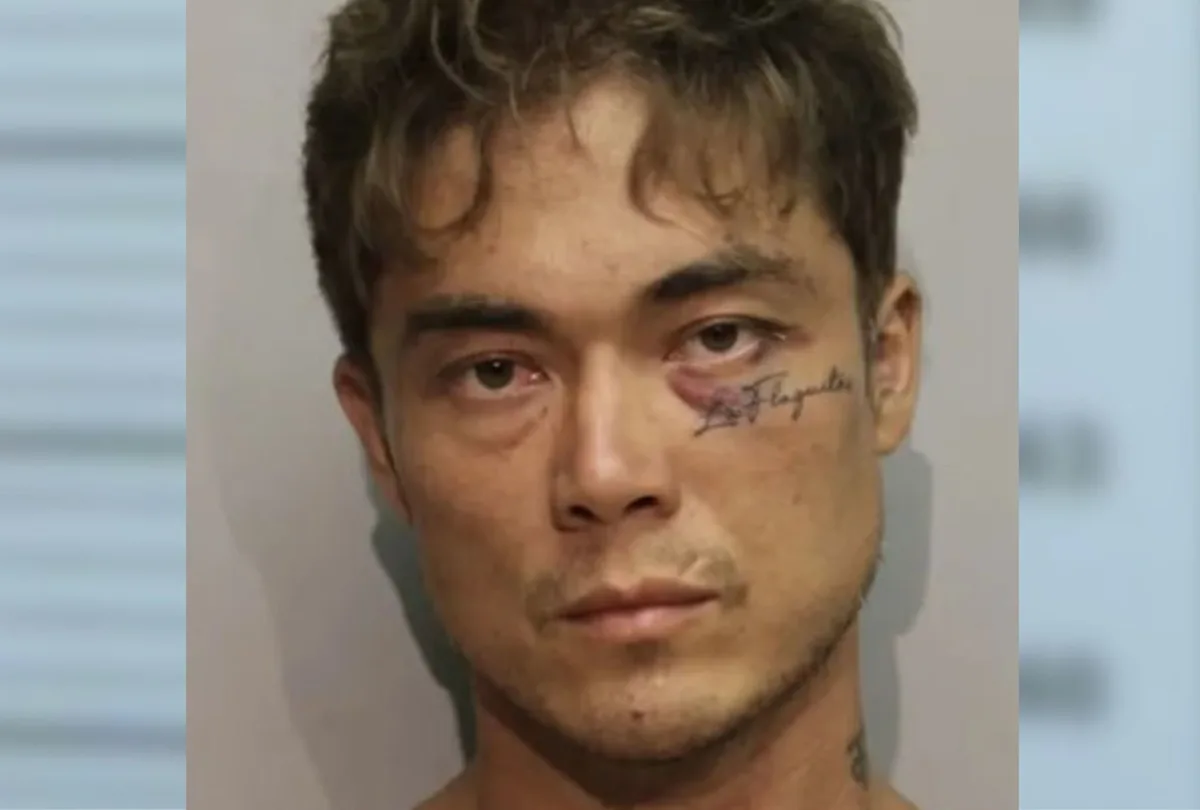
The Hawaii Big Island murders have shaken a remote community known for its laid-back, communal way of life. Authorities have now charged a 36-year-old man with killing three people in the rural Puna area, bringing a measure of resolution to a case that left residents fearful and on edge.
The charges follow an intense manhunt and have cast a harsh spotlight on a corner of Hawaii better known for its tropical beauty than violent crime.
The Charges Against the Suspect
Jacob Daniel Baker was charged Saturday with counts of both first- and second-degree murder, according to a news release from the Hawaii Police Department. As of Sunday, he remained jailed without bond, with his first court appearance scheduled for Monday.
It was not immediately clear whether Baker had legal representation who could speak on his behalf.
The murder counts are not the only charges he faces. Alongside them, Baker has been charged with:
- Burglary.
- Auto theft.
- Criminal damage to property.
A Manhunt Across the Big Island
The charges came just two days after police captured Baker following a manhunt on Hawaii’s Big Island. The search unfolded in the rural Puna community, a place celebrated for its lush tropical landscape and its population of free-spirited, independent residents.
It was in this setting that the three victims were discovered, their deaths sending shockwaves through a community unaccustomed to such violence.
The Three Victims
The victims were found over the course of two days, in locations that stretched across a wide area.
- Robert Shine, 69, was discovered dead on Monday, partially submerged in a cement pond.
- A 79-year-old man, identified by friends as Chitta Morse, was found Tuesday just a few hundred feet away.
- John Carse, 69, was located late Tuesday at a property roughly 19 miles from where the first two bodies were found.
The geographic spread of the killings added to the unease, suggesting the violence was not confined to a single spot.
A Mystery Without a Clear Motive
So far, police have not offered a suspected motive for the killings. Hawaii Police Chief Reed Mahuna noted that investigators found no clear connections among the three victims, aside from the fact that two of them lived near one another.
That absence of an obvious link has only deepened the sense of unease in Puna, where residents are left grappling with why their neighbors were targeted.
Life in Puna
To understand the impact, it helps to understand the community itself. Puna sits amid a striking mix of lush jungle and barren lava fields, drawing people who want to live off the grid.
In this environment, it is common for residents to trade work for lodging, building an informal economy rooted in mutual reliance and trust. That very openness, which defines the community’s character, now sits uneasily against the backdrop of the killings.
A Troubling History With the Suspect
Accounts from residents suggest Baker had been a known and increasingly worrying presence in the area. Puna resident Stephen Shaffer said Baker had worked for his ex-wife, climbing coconut trees on land where she grows fruit, in exchange for a place to live.
After several months, however, the relationship soured. Shaffer said his ex-wife sought a restraining order against Baker, saying she felt threatened by him.
Donald Hyatt, a friend of Shaffer’s ex-wife and of two of the men who were killed, added more detail. He said Baker had left the cabin where he had been living months earlier, only to return recently claiming “squatter’s rights” and threatening Shaffer’s ex-wife.
Warning Signs Before the Killings
The court record points to escalating concerns in the days leading up to the deaths. Just before the killings, two women requested temporary restraining orders against Baker, telling the court he had threatened and harassed them.
A judge denied both applications, concluding there was not enough proof of harassment. In hindsight, those rejected requests stand as troubling warning signs that went unheeded.
Court records also revealed that Baker had been named in 20 other cases over the past two decades, many of them traffic infractions. In most of those matters, he had no attorney and represented himself.
A Community Left Reeling
The killings have left Puna residents deeply shaken. In a place where neighbors often depend on one another and strangers are welcomed into the fold, the violence has challenged the very trust that holds the community together.
As Baker prepares to make his first court appearance, the people of Puna are left to process both their grief and their fear. The Hawaii Big Island murders have not only claimed three lives but also pierced the sense of safety in a community that prided itself on its open, communal spirit.
For now, many questions remain unanswered, chief among them the motive behind the killings. As the legal process moves forward, residents can only hope that the courtroom will eventually provide the clarity that has so far eluded them.
Author