The Carney faith advisory council has landed in the middle of a political storm just days after its launch, with Identity Minister Marc Miller stepping forward to defend both its purpose and its members. Announced by Prime Minister Mark Carney on Monday, the new body is already drawing sharp criticism from Opposition Conservatives and the Jewish advocacy group B’nai Brith.
Miller Defends the Council’s Purpose
Speaking to reporters on his way into a Tuesday cabinet meeting, Miller pushed back against the early wave of skepticism surrounding the Ministerial Advisory Council on Rights, Equality and Inclusion.
He argued that the group’s value lies in bringing together people who have either faced various forms of hate throughout their lives or worked as dedicated advocates in the field. The goal, he said, is to enable open and frank conversation about difficult issues.
For Miller, the priority is avoiding division. Coming together in a way that does not deepen polarization, he suggested, is an essential first step toward progress.
How the Council Was Formed
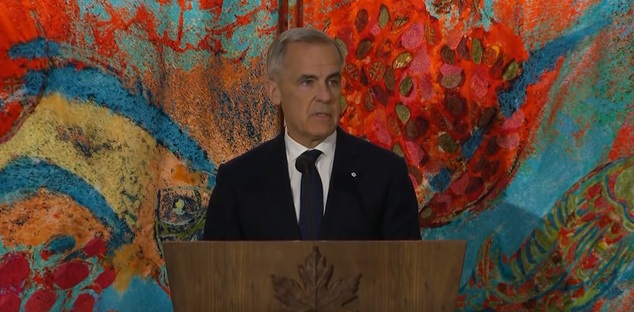
The Carney faith advisory council took shape during a speech the prime minister delivered at a Toronto synagogue on Monday. There, Carney made a striking admission, stating that Canada’s civic compact had failed the country’s Jewish community. He described antisemitism as a scourge and gave the newly formed group an initial mandate to examine the drivers of anti-Jewish hatred.
Among the appointments, Carney named former senator Marc Gold, who previously chaired the Jewish Federations of Canada.
The Prime Minister’s Office later released additional names, though notably without detailing their backgrounds or qualifications. The members include:
- Martine Roy, a former Canadian Armed Forces member and key plaintiff in a successful class-action suit that won damages for military personnel and civil servants dismissed for being part of the 2SLGBTQ+ community
- Catriona Le May Doan, a former Olympic speedskating champion who now chairs the Canada Games Council
- Omar Alghabra, a former Liberal MP and the first Syrian-born Canadian elected to the House of Commons
- Gary LaPlante, a Métis rights advocate who has published three Indigenous newspapers
- Aftab Erfan, a Simon Fraser University professor and former Chief Equity Officer for the city of Vancouver
- Avnish Nanda, an Edmonton-based human-rights lawyer
Poilievre Targets Alghabra’s Appointment
Much of the criticism has zeroed in on two members in particular: Alghabra and Nanda.
Conservative Leader Pierre Poilievre questioned whether Alghabra was suited to help combat antisemitism, accusing him of having lobbied to “keep Hezbollah legal” before entering politics. Poilievre also took aim at the council itself, framing it as another example of unnecessary bureaucracy.
He argued that the last thing Canada needs is another council, claiming that Carney responds to every problem by creating a new agency or body that, in his view, accomplishes little beyond paying out per diems and expenses to Liberal insiders.
Scrutiny From the Jerusalem Post
The controversy intensified when the Jerusalem Post published a story on Tuesday spotlighting Alghabra’s past as chair of the Canadian Arab Federation. The report noted that he had once argued against media use of the word “terrorists” to describe the Al-Aqsa Martyrs Brigade, an organization listed as a terror entity by the Canadian government.
The same story also referenced Nanda, who is currently representing pro-Palestinian campus activists in a lawsuit filed this year against the University of Alberta.
When asked about Nanda, Miller declined to scrutinize the biographies of individual members. He stressed that lawyers are both entitled and obligated to do their jobs, regardless of the views their clients hold.
Miller also urged a sense of realism, cautioning that the council should not be held to a standard of perfection. Expecting to eradicate hatred overnight, he suggested, would be naive.
B’nai Brith Questions the Council’s Authority
The criticism has not come only from political opponents. In a statement, B’nai Brith Canada raised pointed doubts about whether the council is equipped to fulfill its task of reviewing the scale, scope, and drivers of antisemitism.
The group argued that the council lacks both the mandate and the expertise to lead the fight against antisemitism in Canada. It also dismissed the idea that the body represents any kind of breakthrough, noting with frustration that it had taken months to assemble.
A Broader Mandate Than Antisemitism Alone
While Carney emphasized in Toronto that the council’s first tasks would focus narrowly on combating antisemitism, its origins point to a wider purpose.
The body was first announced in February as a replacement for work previously handled by two now-shuttered offices: the Special Representative on Combatting Islamophobia and the Special Envoy on Preserving Holocaust Remembrance and Combatting Antisemitism.
At the time, Canada’s Heritage Department described the council’s mission in expansive terms. It was meant to build bridges between communities and confront all forms of racism and hate, including both antisemitism and Islamophobia. The department also said the council would bring together a network of trusted leaders from across society, spanning civil society, academia, youth leadership, and Indigenous communities, to provide expert advice.
The Road Ahead
The early backlash facing the Carney faith advisory council highlights the difficulty of building a body meant to tackle deeply sensitive issues. Supporters see it as a forum for honest dialogue among people with lived experience of hate, while critics question its authority, expertise, and the selection of certain members.
The central tensions now surrounding the council include:
- Whether its membership has the credibility to address antisemitism effectively
- Concerns over the past statements and legal work of specific appointees
- Skepticism about whether a new advisory body can deliver real results
As the government moves forward, the council’s ability to prove its worth, rather than simply defend its existence, will likely determine whether it becomes a meaningful force against hate or another flashpoint in Canada’s political debate.
Author