The Surface Laptop Ultra has arrived as the flagship of an entirely new class of machines, positioning itself as the poster child for Nvidia’s agentic-AI-first laptop platform. At Computex in Taipei, we finally got our hands on Microsoft’s new device, offering a first real glimpse at what these Nvidia-powered laptops will actually look and feel like, along with a few details the official announcement left out.
Understanding Nvidia’s RTX Spark
Before diving into the laptop itself, it helps to understand the technology at its heart. Nvidia has introduced its own laptop-processor platform called RTX Spark, with the debut chip dubbed the N1X.
This is no ordinary processor. The N1X combines a 20-core CPU with what Nvidia claims is the equivalent of a GeForce RTX 5070 laptop GPU, all packed into a single massive system-on-a-chip. It can be paired with up to 128GB of unified memory.
The design draws heavily from Nvidia’s high-powered “Grace Blackwell” GB10 hardware used in its DGX Spark AI developer box, but it has been optimized for Windows on Arm. It also includes an NPU to support Microsoft’s full suite of Copilot+ AI features.
The headline figure is striking: Microsoft claims the RTX Spark-powered Surface Laptop Ultra will deliver up to 1 petaflop of AI compute, dramatically outperforming any other AI PC in its lineup.
Power Meets Portability
The promise here is ambitious. Like the DGX Spark, Nvidia says this hardware will allow users to run full 120-billion-parameter AI models locally on the device.
That represents a significant leap. Until now, such AI capability has largely been confined to professionals with servers or enthusiasts running purpose-built systems with multiple GPUs. Delivering that kind of muscle in a thin-and-light laptop sounds like the holy grail of modern computing.
These machines are clearly built first and foremost for agentic AI tasks run locally. While we did see some demos of games and optimized creative software, that content felt secondary to the raw AI horsepower on display.
Design and First Impressions
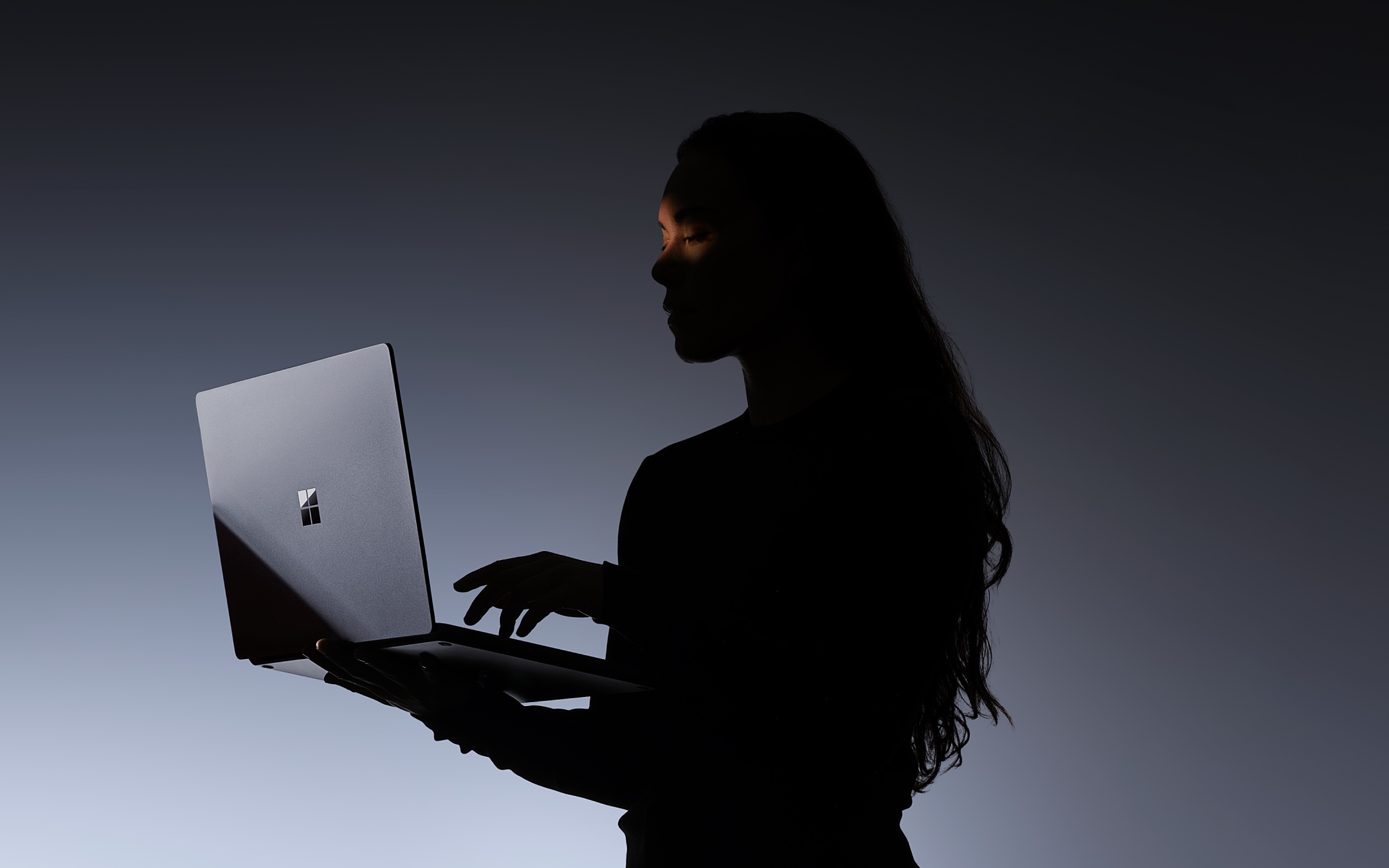
At first glance, the Surface Laptop Ultra looks remarkably familiar. The all-metal chassis is just as sleek as other Surface laptops, complete with the polished Windows logo on the lid, available in Platinum and Nightfall finishes. Casually, it is almost indistinguishable from the 15-inch Surface Laptops we already know.
The basic dimensions reinforce its premium, portable ambitions:
- Less than 18mm thick
- Under 4.5 pounds
- A raised chassis design that makes it appear to float off the desk
Look a little closer, and the subtle floating design becomes one of the more distinctive visual touches.
A Standout Display
Open the lid and the screen immediately commands attention. The Surface Laptop Ultra features a 15-inch mini-LED PixelSense Ultra touchscreen with a squarish 3:2 aspect ratio.
Microsoft is billing it as their brightest laptop display yet, reaching up to 2,000 nits of peak HDR brightness. This is a creator-class panel, boasting a crisp 262 pixels per inch and vivid color reproduction.
In our briefing, the team confirmed several key display features:
- Variable refresh rate (VRR) support
- A 120Hz peak refresh rate
While mini-LED can draw slightly more power, Microsoft insists the impact on battery life will remain manageable enough to maintain all-day endurance.
Ports, Keyboard, and Touchpad
Connectivity appears generous and practical. Along the sides, you’ll find a full-size HDMI output, USB Type-C and USB Type-A connections, a 3.5mm headphone jack, and a full-size SD card reader.
The keyboard carries over from past Surface Laptops, which is far from a complaint. Those full-size keyboards have long earned praise for their satisfying typing feel, and the familiar snap remains intact.
Joining it is the largest haptic touchpad Microsoft has ever placed on a Surface device. The expansive surface offers ample room for gestures and taps, with haptic feedback responding to every action. Notably, a Microsoft rep confirmed the touchpad will be replaceable if repairs are needed, and the company is working with software partners to customize the haptic experience.
Above the display sits a webcam with Windows Hello facial recognition, neatly tucked into very thin bezels, though Microsoft declined to share its native resolution.
Inside the RTX Spark Hardware
The true story of the Surface Laptop Ultra lies beneath the surface. Powering 6,144 CUDA cores and managing giant AI models demands serious thermal engineering.
Microsoft showcased the internals in an exploded diagram, highlighting a dual-fan, dual heat-pipe cooling system. The company claims this gives the laptop more than twice the thermal capacity of the 15-inch Surface Laptop 7th Edition from 2024. A particularly memorable airflow demo even used smoke to illustrate how air moves from the intakes into the fans.
However, there is an important caveat to the much-touted memory specs. While the “up to 128GB” figure grabs headlines, the reality is more nuanced. Some configurations will ship with significantly less, with options as low as 16GB of unified memory, far short of what’s needed to handle sprawling offline AI conversations.
Repairability and Upgrades
Microsoft has paid clear attention to serviceability. Four screws at the underside corners provide access to the interior.
Inside, several components are designed with repair in mind:
- A swappable Type-2280 M.2 SSD
- An accessible, replaceable battery
- QR codes next to components that link to service instructions, similar to Framework laptops
That said, there’s a limitation worth noting. We spotted no SO-DIMM slots on the sample motherboard, which strongly suggests the memory is soldered down and not user-upgradable.
Availability and Pricing
As with the rest of the RTX Spark laptops revealed this week, Microsoft remained tight-lipped on firm details. In fact, OEMs were not even permitted to power on the devices in front of the press.
When it comes to availability, the most specific answer we received was simply “this fall.” Whether that means an early back-to-school launch or a late holiday-season release remains unclear, though a Christmas-timed arrival seems likely.
Pricing is even murkier, but one thing is certain: these are not budget machines. Positioned as “Ultra” models, alongside competitors like the Lenovo Yoga Pro, Asus ProArt, and MSI Prestige, they are aimed squarely at AI early adopters eager to embrace agentic computing on Windows.
The Bigger Picture
The Surface Laptop Ultra marks the beginning of a new chapter in AI-focused hardware. The key takeaways from our hands-on time include:
- A debut device built around Nvidia’s N1X RTX Spark chip
- Claims of up to 1 petaflop of AI compute and local 120-billion-parameter model support
- A premium, familiar Surface design with a standout mini-LED display
- Thoughtful repairability, tempered by likely soldered memory
- A fall release with premium, AI-first pricing expected
What Comes Next
It’s important to remember that we are still early in the hype cycle. The biggest questions, around real-world performance, user experience, and true AI capability, simply couldn’t be answered in a brief hands-on session.
The Surface Laptop Ultra makes a compelling first impression, blending a polished design with genuinely ambitious AI hardware. But whether it can deliver on its lofty promises remains to be seen. Until these machines reach the lab for proper benchmarking, the Surface Laptop Ultra stands as an intriguing glimpse of where AI-first laptops are heading, rather than a fully proven revolution. For now, it signals that the Nvidia RTX Spark era has officially begun.
Author