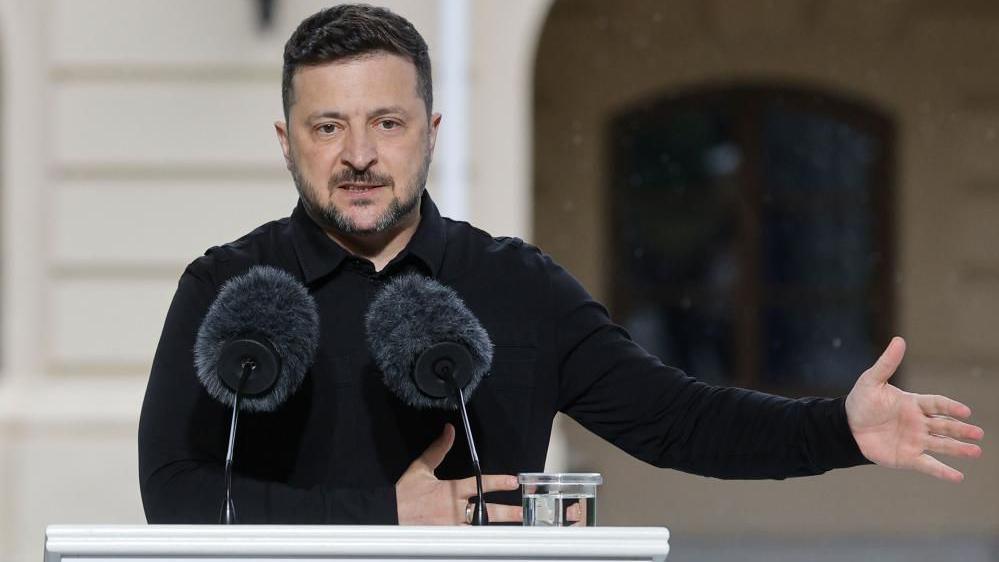
The Zelensky open letter to Putin landed this week as the Ukrainian president made a fresh and pointed attempt to bring the war to an end, publicly inviting his Russian counterpart to sit down face to face. The message, sharp in tone and more than 1,800 words long, framed direct dialogue between the two leaders as the only realistic path to peace.
A Direct Invitation Wrapped in Defiance
In the letter, Volodymyr Zelensky argued that waiting for the war in Europe to once again command Washington’s attention would be a mistake. Peace, he insisted, could only emerge through direct engagement between Ukraine and Russia, and on that basis he proposed a meeting between himself and Vladimir Putin.
The offer itself was not new. Zelensky has floated the idea before, and the Kremlin has consistently replied that he is welcome to come to Moscow. What set this letter apart was both its candor and its edge.
Zelensky openly acknowledged that the United States was now fixated on the situation with Iran, writing that it would be wrong to simply sit back and wait for Europe’s conflict to return to the center of American focus. He also took a personal jab at the Russian leader, suggesting that after 26 years in power, age was beginning to catch up with Putin. He even alluded to Ukraine’s recent drone strike near St Petersburg, describing it as paying a visit.
The Human Cost at the Heart of the Message
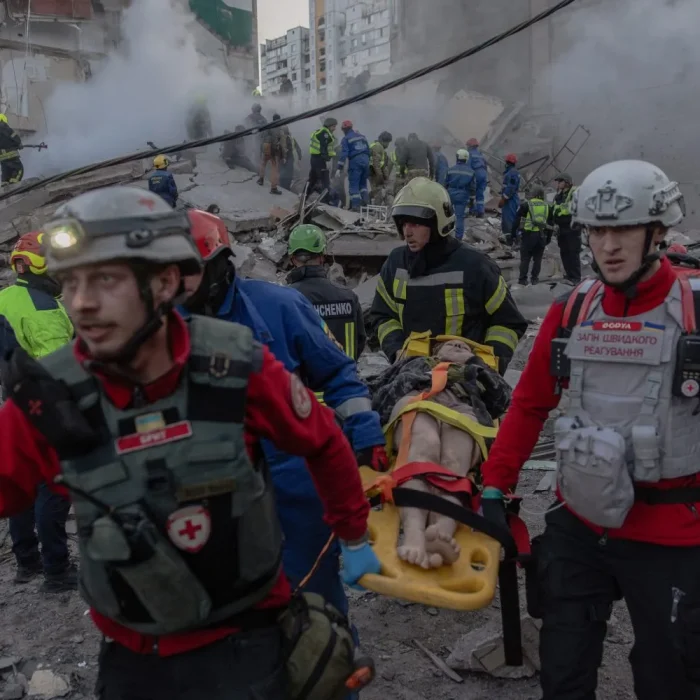
Beneath the combative framing, Zelensky leaned heavily on the toll the war has taken. He conceded that Ukraine had little sympathy for the fate of Russian soldiers given the devastation inflicted on his country, but stressed that the loss of Ukrainian lives weighed on him deeply, calling every death painful.
He also pointed to mounting fatigue inside Russia itself, citing weariness over Ukrainian drone and missile attacks, fuel shortages, and rising prices. Addressing Putin directly, he urged him not to fear taking the path out of the war, calling that the central thing now required of him.
Zelensky suggested that talks could be held in a neutral setting such as Switzerland or Turkey, and proposed a full ceasefire to hold for the duration of any negotiations.
Putin Pushes Back
The Russian response offered little encouragement. Speaking to foreign journalists in St Petersburg, apparently before seeing the letter’s contents, Putin said he was prepared and willing to reach an agreement with Ukraine but insisted that compromises would be necessary. Crucially, he had already ruled out the ceasefire Zelensky sought.
Putin also revived a familiar argument questioning Zelensky’s legitimacy, saying whether the Ukrainian leader truly represents his country was a matter for lawyers and legal analysis. The claim rests on the fact that no presidential election has been held since Zelensky’s term was set to expire in May 2024, though elections in Ukraine have been suspended under martial law imposed after Russia’s invasion.
His broader position remained unchanged. Putin has long demanded that Ukraine withdraw from four regions largely under Russian control, Donetsk, Luhansk, Kherson, and Zaporizhzhia, and abandon its ambitions to join NATO. He even floated the idea that, with Trump preoccupied by Iran, the European Union might pressure Zelensky into surrendering territory.
Ukraine has firmly rejected any such concessions, warning that ceding land would only embolden Russia to attack again, much as it did in 2022 when it launched its full-scale invasion, eight years after illegally annexing Crimea.
Washington Weighs In
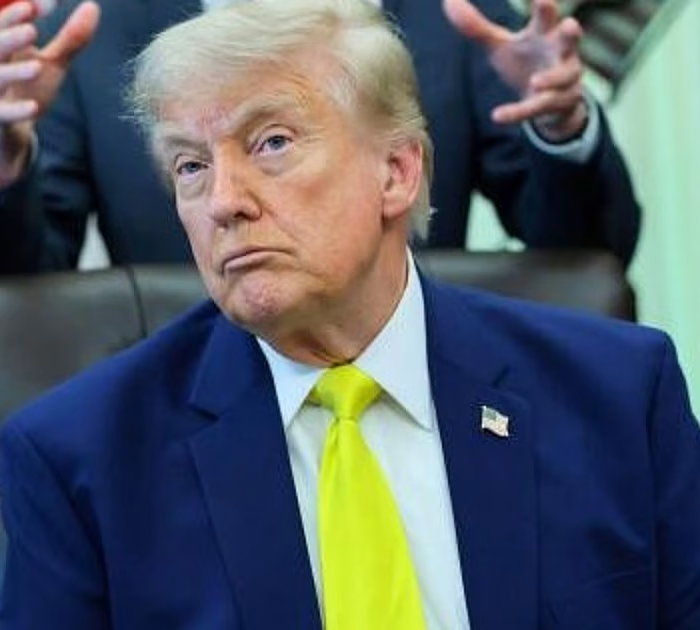
President Donald Trump offered an upbeat take when asked about the prospect of a summit. He said it would be great if the two leaders met and urged them to get it done, while crediting the United States with helping move the sides closer to peace.
Pressed on what compromises each country would have to make, Trump declined to spell them out, saying only that he wanted both parties to give ground and expressed confidence that they would.
A Proposal Awaiting an Answer
The Kremlin confirmed it had received the letter and said Putin would be briefed on its contents. Ukrainian Foreign Minister Andriy Sybiha described the message as a serious and meaningful proposal to end the war, calling on Moscow to respond in kind and declaring that the time had come to choose peace.
Whether the letter breaks the deadlock remains far from clear. Ceasefire efforts have stalled repeatedly in recent months, and earlier rounds of negotiations in Geneva, Abu Dhabi, and Istanbul all ended without agreement. For now, Zelensky’s invitation hangs in the air, a bold gesture whose fate rests on a response from the Kremlin that may never come on the terms he has set.
Author